
Large labia most commonly refers to enlarged labia minora, which are often disproportionate in size to the surrounding outer labia majora. The appearance of the labia can vary significantly between women, and there is a wide range of different labial sizes and shapes. Despite this, many women have labia that are enlarged considerably and may cause functional symptoms, including discomfort during sexual intercourse and the inability to carry out gym exercises comfortably. For women affected by large labia, labiaplasty, also known as labia reduction, is a highly effective surgical procedure that permanently reduces labial size to eliminate functional symptoms and improve appearance.
RELATED: Common Questions about Labia Reduction
What is a labia?
The labia minora refers to the inner folds of skin that are located on either side of the opening of the vagina. The labia minora extend upwards to the clitoris, where the clitoral hood is found, and the labia are located on either side of the vagina and urethra opening. The labia majora are located on the outside of the inner labia and are both larger and fuller in volume. Our surgeons can perform both labia minora reduction and labia majora reduction.
RELATED: What is a Labiaplasty?
Both types of procedures are also known as labiaplasty. Labiaplasty surgery is most commonly performed under local anaesthesia, with or without oral sedation. In some cases, labiaplasty is performed under general anaesthesia. However, the choice is always yours on the preference of anaesthetic, with many patients preferring to be completely asleep for their procedure. The principle of labia reduction surgery involves the surgical removal of excess labial tissue, most commonly undertaken with a surgical scalpel. Some surgeons may use a laser to perform labiaplasty. However, we believe that laser labiaplasty results in a longer recovery period and a greater risk of scarring. Once the redundant tissue has been removed, the raw edges are carefully reapproximated with absorbable stitches, which do not require removal at your post-operative review appointment. Labiaplasty surgery typically takes 1 to 2 hours to perform. All types of labiaplasty surgery are performed as day cases, so you can go home the same day.
RELATED: What is a labia reduction?
What is the normal size of a labia?
There is a broad spectrum of normality regarding the size and shape of female labia. Several scientific studies have collected data on the average length of the labia minora; however, none have identified a normal length, with some labia measuring up to 10 cm or more. It is unclear whether there is a link between advancing age and increased labia size. In many cases, women may have asymmetrical labia, with one labia larger than the other. Labia can also differ based on the thickness of the labia edge or can be darkly pigmented in colour. Edge excision labiaplasty can effectively remove darkly pigmented labia.
How common are large labia?
Large labia are more common than you might think, with up to 40% of all women having big labia in the UK. This figure may not be entirely accurate, however, as it is thought there may be significant underreporting of the extent of this common condition, and many women may feel uncomfortable talking about the issue of large labia.
Why are labia minora larger than labia majora?
It is not uncommon to notice that your labia minora protrude outwards more than the outer lips, also known as the labia majora. Large labia are also known as hypertrophy of the labia minora. Labia majora can also be enlarged, a condition known medically as labia majora hypertrophy. Both types of labia enlargement may be considered a variant of normal and are not known to be associated with a particular medical condition, and, in the vast majority of cases, do not cause pain or discomfort.
RELATED: What is Labia Minora Reduction?
RELATED: What is Labia Majora Reduction?
Causes of labia hypertrophy or large labia are primarily related to hereditary factors or hormonal imbalances involving excessive oestrogen secretion, such as when it occurs during puberty and menopause. The pregnant state can also increase the vascularity of the female genitalia, and this may lead the labia minora to become engorged and, therefore, appear larger.
In rare cases, large labia can be caused by localised skin and soft tissue bacterial infection or injury to the area, leading to inflammation and chronic swelling in some cases. It is well known to observe labial hypertrophy in women who cycle frequently.
Is the vagina affected by having large labia?
Having large labia does not affect the structure or function of the vagina in any way. Every patient is different in terms of the size and shape of the vagina, as with the labia. If you are experiencing vaginal discomfort, then we would advise seeing a gynaecologist for further assessment. Many women choose to have a labiaplasty because they have developed significant unhappiness with the appearance of their genitalia. This can affect a woman’s self-confidence and, in severe cases, can result in the development of anxiety and/or depression. In some instances, women may avoid certain activities or situations which may be related to having enlarged labia, and this includes sexual intercourse and specific items of clothin,g such as beachwear.
RELATED: What Conditions Can Vaginal Rejuvenation Target?
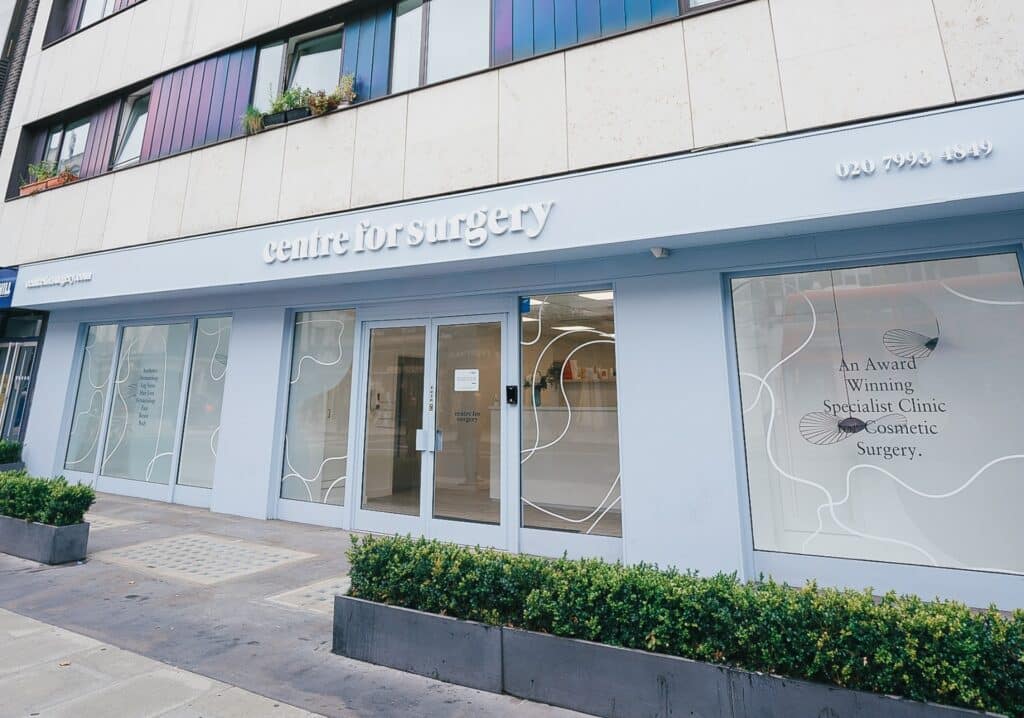
For women affected by having large labia, which is impacting their self-confidence, Centre for Surgery is proud to be one of the most experienced providers of labiaplasty surgery in London. Our surgeons are experts in all types of labia correction, including labia minora and labia majora reduction. Please speak to one of our patient coordinators today, who will happily arrange a face-to-face private consultation with an expert female labiaplasty surgeon at our state-of-the-art Baker Street clinic in central London.
Why Choose Centre for Surgery for Labia Surgery
When it comes to personal and sensitive procedures such as labia surgery, the Centre for Surgery in London stands as a premier choice for several reasons. We offer a comprehensive, patient-centred approach that sets us apart in the field of plastic surgery. Below are some of the key factors that make us a preferred choice for many:
Top-tier Patient Care
We pride ourselves on delivering an exceptional level of care tailored to your unique needs. From your initial consultation through to your recovery, our team of professionals is committed to supporting you every step of the way.
Experienced Surgeons
Our highly qualified surgeons bring years of experience to the table. Specialising in labia surgery, they adhere to the highest ethical standards and are committed to achieving the best possible outcomes for each patient.
State-of-the-Art Facilities
Our purpose-built surgical centre is designed specifically for procedures such as labia surgery, enabling us to deliver exceptional levels of safety and care while effectively managing costs.
Patient Testimonials
Don’t just take our word for it. Here’s what some of our patients have to say:
- “The team at Centre for Surgery went above and beyond. The care I received from start to finish was second to none.” – Lucy, London
- “I couldn’t be happier with my results and the entire experience. Centre for Surgery is truly the best in the field.” – Rachel, Birmingham
- “From the consultation to the surgery and aftercare, every aspect was outstanding. I felt comfortable and well-informed throughout the process.” – Hannah, Manchester
How to Book Your Consultation
Ready to take the next step on your journey? Contact us to book your consultation:
- 📞 Phone: 0207 993 4849
- 📧 Email: contact@centreforsurgery.com
- 📍 Address: 95-97 Baker Street, London W1U 6RN
Additional Resources
For more information, feel free to explore:
- About Us
- Finance Options, including 0% APR with Chrysalis Finance
- Plastic Surgery Blog
- Clinic FAQs
- Baker Street Clinic
We are dedicated to your well-being and satisfaction and look forward to welcoming you at our Baker Street clinic. Your comfort and results are our highest priority.
[contact-form-7 id=”256″ title=”Treatments form”]