
Surgical rhinoplasty and non-surgical rhinoplasty are not interchangeable treatments. They look superficially similar — both alter the appearance of the nose — but they work through fundamentally different mechanisms and produce different categories of result. Choosing the wrong one for your specific concern produces disappointment regardless of how well the procedure itself is performed.
This guide explains exactly what each procedure does, the honest comparison between them, which concerns each addresses well and which it cannot fix, and how to choose based on your specific anatomy and goals. The short version: non-surgical rhinoplasty is excellent for minor refinement of specific features in patients with otherwise-good underlying nasal structure. Surgical rhinoplasty addresses the full range of concerns — including everything that filler cannot — but requires real recovery and is a permanent commitment.
What each procedure actually does
The fundamental distinction is structural:
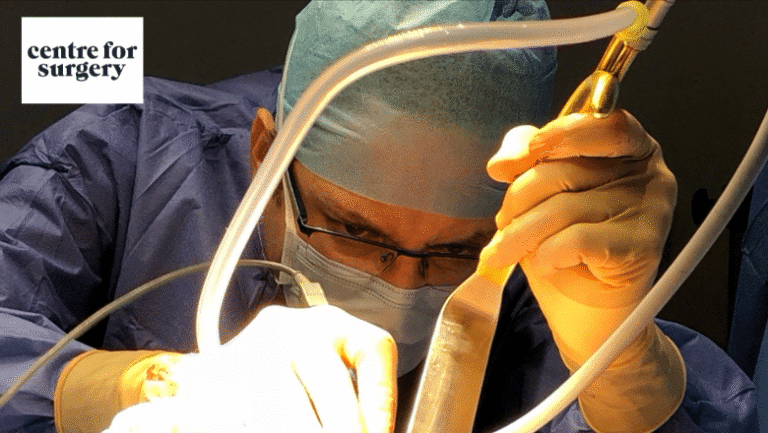
Surgical rhinoplasty modifies the underlying bone and cartilage of the nose. The surgeon makes incisions (either hidden inside the nostrils — “closed” technique — or with a small incision across the columella between the nostrils — “open” technique), lifts the skin from the underlying framework, and reshapes the bone and cartilage directly. The skin is then redraped over the new framework, and incisions are closed. The change is structural and permanent.
Non-surgical rhinoplasty uses small volumes of hyaluronic acid filler injected at specific points along the nose to add volume strategically. The underlying bone and cartilage aren’t touched — instead, filler placement creates the illusion of a different nose shape by adding to the existing structure. For more on which patients suit this approach, see our guide on who is a good candidate for non-surgical nose filler.
The mechanism matters: surgical rhinoplasty can remove tissue (bone, cartilage, soft tissue) as well as add or reshape it. Non-surgical rhinoplasty can only add filler. This single difference determines almost everything about which concerns each procedure can address.
What each procedure can and can’t do
Surgical rhinoplasty CAN:
- Reduce the size of a nose that’s too large
- Reduce a dorsal hump permanently
- Narrow a wide bridge or wide tip
- Refine the tip shape, projection, and rotation
- Reduce nostril size and alar base width
- Straighten a crooked nose
- Correct breathing problems (septoplasty often combined with cosmetic work)
- Address ethnic-specific concerns (see ethnic rhinoplasty)
- Revise previous rhinoplasty results (revision rhinoplasty)
- Lift a drooping tip
- Repair traumatic deformities
- Produce permanent change
Surgical rhinoplasty CAN’T:
- Be reversed if you don’t like the result (revision is possible but limited)
- Be performed with minimal recovery time
- Be undone easily if you change your mind
- Produce immediate visible final result — full settling takes 12-18 months
Non-surgical rhinoplasty CAN:
- Smooth out a mild dorsal hump by raising the bridge above and below it
- Lift a slightly drooping tip
- Add subtle projection to a flat or under-projected nose
- Correct minor asymmetry by adding volume to one side
- Refine the appearance of mild irregularities after surgical rhinoplasty (sometimes used as a finishing touch)
- Provide a “trial run” before committing to surgery
- Produce results visible immediately
- Be reversed with hyalase within 24-48 hours if unwanted
- Be performed in 30 minutes with no significant downtime
Non-surgical rhinoplasty CAN’T:
- Make a large nose smaller (filler only adds; it cannot subtract)
- Reduce a substantial dorsal hump (smoothing minor humps is different from reducing large ones)
- Narrow a wide bridge or tip
- Reduce nostril size
- Refine bulbous or boxy tips
- Correct breathing problems
- Address significant crookedness or trauma deformity
- Produce permanent results — typical duration 12-18 months
- Be used safely in all anatomical situations — vascular risks exist
The pattern is clear: filler adds volume to refine specific subtle features; surgery reshapes the underlying framework comprehensively. They address different problems.
The right treatment for your specific concern
Concern: My nose is too large overall.
→ Surgical rhinoplasty. Filler cannot make a nose smaller — it can only add. Adding filler to a large nose makes it appear larger, not smaller.
Concern: I have a noticeable bump (dorsal hump).
→ Depends on the size. For minor humps where the bridge above and below could be raised slightly to create a straight line, non-surgical rhinoplasty can work. For substantial humps where the bridge needs to be physically reduced, surgical rhinoplasty is the only option. See our guide on dorsal hump causes and removal options.
Concern: My nose is wide at the bridge or tip.
→ Surgical rhinoplasty. Filler cannot narrow nasal structures. See our guide on how to make a wide nose smaller.
Concern: My nostrils are too wide / large.
→ Surgical rhinoplasty with alar base reduction.
Concern: My tip droops when I smile or at rest.
→ Both can work. Surgical rhinoplasty produces permanent correction by addressing the underlying cartilage. Non-surgical rhinoplasty can subtly elevate a mildly drooping tip — see our guide on non-surgical nose filler candidates.
Concern: My nose is asymmetric or crooked.
→ For minor asymmetry: filler can balance the appearance by adding to the deficient side. For significant crookedness from trauma or developmental causes: surgical rhinoplasty addressing both bone and cartilage.
Concern: I have a flat or under-projected bridge.
→ Both can work. Non-surgical rhinoplasty is often appropriate for mild under-projection, particularly common in patients with ethnic features wanting refinement without surgery. Surgical rhinoplasty with cartilage grafts produces permanent projection enhancement.
Concern: I have breathing problems.
→ Surgical rhinoplasty (often septoplasty or septorhinoplasty). Filler doesn’t address airflow.
Concern: I want to “try” rhinoplasty before committing to surgery.
→ Non-surgical rhinoplasty as a preview. The result isn’t identical to what surgery would achieve, but it provides a sense of how subtle refinements might look.
Concern: I had rhinoplasty and want minor refinement.
→ Wait at least 12 months from surgery, then consider non-surgical refinement for small remaining irregularities. For more substantial issues: revision rhinoplasty.
Concern: I want immediate change with no downtime.
→ Non-surgical rhinoplasty if your concern fits what filler can address. If your concern requires structural change, no amount of “no downtime” makes filler the right answer.
The honest cost-benefit comparison
Speed of result:
- Non-surgical: immediate (full effect after 2 weeks of swelling resolution)
- Surgical: 6-12 months for refined result; up to 18 months for complete settling
Downtime:
- Non-surgical: typically same-day return to normal activities
- Surgical: 1-2 weeks of social downtime; splint for 1 week; bruising for 2-3 weeks; no contact sports for 6 weeks
Duration of result:
- Non-surgical: 12-18 months
- Surgical: permanent
Reversibility:
- Non-surgical: yes — hyalase dissolves filler within 24-48 hours
- Surgical: limited — revision possible but anatomy can never fully return to pre-surgical state
Scope of change possible:
- Non-surgical: subtle refinement of specific features
- Surgical: comprehensive reshaping of size, shape, and proportions
Risks:
- Non-surgical: vascular complications (rare but serious) including risk of skin necrosis and very rarely vision changes; lumps, asymmetry, dissatisfaction with subtle effect
- Surgical: bleeding, infection, breathing difficulties, asymmetry, scarring, dissatisfaction with permanent result, need for revision
Cost:
- Non-surgical: £500-£900 per session, repeated 12-18 monthly
- Surgical: typically £6,000-£10,000+ as a single procedure
Long-term economics over 10 years:
- Non-surgical: £3,500-£7,000 in maintenance costs
- Surgical: single investment, often less than a decade of filler maintenance
Finance options through Chrysalis Finance, including 0% APR, are available for both treatment paths.
Who is a good candidate for non-surgical rhinoplasty
The ideal candidate for filler-based nose refinement has:
- A nose that’s the right overall size and shape but with one or two specific minor irregularities
- A mild dorsal hump that could be smoothed by raising the bridge above and below
- Slight tip droop that could benefit from subtle elevation
- Minor asymmetry where adding volume to one side balances appearance
- Under-projected bridge that needs subtle enhancement
- Realistic expectations about subtle rather than dramatic change
- Comfortable with maintenance every 12-18 months
- No history of nasal trauma or previous rhinoplasty without proper assessment
- Healthy skin without active acne, rosacea, or skin conditions in the treatment area
Non-surgical rhinoplasty is less suitable for patients with:
- Larger nose wanting reduction
- Wide tip or bridge needing narrowing
- Significant crookedness or trauma deformity
- Substantial dorsal hump
- Breathing problems
- Previous nose filler with current issues (consider dissolving first)
- Realistic dissatisfaction with overall nose appearance rather than specific features
Who is a good candidate for surgical rhinoplasty
Surgical rhinoplasty suits patients who:
- Have significant concerns about overall nose size, shape, or proportions
- Want permanent change rather than ongoing maintenance
- Have concerns that filler cannot address (size reduction, narrowing, tip refinement, nostril changes)
- Are willing to accept recovery period and downtime
- Have breathing problems alongside cosmetic concerns
- Have realistic expectations about achievable change
- Are in good general health
- Are emotionally stable and seeking surgery for their own reasons
- Are at least 17-18 for women, 18+ for men (nasal growth must be complete)
Surgical rhinoplasty is less suitable for patients with:
- Very minor concerns that might be addressed by filler
- Body dysmorphic tendencies or unrealistic expectations
- Unstable life circumstances making the recovery period impractical
- Bleeding disorders or significant medical comorbidities
- Recent significant weight changes (face shape may continue evolving)
For more on rhinoplasty candidacy and process, see our main service pages on rhinoplasty and septorhinoplasty.
Sequencing — when both treatments fit different stages
Some patients benefit from both treatments at different points:
Filler as a preview, then surgery: Patient tries non-surgical rhinoplasty to preview a refinement. If satisfied, they may continue with filler maintenance. If wanting more substantial change, they progress to surgical rhinoplasty. Filler should be fully dissolved before surgical planning.
Surgery first, filler for refinement: Patient has surgical rhinoplasty. After 12+ months of complete healing, minor remaining irregularities can be addressed with conservative filler placement. This is a finishing touch, not a substitute for revision surgery.
Revision surgery vs filler refinement: For patients with significant dissatisfaction after rhinoplasty, revision surgery is appropriate. For minor issues, filler can be a less invasive alternative — but with limitations depending on what the issue is.
The non-surgical procedure in detail
Consultation:
- Examination of nose anatomy, photographs, discussion of goals
- Assessment of whether your specific concerns are appropriate for filler
- Discussion of realistic outcomes
- Review of vascular safety considerations
The procedure:
- Application of topical anaesthetic for 15-20 minutes
- Marking of injection points
- Cannula-based or fine needle injection of hyaluronic acid filler at specific anatomical points
- Total volume typically 0.5-1.5ml
- Procedure takes 30 minutes
Aftercare:
- Mild swelling for 24-48 hours
- Avoid pressure on the nose (no glasses) for 1-2 weeks — see our guide on when you can wear glasses after non-surgical nose job
- Avoid heat exposure for 48-72 hours
- Possible mild bruising at injection sites
- Final result visible at 2 weeks
For comprehensive detail on what non-surgical rhinoplasty involves, see our guide on what is a non-surgical rhinoplasty.
The surgical procedure in detail
Consultation:
- Detailed examination and computerised imaging
- Discussion of techniques (open vs closed, primary vs revision)
- Assessment of overall facial proportions
- Health screening
- Realistic outcome discussion
The procedure:
- Performed under general anaesthesia (or TIVA) in our CQC-regulated facility
- Typically 2-3 hours operating time
- Day-case procedure for most patients
- Small splint applied at the end of surgery
Aftercare and recovery:
- Splint removed at 1 week
- Visible bruising and swelling for 2-3 weeks
- Return to office-based work at 1-2 weeks
- Light exercise after 2 weeks
- No contact sports for 6 weeks
- Final refined result visible at 6-12 months
- Complete settling at 12-18 months
For more on what to expect from surgical rhinoplasty, see our main rhinoplasty service page.
Common questions
Can non-surgical rhinoplasty replace surgical rhinoplasty?
For appropriate candidates with specific limited concerns, yes. For most patients seeking comprehensive nose change, no. Filler cannot do what surgery can do.
Is non-surgical rhinoplasty safer than surgical rhinoplasty?
Different risk profiles. Non-surgical has very low risk of common complications but a small risk of serious vascular events. Surgical has higher rates of minor complications but the risks are generally more predictable and manageable. Both are safe in experienced hands.
How quickly can I have non-surgical rhinoplasty?
Often within days of consultation. The procedure itself takes 30 minutes.
How long is the wait for surgical rhinoplasty?
Typically a few weeks to a few months depending on surgeon availability and your scheduling preferences.
Will my non-surgical rhinoplasty results look identical to surgical results?
No. Filler adds volume to refine appearance. Surgery reshapes underlying structure. Even when treating the same feature, the approach produces different results.
Can I have non-surgical rhinoplasty if I’ve already had surgical rhinoplasty?
Yes, typically waiting at least 12 months after surgery. Useful for minor remaining irregularities.
Will my surgical rhinoplasty result change over time?
The fundamental structural change is permanent, but the nose continues to age naturally with the rest of the face. Long-term results stay close to the immediate post-recovery result.
What happens if I don’t like my surgical rhinoplasty?
Revision rhinoplasty is possible after at least 12 months of healing. Revision is typically more complex than primary surgery and is often best performed by surgeons specialising in revision work. See revision rhinoplasty.
What happens if I don’t like my non-surgical rhinoplasty?
Hyalase dissolves the filler within 24-48 hours, returning your nose to its pre-treatment baseline.
Can both procedures fix my breathing problems?
Only surgical rhinoplasty (often as septorhinoplasty) addresses breathing problems. Filler doesn’t change airflow.
Is one procedure better for older versus younger patients?
Age itself isn’t the main factor — appropriate candidacy depends on the specific concern and overall health. Non-surgical can be appropriate for both younger and older patients with specific minor concerns. Surgical is appropriate at any adult age with realistic expectations and good general health.
How do I decide between them if I’m uncertain?
Detailed consultation examining your specific anatomy and discussing your goals. For some patients, the answer is clear from anatomical assessment. For borderline cases, starting with non-surgical can provide useful information before committing to surgery.
Centre for Surgery · CQC-regulated · GMC specialist-registered surgeons · 95–97 Baker Street, Marylebone, London W1U 6RN · 0207 993 4849 · Book a consultation · Finance from 0% APR