
A facelift addresses the structural changes of facial ageing — loose skin, jowls, deeper folds — that no non-surgical treatment can fully reverse. Many patients considering surgery have already had dermal fillers to soften lines or add volume. This raises a common and important question: do fillers need to be dissolved before a facelift?
The honest answer is that it depends. Whether existing fillers should be removed before surgery depends on the type of filler used, where it was placed, how long it has been in the tissue, and whether it is distorting the underlying anatomy. This article explains when dissolving fillers makes sense, when it isn’t necessary, and what the process involves.
How Fillers Affect Facelift Planning
Dermal fillers are widely used and many patients have had multiple rounds of treatment over years before considering surgery. Although fillers add volume and can soften ageing changes, their presence in the tissue can complicate the surgical planning process.
When fillers have been used repeatedly over years, the deeper tissues of the cheeks, jawline, nasolabial folds, and mid-face can look and feel different from untreated tissue. Surgeons need to assess the patient’s true underlying anatomy to plan how much skin to lift, how to reposition facial fat, and how to achieve a balanced result. If filler is masking that anatomy, the planning is based on an artificially altered shape rather than the real one.
Some fillers, particularly hyaluronic acid (HA) products, break down naturally over time. Others — including calcium hydroxylapatite, poly-L-lactic acid, and the older permanent fillers — can persist for years or be very difficult to remove. Migrated filler can also create irregularities or unnecessary fullness, which become more obvious once the skin is tightened.
When Dissolving Fillers Before a Facelift Is Recommended

There are several situations where dissolving filler before surgery is the right call.
Over-correction is the most common reason. If a patient has had repeated rounds of cheek or mid-face filler, the area may be carrying significantly more volume than the surgeon should plan around. Removing the excess gives the surgeon a clear view of the underlying support structures and allows for more accurate lift planning.
Migrated filler is another common reason. HA filler in particular can drift from its original placement over time, creating lumps, asymmetry, or fullness in unintended areas. These distortions can become more obvious after a facelift tightens the overlying tissue, so it’s better to address them first.
Old or persistent fillers that are still affecting the tissue should also be considered. Some patients have HA filler that has clinically resolved on examination but, on careful palpation, can still be felt in deeper layers. If it is altering the contour, dissolving it before surgery improves the surgical result.
Finally, patient preference matters. Some patients have decided after years of filler that they no longer want the appearance the filler created, even if the placement is technically fine. Removing it before a facelift means the surgical result reflects the patient’s natural structure rather than years of accumulated injectable work.
RELATED: Dissolving Filler in the Face & Lips
When Fillers Don’t Need to Be Dissolved
Not every patient with prior filler needs it removed before surgery.
If the filler was placed several years ago and has fully broken down — confirmed clinically and through patient history — there’s nothing left to dissolve. HA fillers placed more than 12 to 24 months earlier have usually resolved, depending on the product and placement.
If only small amounts of filler remain and they aren’t distorting the anatomy, the surgeon may proceed without dissolving them. Subtle lip enhancement or light tear-trough work, for example, often doesn’t interfere with facelift surgery.
In some cases, fillers can complement facelift results once healing has progressed. Tear troughs, fine perioral lines, and small areas of volume loss can be refined with filler several months after surgery, once the surgical result has settled.
The decision is made during consultation based on examination, the patient’s filler history, and the surgical plan.
The Filler Dissolving Process

HA fillers are dissolved using hyaluronidase — an enzyme that breaks down hyaluronic acid quickly and safely. The process is straightforward: small amounts of the enzyme are injected into the treated areas during a short clinic appointment. Mild swelling or redness for a day or two is normal and resolves quickly.
Non-HA fillers cannot be dissolved with hyaluronidase. Calcium hydroxylapatite (Radiesse), poly-L-lactic acid (Sculptra), and PMMA fillers (Bellafill) require different management — sometimes surgical removal, sometimes simply waiting for the body to break them down over time. This is one of the reasons documenting filler type and brand at the time of treatment matters.
After dissolving HA filler, surgeons usually wait two to four weeks before proceeding with a facelift. This allows tissues to settle, residual swelling to resolve, and the natural contours to return. The surgical plan is then based on the patient’s true anatomy rather than a transient post-dissolution state.
How Fillers and Facelifts Address Different Problems
Fillers and facelifts solve different problems, and understanding the distinction helps patients make better decisions about both.
Fillers add volume. They can soften lines, restore lost volume, and enhance specific features. They are most effective for early to moderate ageing changes where volume loss is the primary concern.
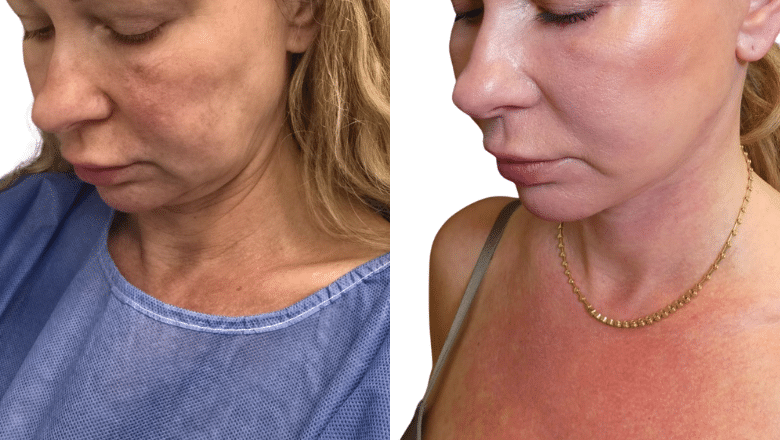
Facelift surgery repositions and tightens the deeper supporting layers of the face — the SMAS — and removes excess skin. It addresses laxity and descent, which are structural problems that no amount of filler can correct. When patients use filler to try to lift sagging tissue, the result often looks heavy or overfilled rather than rejuvenated.
A well-planned facelift restores the structural support that has weakened with age, producing sharper jawlines, smoother neck contours, and improved mid-face structure. After surgery, many patients find they need significantly less filler than before — and sometimes none at all — because the underlying problem has been addressed.
RELATED: Dermal Fillers vs Facelift Surgery
Managing the Transition Period
Some patients are uncomfortable with the idea of dissolving fillers because they don’t want to look older while waiting for surgery. This is a reasonable concern. The transition period is usually two to four weeks, during which the face will look how it would have looked without the filler — which, for many patients, is closer to their natural ageing pattern.
This temporary change actually helps the surgical planning. The surgeon can assess how the face has genuinely aged, where laxity is most pronounced, and where volume has been lost rather than artificially added. The result is a facelift planned around real anatomy rather than augmented anatomy, which produces more natural, predictable outcomes.
After surgery, the structural lift addresses many of the issues that filler was masking. Patients are often surprised by how much less injectable maintenance they need afterwards.
FAQs
Do all fillers need to be dissolved before facelift surgery?
No. Only fillers that distort tissue, add excessive volume, or interfere with assessing the natural anatomy need to be dissolved. Many fillers fade naturally and don’t affect the surgery.
How long after dissolving fillers can I have a facelift?
Most surgeons wait two to four weeks. This allows swelling to resolve and the natural contours to return.
Can I have fillers again after my facelift?
Yes — but usually in much smaller amounts. The structural lift resolves issues that filler was previously needed to mask.
What happens if fillers aren’t dissolved when they should be?
The surgical result can look less natural — uneven, overly full, or asymmetrical once the skin is tightened.
Can non-HA fillers be dissolved?
Hyaluronidase only dissolves HA fillers. Non-HA fillers (Sculptra, Radiesse, Bellafill, PMMA) cannot be dissolved with enzyme treatment and require different management — sometimes surgical removal, sometimes time.
Will dissolving fillers make me look worse before surgery?
You may look less volumised for two to four weeks. This is short-lived and helps the surgeon plan a more natural-looking facelift.
Centre for Surgery
Centre for Surgery is a CQC-regulated cosmetic surgery clinic at 95–97 Baker Street, London W1U 6RN. Facelift surgery is performed by GMC specialist-registered consultant plastic surgeons. Filler assessment, dissolving, and post-operative injectable refinement are all carried out in-house, which means the same clinical team plans and manages your full treatment pathway.
Finance is available through Chrysalis Finance, with 0% APR options.
To arrange a consultation, call 0207 993 4849 or email contact@centreforsurgery.com.
[contact-form-7 id=”256″ title=”Treatments form”]