The honest answer to “filler vs facelift?” depends almost entirely on what’s actually wrong with your face. The two treatments aren’t really alternatives to each other — they address different problems through different mechanisms, and the right choice follows from accurate diagnosis of what’s bothering you.
Dermal filler addresses volume loss. Facelift surgery addresses tissue descent and skin laxity. If your face has lost volume but its underlying structure is intact, filler is the appropriate intervention. If your face has descended and the skin is genuinely loose, no amount of filler will produce the result that surgery delivers. This guide explains the distinction in detail, with honest discussion of when each is appropriate and when neither is.
What ageing actually does to the face
Facial ageing isn’t a single process. Several distinct changes happen simultaneously, contributing to the overall aged appearance:
Volume loss. The fat compartments of the face — particularly in the temples, cheeks, mid-face, and around the mouth — gradually thin from the 30s onward. The face becomes flatter, the cheekbones less prominent, the temples hollowed. This is the change that filler directly addresses.
Soft tissue descent. The supporting ligaments that hold facial tissues in their youthful position progressively weaken. Combined with gravity and volume loss above, this allows the cheeks, jowls, and neck to descend over time. Jowling, deepening nasolabial folds, and the development of a turkey neck are all manifestations of descent. Filler cannot reverse descent; surgery can.
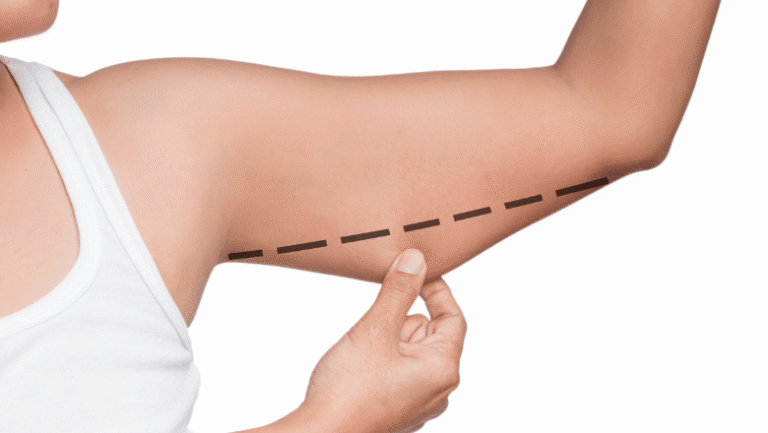
Skin laxity. The skin itself loses collagen and elastin, becoming thinner and less able to retract. Mild laxity is what gives a soft, slightly loose appearance under the jaw. Significant laxity is hanging skin that has separated from the underlying tissue plane. Filler can sometimes mask mild laxity through volume; significant laxity requires surgical excision.
Bone resorption. The facial skeleton itself changes with age — bone density decreases, the jawline becomes less defined, the eye socket enlarges, the chin loses projection. Filler can compensate for some of these changes; significant bone change is harder to address without implants or fat transfer.
Skin quality changes. Surface texture, pigmentation, and overall skin condition deteriorate with cumulative sun exposure and time. Neither filler nor facelift addresses skin quality directly — energy-based treatments (laser, radiofrequency, microneedling) or biostimulators (Profhilo, polynucleotides) are needed.
The right treatment depends entirely on which of these processes is dominant in your particular face.
When dermal filler is the right answer
Filler is appropriate for:
Volume loss with reasonable underlying structure. Patients in their 30s-50s whose primary concern is hollowing — flat cheeks, sunken temples, deepening tear troughs, thinning lips — but whose face hasn’t significantly descended. Filler placed strategically restores structural volume that drives an immediate visual rejuvenation.
Specific area concerns. Targeting individual problem areas — tear troughs, cheeks, marionette lines, lips, chin — that can be addressed with localised injection without comprehensive intervention.
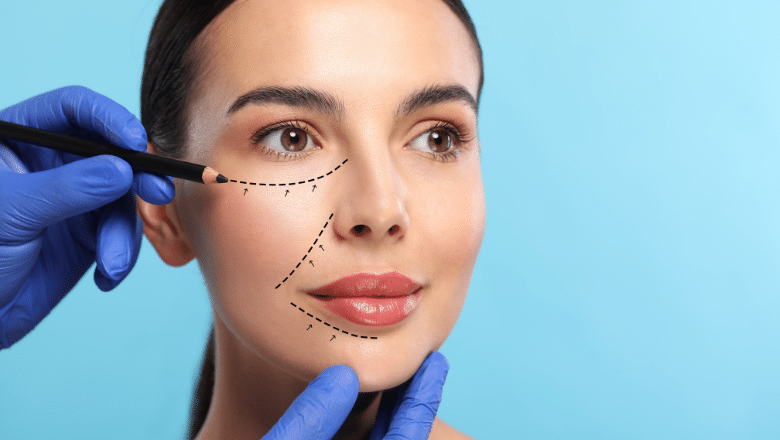
The “liquid facelift” approach. For patients with moderate volume loss across multiple facial areas, the liquid facelift (8-point lift) places filler at eight strategic anchor points to lift descended tissue back toward its youthful position. This produces meaningful improvement for the right candidates without surgery.
Bridging years before surgery. Patients in their 40s and early 50s who aren’t yet at the stage where facelift would deliver dramatic improvement, but want to address visible ageing in the interim. Filler-based plans can buy 5-10 years before surgery becomes the more appropriate intervention.
Maintenance after facelift. Post-surgical patients use filler to maintain volume and prevent re-aging of treated areas.
Treating patients who won’t have surgery. Some patients are unwilling to have surgery for medical, financial, or personal reasons. Conservative filler maintenance produces meaningful improvement even when it’s not the optimal intervention.
Specific advantages:
- Immediate results — visible the same day
- Minimal downtime (24-48 hours of mild swelling)
- Reversible with hyalase if the result isn’t right
- Lower upfront cost than surgery
- No general anaesthesia
- No scarring
When facelift surgery is the right answer
Surgery becomes appropriate when:
Tissue descent is established. Visible jowling along the jawline, sagging cheeks, neck banding, and deepening of folds that filler can only partly mask. Once the underlying tissue has descended, repositioning requires surgery — there’s no injectable that can lift descended tissue back into its original position.
Skin laxity is significant. Loose skin that doesn’t spring back when stretched. Filler can pad the volume but cannot remove the excess skin or restore tone. Modern facelifts excise excess skin while repositioning underlying tissue.
Diminishing returns from non-surgical treatment. Each round of filler producing less visible benefit, requiring more product to achieve less effect, or producing increasingly artificial appearance as filler accumulates over the years.
Patient wants a definitive solution. The cumulative cost of years of filler treatment often approaches or exceeds the cost of facelift surgery, with a less impressive long-term result. For patients ready to commit to a single intervention, surgery offers a 10-15 year result with comprehensive change.
Multiple ageing concerns combined. When jowling, neck banding, deep folds, and significant volume loss all need addressing, facelift (often combined with neck lift, fat transfer, and skin treatments) delivers comprehensive change that injectables can’t match.
Specific advantages:
- Definitive, longer-lasting result (10-15+ years from a well-executed modern facelift)
- Addresses tissue descent that filler cannot reach
- Removes excess skin permanently
- Can be combined with fat transfer to address both volume and descent
- Surgical precision in repositioning that no injectable can achieve
- Better long-term value for patients past the threshold where filler can deliver enough
For more on surgical options, see our guides on SMAS facelift, deep plane facelift, mini facelift, and neck lift — each appropriate for different patterns of ageing.
When neither alone is the right answer
Often the best result comes from combining surgery with non-surgical treatments rather than choosing between them:
Surgery + volume restoration. A facelift addresses descent and laxity but doesn’t restore lost volume. Many modern facelifts combine with fat transfer to address both — the surgery repositions descended tissue while fat grafting restores volume that’s been lost. This combined approach produces more natural-looking results than either alone.
Surgery + skin treatments. Surgery doesn’t improve skin texture, pigmentation, or surface quality. Patients combining facelift with energy-based treatments (Morpheus8, laser resurfacing) or biostimulators (Profhilo, polynucleotides) achieve comprehensive rejuvenation that addresses every aspect of facial ageing.
Pre-surgical optimisation. Patients with significant filler accumulated over years often benefit from dissolving existing filler with hyalase before surgery. The surgeon then operates on natural anatomy rather than filler-distorted tissue. For more, see our guide on do fillers need to be dissolved before a facelift.
Post-surgical maintenance. Even the best facelift result benefits from ongoing maintenance — annual skin quality treatments, occasional filler top-ups for specific areas, and consistent anti-wrinkle injections for dynamic lines. The combination keeps the surgical result fresh for many years.
This integrated approach — combining surgical and non-surgical work across treatment cycles — reflects our broader thinking captured in the non-surgical facelift hub and anti-ageing treatments hub.
The honest threshold
A useful question to ask: when you pinch the loose skin near your jawline and let go, does it spring back immediately, or does it tent momentarily before settling? If it springs back, non-surgical treatment can probably help. If it tents, surgical excision is more likely to deliver the result you want.
Another question: are you addressing volume loss (hollow cheeks, flat temples, sunken tear troughs) or descent (jowls, neck banding, sagging)? Volume loss responds to filler. Descent requires surgery.
A consultation with one of our specialist surgeons gives a definitive answer based on examining your actual anatomy. Patients sometimes arrive convinced they need filler when surgery is more appropriate, or convinced they need surgery when filler would deliver what they want. The right answer comes from honest anatomical assessment.
Safety considerations
Filler safety. Dermal fillers in the UK are classified as medical devices rather than prescription medications, meaning practitioners with limited training can legally administer them. Risks include vascular occlusion (filler blocking a blood vessel), infection, lumping, migration, and allergic reaction. Most complications are minor; serious complications (skin necrosis, blindness) are rare but recognised. Choosing an experienced medical injector substantially reduces risk. For more on the broader concerns, see our guide on lip filler migration.
Facelift safety. Modern facelift surgery performed in a CQC-regulated facility by GMC-registered specialist surgeons has an excellent safety profile. Risks include bleeding, hematoma, infection, scarring, nerve injury, and asymmetry. Major complications are uncommon (1-2% of patients) and most resolve with appropriate management. The safety profile is comparable to other elective surgical procedures.
Cost comparison
Filler-based treatment plan:
- Initial liquid facelift: £1,200-£2,500
- Maintenance: £800-£1,500 annually
- 5-year total: £5,200-£10,000
- 10-year total: £9,200-£17,500
Facelift surgery:
- Modern facelift: £12,000-£25,000 depending on technique and extent
- Recovery: 2-3 weeks of social downtime
- Result: 10-15 years of meaningful improvement before further surgery considered
- Maintenance: typical non-surgical maintenance £1,000-£2,000 annually
For patients who would otherwise spend a decade or more on filler-based treatment, surgery often represents better long-term value. Finance options through Chrysalis Finance, including 0% APR, are available for both approaches.
The consultation
A consultation establishes which approach matches your specific anatomy, goals, and budget:
- Anatomical assessment — volume loss vs. descent vs. laxity in your specific case
- Discussion of your goals and what you’re hoping to achieve
- Realistic discussion of what each approach can and can’t deliver for you
- Treatment plan options with costs, sequencing, and timelines
- Honest recommendation — including, sometimes, “you don’t need treatment yet” or “you’d be better served by a different intervention than you came in asking for”
The combination of medical expertise and aesthetic judgement that produces good outcomes can’t be substituted by online assessment. An in-person consultation with examination of your actual face is essential before committing to either filler or surgery.
Common questions
Can I have filler now and surgery later?
Yes — this is a common pathway. Filler buys time during the years when surgery wouldn’t yet deliver dramatic improvement. Once tissue descent and skin laxity reach the point where surgery becomes appropriate, the conversation shifts.
Will the surgeon recommend filler or surgery?
Depends on your anatomy. Experienced surgeons recommend whichever is genuinely appropriate, not whichever generates more revenue. A surgeon who recommends surgery for a patient who’d be better served by filler isn’t a surgeon you want operating on you.
How long do facelift results actually last?
A well-executed modern facelift performed by an experienced surgeon typically delivers 10-15 years of meaningful improvement. Some patients see longer; very few see less. Ongoing ageing continues, but the patient at year 12 usually still looks substantially younger than they would have without surgery.
Can I just keep getting filler instead of surgery?
Sometimes — for patients with predominantly volume loss and modest descent. But for patients with significant tissue descent and skin laxity, no amount of filler delivers what surgery does. Pushing filler past its appropriate threshold often produces the “overfilled” appearance that many patients dislike.
What about thread lifts?
PDO thread lifts are sometimes marketed as a non-surgical alternative to facelift. The evidence is mixed — results are typically modest and short-lived (6-12 months), and the procedure carries risks (thread migration, lumping, asymmetry) that we believe outweigh its benefits. We don’t offer PDO threads at Centre for Surgery; for patients who need lifting beyond what filler can provide, surgery is the appropriate intervention.
Is it ever too late for filler or surgery?
Filler benefits diminish as descent increases — there’s a point where adding more filler produces unnatural results without addressing the actual problem. Surgery, by contrast, can be performed at almost any age with appropriate medical fitness. Many of our facelift patients are in their 60s and 70s.
What if I’m not sure?
That’s exactly what consultation is for. Bring photos of yourself from 5-10 years ago, photos of what you’d like to look like, and a frank description of what bothers you. The right approach becomes clearer with proper anatomical assessment.
How do I know my surgeon is qualified?
At Centre for Surgery, all facelift surgeons are GMC-registered with the GMC’s specialist register in plastic surgery. The clinic is CQC-regulated. These are baseline requirements that not all UK aesthetic clinics meet. Verify these credentials before committing to any surgical procedure.
Centre for Surgery · CQC-regulated · GMC specialist-registered surgeons · 95–97 Baker Street, Marylebone, London W1U 6RN · 0207 993 4849 · Book a consultation · Finance from 0% APR