Dissolving filler is the process of using an enzyme called hyaluronidase (commonly known as hyalase) to break down hyaluronic acid filler that’s already in the tissue. The result: the filler dissolves within 24 to 48 hours, and the treated area returns to its pre-filler state. It’s one of the major safety advantages of HA-based fillers — and one of the main reasons we don’t recommend permanent fillers, which can’t be reversed.
This is the comprehensive guide to dissolving filler: when it’s appropriate, how the process works, what it costs, what to expect, and the common scenarios where patients consider dissolution. For the broader filler service context, see our filler dissolving treatment service page.
What hyalase is and how it works
Hyaluronidase (hyalase) is an enzyme that breaks down hyaluronic acid — the active ingredient in HA-based dermal fillers. It works by cleaving the cross-linked bonds that hold the HA gel together, converting the gel into individual HA molecules that the body then naturally absorbs over the following days.
The enzyme is naturally present in the human body. The hyalase used clinically is manufactured as a purified, sterilised solution that’s injected directly into the area where filler dissolution is desired. The effect is targeted — only the filler in the immediate injection area is affected, and only HA-based products are dissolved.
Critically: hyalase only works on HA filler. Non-HA fillers — including calcium hydroxylapatite (Radiesse), poly-L-lactic acid (Sculptra), PMMA (Bellafill), and silicone-based products — cannot be dissolved with hyalase. These products either gradually break down over much longer periods (1-3 years for Radiesse and Sculptra) or are essentially permanent (PMMA, silicone). This is one of several reasons we don’t use permanent or semi-permanent fillers at Centre for Surgery. For more on this, see our guide on permanent lip fillers and why you should avoid them.
When dissolving filler is the right answer
Several scenarios commonly prompt dissolution:
Result you’re unhappy with. The most common reason — the filler hasn’t produced the look you wanted. Maybe the lips are too big, the cheeks look heavy, or the overall result isn’t what was discussed at consultation. Dissolving allows a reset before re-treatment with adjusted technique.
Filler migration. Filler that has drifted from where it was placed, particularly common with lip filler — see our detailed guide on lip filler migration. Migrated filler typically requires hyalase to correct because the drifted product won’t move back into position on its own.
Overfilling over time. Patients who’ve had multiple rounds of top-up treatment over years often accumulate more filler than they realise. The cumulative effect can produce a heavy, “done” appearance that they didn’t intend. A reset with hyalase, followed by more conservative re-treatment, often restores natural appearance.
Lumps or asymmetry. Filler that hasn’t integrated smoothly — visible lumps, uneven distribution, asymmetric placement. Hyalase placed at the problem area can dissolve the affected filler without disturbing the rest.
Vascular emergency. The most urgent reason. If filler enters or compresses a blood vessel — causing skin colour changes, severe pain, or (rarely) visual disturbance — immediate hyalase reversal is required to restore blood flow. This is a medical emergency and Centre for Surgery keeps hyalase on-site for immediate use if needed.
Pre-surgical preparation. Some surgical procedures benefit from dissolving existing filler beforehand — most commonly facelift surgery in patients with significant accumulated facial filler. See our guide on do fillers need to be dissolved before a facelift for the detailed discussion.
Change of preference. Patients sometimes simply decide they no longer want enhanced features. Tastes change, life circumstances change, or the social context that motivated the original treatment has shifted. Dissolution returns the area to its natural state.
Allergic reaction or biofilm. Rare but real — some patients develop late-onset reactions to filler, sometimes from a biofilm (bacterial colonisation around the product). Dissolution typically resolves these reactions.
How the dissolving process works
Pre-treatment. A thorough consultation establishes what filler was placed, when, and where. If treatment was performed elsewhere, bring details if available — though hyalase works regardless of which HA brand was originally placed.
Allergy test. Hyalase carries a small risk of allergic reaction (well under 1% of patients). A patch test on the forearm 30 minutes before treatment confirms tolerance. For patients with known allergies to bee or wasp stings (the enzyme has cross-reactivity), particular caution is warranted.
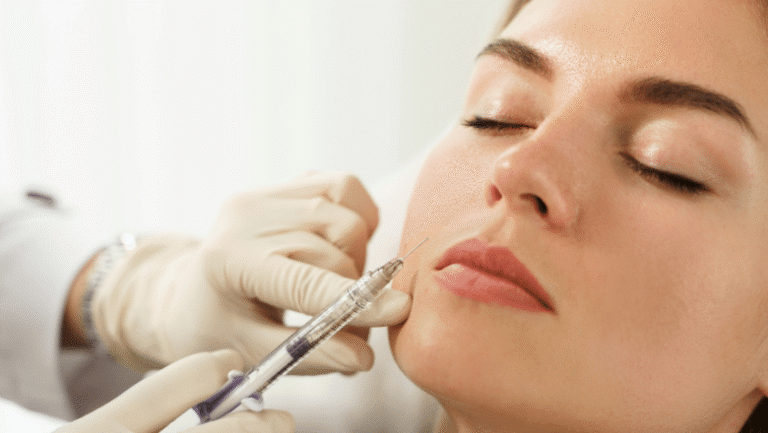
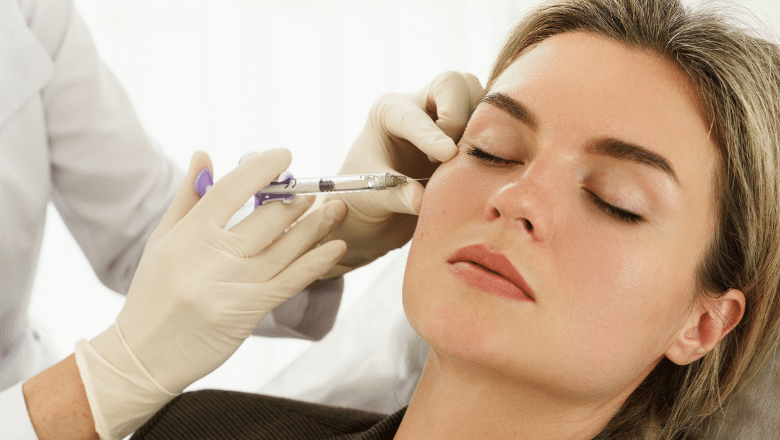
The injection.
- Small volume of hyalase (typically 150-300 units per ml of filler being dissolved) is injected into the area where the filler sits
- Treatment takes 5-15 minutes depending on the volume and number of areas treated
- The enzyme begins working immediately
- Tingling or warmth at the injection site is the most commonly reported sensation
What happens next. The filler softens within hours and progressively dissolves over 24 to 48 hours. The treated area may initially look swollen as the enzyme works, then gradually returns to baseline as the dissolved HA is absorbed.
Follow-up. A review at 2-4 weeks assesses the result and determines whether further dissolution sessions are needed. Some patients — particularly those with substantial accumulated filler — benefit from a second session 2-4 weeks after the first.
How many sessions are needed
For most patients, a single session is sufficient. However, several factors can increase the number of sessions required:
Multiple rounds of accumulated filler over years can create denser, more integrated filler that needs more enzyme to fully dissolve.
Different filler types in the same area — some HA products are more cross-linked (more resistant to breakdown) than others. Resilient products may need higher hyalase doses.
Biofilm formation can shield filler from enzyme action, requiring repeated dissolution sessions sometimes combined with antibiotics.
Unclear filler history — when the patient doesn’t know what was originally placed, treatment may proceed cautiously across multiple sessions to ensure adequate dissolution without over-treating.
Most patients are dissolved within 1-2 sessions. Persistent residual filler beyond that is uncommon.
Does it hurt?
The injection itself is brief and tolerable. The very fine needle used produces minimal discomfort — similar to or less than the original filler treatment. Patients commonly report:
- Brief stinging at injection points
- Tingling or warmth as the enzyme begins working
- Mild discomfort lasting 1-2 hours after treatment
Topical anaesthetic can be applied for particularly anxious patients but isn’t necessary for most. The procedure is significantly less uncomfortable than most people expect.
What to expect afterwards
Immediately: mild swelling and possible small bruising at injection sites. Some redness for a few hours.
First 24 hours: the filler begins visibly softening and reducing. The treated area may look slightly swollen as the enzyme works.
24-48 hours: filler dissolution substantially complete. The treated area gradually returns toward its pre-filler state.
1-2 weeks: any residual swelling resolves. Final result visible at the 2-week mark.
Restrictions:
- Avoid touching or massaging the treated area for 24 hours
- Avoid strenuous exercise for 24 hours
- Avoid heat exposure (saunas, steam) for 24-48 hours
- Mild bruising can be covered with concealer after 24 hours
For more on the broader filler aftercare framework, see our lip filler aftercare guide and injectables aftercare guide.
The “reset and rebuild” approach
For patients who want to restart their filler journey with better technique, the standard approach at Centre for Surgery is:
Stage 1: full dissolution of existing filler with hyalase.
Stage 2: recovery period of 2-4 weeks to allow the tissue to settle and any residual product to fully resolve.
Stage 3: honest reassessment of the patient’s natural anatomy without filler influence. Often patients discover their underlying anatomy needs less correction than they thought.
Stage 4: conservative re-treatment with appropriate volume and technique, if appropriate. Sometimes patients choose to remain filler-free at this point.
Stage 5: long-term maintenance plan with modest volumes at appropriate intervals, with periodic full dissolution every 12-18 months to prevent accumulation.
This approach prevents the cycle of accumulating filler that produces the “done” appearance many patients want to escape.
Risks and considerations
Common (mild and self-limiting):
- Bruising and swelling at injection sites for 3-5 days
- Mild tenderness for 24-48 hours
- Temporary asymmetry as filler dissolves unevenly
Less common:
- Over-dissolution — too much enzyme dissolving more filler (or natural HA) than intended
- Lumpy or uneven dissolution requiring additional treatment
- Mild allergic reaction at the injection site
Rare:
- Significant allergic reaction (anaphylaxis very rare but recognised — pre-treatment patch testing reduces risk)
- Persistent residual filler requiring multiple sessions
- Temporary reduction in natural HA content of treated tissue (regenerates within days to weeks)
A thorough consultation discusses your individual risk profile based on filler history, skin type, and overall health.
What you can’t dissolve
Hyalase is specific to hyaluronic acid. It does not work on:
- Calcium hydroxylapatite (Radiesse) — breaks down naturally over 12-18 months, sometimes faster with targeted dissolution attempts but cannot be quickly removed
- Poly-L-lactic acid (Sculptra) — breaks down over 18-24 months
- PMMA (Bellafill, Aquamid) — essentially permanent
- Silicone-based products — permanent; removal often requires surgical excision
- Fat transfer — the fat that survives integration becomes permanent tissue and is not removable with enzyme
Patients with non-HA filler that they want removed face significantly more limited options. For some, the only practical answer is patience while the product naturally degrades; for others, surgical removal of nodules or affected tissue may be considered. This is why we recommend HA-based products for all elective filler treatment — the reversibility is a fundamental safety feature.
Cost
At Centre for Surgery, filler dissolving treatment is priced per session — typically:
- Single area (e.g., lips): from £250 per session
- Multiple areas: from £350-£450 per session depending on scope
- Emergency vascular reversal: performed without delay; cost handled as part of standard duty of care
For patients dissolving filler placed elsewhere, no consultation fee is charged for the dissolution consultation. Finance options through Chrysalis Finance, including 0% APR, are available.
Common questions
Will dissolving filler make my lips look worse than before treatment?
No — dissolving returns the lips to their natural pre-filler state. Some patients feel their lips look “thin” or “deflated” immediately after dissolving because they’ve been accustomed to filled appearance for months or years. Within 4-8 weeks, the lips look like the patient’s natural lips again. For more, see our guide on does lip filler stretch your lips.
Can dissolving filler damage my natural tissue?
Hyalase breaks down HA — both the filler and any local natural HA in the immediate injection area. The natural HA regenerates within days. There’s no permanent damage to the lip, cheek, or other treated tissue.
How long should I wait before having filler again?
Minimum 2 weeks, ideally 4 weeks. The longer wait allows full tissue assessment and proper planning of conservative re-treatment.
Can hyalase dissolve filler that’s been in place for years?
Yes — hyalase works on HA filler regardless of how long it’s been in place. Older filler may need slightly higher doses but the dissolution still works effectively.
What if I don’t know what filler I had previously?
This is common, particularly when treatment was performed elsewhere. Dissolution can still proceed — hyalase works on all HA brands. If non-HA filler was originally placed, the hyalase won’t dissolve it, which itself confirms the product type.
Will I need any treatment to manage the recovery?
No specific treatment — just standard aftercare (gentle handling, no heat, no exercise for 24 hours). Most patients find the recovery substantially easier than the original filler treatment.
Can I have all my filler dissolved if I want a complete reset?
Yes — patients sometimes opt for full-face dissolution of accumulated filler from multiple areas. This may require 2-3 sessions over 4-8 weeks to achieve complete dissolution, depending on the volume and locations involved.
What if dissolution is needed urgently due to a complication?
Vascular occlusion (filler blocking a blood vessel) requires immediate hyalase reversal — within hours, ideally within 60-90 minutes for best outcome. Centre for Surgery keeps hyalase on-site for emergency use. If you’ve had filler treatment elsewhere and develop concerning symptoms (skin colour changes, severe pain, visual disturbance), seek immediate medical attention — at our clinic, by phone on 0207 993 4849, or via A&E if outside clinic hours.
Is there an alternative to dissolving if I just want a different look?
For minor adjustments, sometimes additional filler placed strategically in adjacent areas can rebalance the result without needing to dissolve. For more substantial changes, dissolution is usually the most reliable path. The honest answer comes from consultation rather than online assessment.
Centre for Surgery · CQC-regulated · GMC specialist-registered surgeons · 95–97 Baker Street, Marylebone, London W1U 6RN · 0207 993 4849 · Book a consultation · Finance from 0% APR