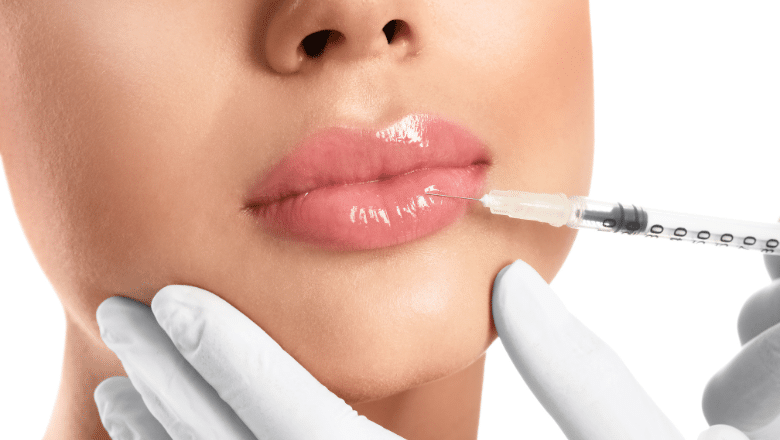
Lip filler aftercare matters more than most patients realise. The 48 hours after treatment determine how much swelling you carry into the following week, how cleanly the filler settles into its intended position, and whether you develop any of the common avoidable complications — lumps, migration, or persistent bruising. The treatment itself takes 15 to 20 minutes; the aftercare runs for two weeks.
This is the comprehensive aftercare guide: what to do, what to avoid, why each restriction exists, when to call the clinic, and what’s normal versus what isn’t. For the broader injectables aftercare framework that applies across all dermal filler work, see our injectables aftercare guide.
What’s normal in the first 48 hours
The most common immediate effects after lip filler are predictable and self-limiting:
Swelling. Lips swell significantly in the first 24 to 48 hours — often noticeably more than the filler volume actually placed. The lips have a rich vascular supply and respond strongly to any injection or trauma. Peak swelling is typically 12 to 24 hours after treatment, then gradually subsides. Most of the swelling has settled by day 3 to 4, with the remaining 10 to 20% taking up to two weeks to fully resolve. For a deeper look at the swelling timeline specifically, see our guide on lip filler swelling and how long healing takes.
Tenderness. The lips feel sore to touch, particularly when smiling, eating, or drinking. This eases over 2 to 3 days.
Mild bruising. Small bruises at injection points are common — the lips are highly vascular, so even excellent technique can occasionally nick a small vessel. Visible bruises typically last 3 to 7 days. For more detail on managing this specifically, see our guide on lip filler bruising.
Small lumps or unevenness. Very common in the first week as the product is still settling. The filler hasn’t yet integrated with the tissue, so palpable irregularities are expected. They typically smooth out as the product distributes and swelling resolves.
Asymmetry. Some asymmetry is normal in the first 2 weeks, often due to uneven swelling rather than uneven filler placement. The right time to assess symmetry is at the 2-week follow-up, not earlier.
None of these are reasons for concern in their normal form.
The first 24 hours: what to do
Ice the lips immediately. Apply a cold compress (ice wrapped in a clean cloth) for 10 minutes at a time, repeated 2 to 3 times in the first day. Never apply ice directly to the lips — wrap it. Icing reduces swelling, eases tenderness, and constricts blood vessels to limit bruising.
Keep your head elevated. Use 2 to 3 pillows to keep your head higher than your heart while sleeping for the first 1 to 2 nights. This reduces overnight fluid accumulation and the morning swelling that comes with it.
Sleep on your back. Side sleeping can press one side of the lips into the pillow, distributing filler unevenly while it’s still soft. Sleep on your back for the first 48 hours to protect the placement.
Stay hydrated. Hyaluronic acid filler binds water — sufficient hydration helps the filler perform at its best and supports tissue healing.
Take paracetamol if needed. Standard over-the-counter painkillers are fine for any discomfort. Avoid ibuprofen and aspirin for the first 48 hours — both increase bleeding risk and can prolong bruising.
Eat soft foods. Smoothies, yogurt, soft pasta, scrambled eggs. Avoid anything requiring vigorous chewing while the lips are sensitive. Wait until any local anaesthetic has fully worn off (2 to 5 hours after treatment) before eating, so you don’t accidentally bite your lip.
Brush gently. Use a soft toothbrush and very light pressure for the first day. Continue normal oral hygiene — clean lips heal best.
The first 48 hours: what to avoid
No alcohol. Alcohol dilates blood vessels, increases bruising, and impairs healing. Avoid for at least 24 hours, preferably 48.
No strenuous exercise. Anything that raises your heart rate significantly — running, weights, hot yoga — pushes blood pressure up and worsens both swelling and bruising. Wait at least 24 to 48 hours.
No heat exposure. Saunas, steam rooms, hot tubs, sunbeds, and sunbathing all increase blood flow to the face and exacerbate swelling. Avoid for 48 to 72 hours.
No lipstick, lip balm, or other lip products. For the first 24 hours, leave the lips clean and untouched. The injection points are tiny openings in the skin barrier and shouldn’t be exposed to product residue. After 24 hours, gentle lip balm is fine; lipstick can be reapplied with care.
No flying. Cabin pressure changes can worsen swelling and bruising. Avoid flying for at least 48 hours after treatment, ideally a full week if possible.
No straws. The suction action when drinking through a straw repeatedly stresses the lip tissue while the filler is still soft, potentially affecting placement. Drink from a glass for the first 48 hours.
No kissing or vigorous lip movement. Avoid kissing, exaggerated facial expressions, and “fish face” puckering while the filler settles. This isn’t about prudishness — it’s about not displacing soft, still-integrating product.
No smoking or vaping. Both restrict blood supply to the lips and impair healing. The repeated pursing action of smoking also stresses the injection sites. The longer you can avoid both, the better — at minimum 24 hours, ideally 5 to 7 days.
No salty or very spicy food. Salt promotes fluid retention and worsens swelling. Spicy food irritates the sensitised injection sites. Skip both for 48 hours.
No picking, scratching, or aggressive massage. Don’t touch the injection points more than necessary. If your injector has asked you to massage specific lumps, follow their exact instructions — uninstructed massage can break down filler or push it out of position.
No other facial treatments. Avoid facials, laser treatment, microneedling, or any other procedure on the lower face for at least 2 weeks.
Week 1: continuing to settle
By the end of day 3, the worst of the swelling should have settled. Days 4 to 7 are typically when:
- Any residual bruising fades through the standard colour progression (purple → green → yellow)
- Tenderness resolves
- Small lumps and unevenness usually smooth out
- The lips begin to look more like their final result
Continue to avoid extreme heat, very strenuous exercise, and other facial treatments through week 1. Lipstick and lip balm are fine at this point. You can return to normal eating, gentle exercise, and most activities by day 3 to 4.
Week 2: the assessment point
At the 2-week mark, the filler has fully integrated and any residual swelling has resolved. This is the right time to assess the result honestly:
- Is the volume what you wanted?
- Is the shape symmetric?
- Are there any remaining lumps that don’t smooth with gentle palpation?
If anything isn’t right at 2 weeks, this is when to book a follow-up. Most experienced injectors include a 2-week review as standard, with the option to add a small top-up or address any residual issues. Patients who panic about asymmetry or appearance at day 3 or 5 are usually reassured at day 14.
When to call the clinic urgently
Most lip filler complications are minor and self-limiting. A small number require immediate medical attention:
Severe, increasing pain beyond what’s expected from a routine procedure. The lips should be sore, not severely painful. Worsening pain over 24 to 48 hours is a warning sign.
Skin discolouration outside normal bruising patterns. White, mottled, dusky, or blue discolouration of the skin around the lips can indicate vascular occlusion — filler blocking a blood vessel. This is rare but a medical emergency requiring immediate treatment with hyalase. Don’t wait — call the clinic at the first sign of unusual skin colour.
Severe or increasing swelling after the initial 48 hours, particularly if accompanied by redness spreading beyond the lip area or systemic symptoms (fever, malaise). Could indicate allergic reaction or infection.
Hard, painful lumps that develop after the first week, particularly if accompanied by redness or warmth. May indicate infection or inflammatory reaction requiring intervention.
Cold sores. Lip filler injection can trigger cold sore outbreaks in patients prone to them. If you have a history of cold sores, your injector may have prescribed antiviral medication prophylactically. New cold sores after treatment respond well to antivirals — contact the clinic for assessment.
Vision changes — extremely rare but a serious emergency. Filler entering a facial artery can travel back toward the eye via the ophthalmic artery network. Any visual symptoms after filler treatment require immediate medical attention.
At Centre for Surgery, hyalase is kept on-site for immediate reversal if needed. Any urgent concerns — call 0207 993 4849 and ask for an emergency appointment.
What if I don’t like the result?
Hyaluronic acid filler is reversible. Hyalase (hyaluronidase) is an enzyme that breaks down HA, and a small injection of hyalase can dissolve filler within 24 to 48 hours. The lips return to their pre-treatment state, and re-treatment is possible about 2 weeks later if you want to try again with different placement or volume. For the full guide on the dissolving process, see dissolving filler in the face and lips.
This is one of the main reasons we use HA filler — it gives patients an exit option if the result isn’t what they hoped for. Permanent fillers don’t offer this option and are not recommended.
For more on what can go wrong and how problems are managed, see our guide on lip filler migration.
How long the result lasts
Lip filler typically lasts 6 to 12 months on the first treatment, sometimes longer with subsequent maintenance sessions as your tissue adapts. Several factors affect duration:
Metabolism — patients with faster metabolic rates break down HA filler faster. Younger patients and those who exercise vigorously often see shorter duration.
Smoking — significantly reduces filler longevity through vascular effects.
Sun exposure — UV damage accelerates filler breakdown. Daily SPF on the lips (in a balm or stick form) extends results.
Repeated treatment over time — many patients find duration increases on subsequent treatments as their tissue adapts.
For longer-lasting lip enhancement, surgical alternatives like lip lift surgery provide permanent results without the need for ongoing maintenance — see how long does a lip lift last and bullhorn vs corner lip lift for the surgical options. For the broader comparison between the surgical and injectable options, see our guide on lip lift surgery vs lip flip vs lip filler.
Strategies to maximise filler longevity
- Daily broad-spectrum SPF on the lips (lip balm with SPF 30+)
- Stop smoking — by far the largest modifiable factor
- Avoid excessive lip pursing or fish-face expressions (mechanical stress accelerates breakdown)
- Maintain good hydration
- Avoid skincare products that irritate the lip area
- Limit alcohol
- Eat a healthy diet supporting overall skin quality
Preparing for your next treatment
For maintenance or top-up treatment, prepare in the days before:
- Avoid blood-thinning medications and supplements (aspirin, ibuprofen, vitamin E, fish oil, St John’s Wort, ginkgo biloba) for a week before — only if your doctor has confirmed it’s safe to stop these
- Avoid alcohol for 24 to 48 hours before
- Consider arnica tablets in the days before (some patients find this reduces bruising)
- Eat fresh pineapple (contains bromelain, an enzyme reputed to reduce bruising)
- Limit caffeine, which can be mildly dehydrating
- Don’t smoke in the days before treatment
- Arrive with clean lips, no lipstick
If you take any prescribed blood-thinning medication (warfarin, DOACs, antiplatelets), do not stop them without consulting your prescriber. Treatment can still proceed, but expect slightly more bruising.
Common questions
How long after treatment can I wear lipstick?
24 hours. After that, apply gently — avoid rubbing or pressing the lips while the filler is still settling. The injection points are micro-openings in the lip skin that should be allowed to seal before exposing them to product.
When can I drink hot drinks?
Wait until the local anaesthetic has fully worn off (2 to 5 hours after treatment) before consuming hot food or drink. Numbed lips can’t sense scalding heat — patients have burned themselves on hot coffee without realising. Once sensation has returned, hot drinks are fine.
Can I do gentle exercise the day after?
Light walking, gentle stretching, and yoga are fine 24 hours after treatment. Avoid anything that significantly raises your heart rate — heavy weights, running, intense cardio — for 48 hours.
How long should I sleep on my back?
At least 48 hours, ideally a week. Side sleeping puts pressure on the lips and can affect filler distribution while it’s still soft. After 7 to 10 days, the filler has integrated and side sleeping won’t displace it.
Will lip filler stretch my lips permanently?
With moderate volumes and appropriate intervals between treatments, no. Repeated overfilling over years can stretch lip tissue, contributing to the “deflated balloon” appearance some patients develop when they later stop treatment. Conservative volumes and regular dissolving of any unwanted accumulated filler prevent this. For more on this specifically, see our guide on does lip filler stretch your lips.
Can I get cold sores from lip filler?
The injection trauma can trigger cold sores in patients who carry the herpes simplex virus and have had cold sores before. Tell your injector if you have a cold sore history — prophylactic antivirals can be prescribed for 2 to 3 days before and after treatment.
Is lip filler safe during pregnancy or breastfeeding?
No — we don’t perform elective injectable treatment during pregnancy or breastfeeding. The MHRA hasn’t approved lip filler use in these populations. Treatment can resume after.
How much filler do I need?
Most patients need 0.5 to 1ml for an initial treatment, with a small top-up at 2 weeks if needed. Up to 2ml for more substantial enhancement. The right volume depends on your starting anatomy, goals, and what looks balanced for your face — not what you’ve seen on social media.
When should I book my next appointment?
The 2-week review is essential and should be booked at the time of your initial treatment. After that, plan maintenance every 6 to 12 months based on how your particular lips respond. Don’t wait until the filler has completely worn off — small top-ups before that point usually produce more consistent long-term results than letting it fade fully each time.
For an overview of all the lip filler topics — including managing complications, current trends, and surgical alternatives — see our broader guides on current trends in lip filler and lifting the corners of the mouth with filler.
Centre for Surgery · CQC-regulated · GMC specialist-registered surgeons · 95–97 Baker Street, Marylebone, London W1U 6RN · 0207 993 4849 · Book a consultation · Finance from 0% APR