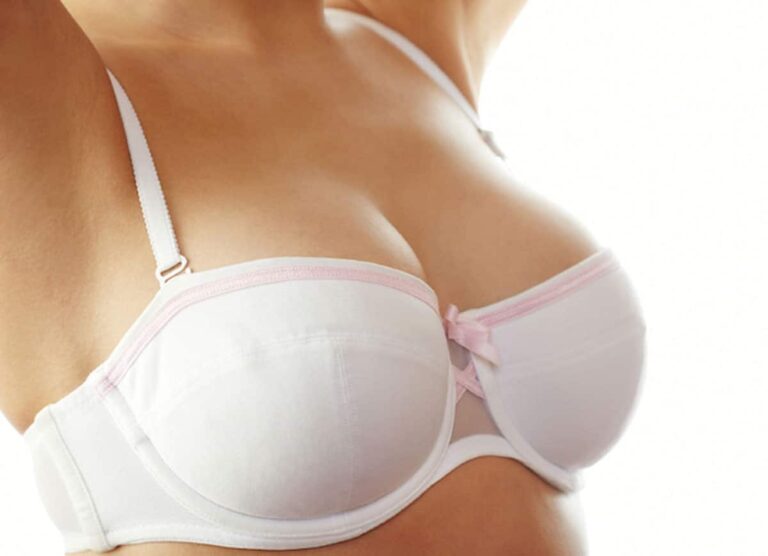
Breast augmentation is one of the most commonly performed cosmetic surgery procedures at the Centre for Surgery, and for a good reason – the outcomes are phenomenal with pleased patients. Whilst there have been a few recent developments in new techniques for breast augmentation, one of the most exciting developments is a new technique known as subfascial breast augmentation. Subfascial breast augmentation is a term used to refer to the position of the breast implants relative to the chest wall muscle.
Traditionally, the most common methods for breast implant placement have been either on top of the muscle, also known as the sub-glandular approach or beneath the muscle, often referred to as the “dual plane approach”. Centre for Surgery is fortunate to have our own fully trained plastic surgeons who use the subfascial breast implant insertion technique, which places the implants above the muscle but beneath the fascia that surrounds the chest wall muscles.
RELATED: A Guide to Changing Implant Placement from Under the Muscle to Subfascial
What is subfascial breast augmentation?
Subfascial breast augmentation involves the placement of implants beneath the fascia of the pectoral muscle. The fascia itself has a tough, membranous consistency and covers the pectoralis muscle, helping give the chest muscle its characteristic appearance. The subfascial approach for breast augmentation actually involves placing the implant between the fascia and the underlying muscle. The fascia’s durability helps maintain breast implants in the correct position and provides additional protection against the risk of malposition.
RELATED: Breast implant incisions and positioning
Surgeons often find that placing the implant beneath the fascia, rather than in the subglandular position, provides a more natural breast appearance and helps reduce many of the risks associated with implants placed beneath or on top of the muscle.
What are the benefits of subfascial breast augmentation?
There are several key benefits to performing subfascial breast augmentation, which has led to its increasing popularity amongst plastic surgeons over the last few years. The toughness and durability of the fascia help maintain the implant’s position, minimising the risk of it moving out of position. Many patients and surgeons alike find that the appearance is more natural than that of implants placed on or beneath the chest wall muscle.
An additional benefit of subfascial implant placement is that patients do not have to wait for the implants to drop or migrate into position after surgery. Implants placed beneath or on top of the muscle require time to drop to their intended position naturally.
RELATED: Commonly asked questions about breast augmentation
Subfascial breast augmentation also carries significantly less post-operative discomfort than dual-plane breast augmentation, as in the former there is no need to cut the chest wall muscle from the underlying ribs to place the implant beneath the muscle. Subfascial breast augmentation preserves the muscle attachments of the chest wall, which results in markedly reduced pain and discomfort and, therefore, a much quicker post-operative recovery.
Are there any alternatives to subfascial breast augmentation?
Many breast augmentation procedures utilise the subfascial implant placement due to all the benefits described above. Having said that, not all patients are suitable candidates for subfascial breast augmentation. In these cases, your surgeon would either place the breast implant on top of the muscle, known as the subglandular approach, or beneath the muscle, also known as the dual-plane approach.
RELATED: What kind of breast implant is right for you?
Placing implants on top of the muscle is known as a subglandular breast augmentation, and the implants are inserted above the pectoralis muscle. Subglandular breast augmentation is a good option for patients who desire a more lifted appearance to their breasts in addition to increased volume. Sub-glandular implant placement results in no need to wait until your implants drop into their desired position, and many patients remark that the appearance of their breasts is very natural after this type of breast augmentation.
Breast implants placed under the muscle are the most common method of breast implant placement used today and are also known as the dual plane or submuscular approach. Dual-plane breast augmentation is often a perfect choice for women who either have very little breast tissue or have a chest that is wider compared with other women, and is most commonly used for women who are combining a breast augmentation with a breast lift procedure.
When you book your complimentary consultation with a specialist plastic surgeon, we will ensure that you are informed about all the methods used in our breast augmentation procedures. Your surgeon will then recommend the method that will yield the most natural-looking result, having thoroughly assessed your individual needs.
[contact-form-7 id=”256″ title=”Treatments form”]