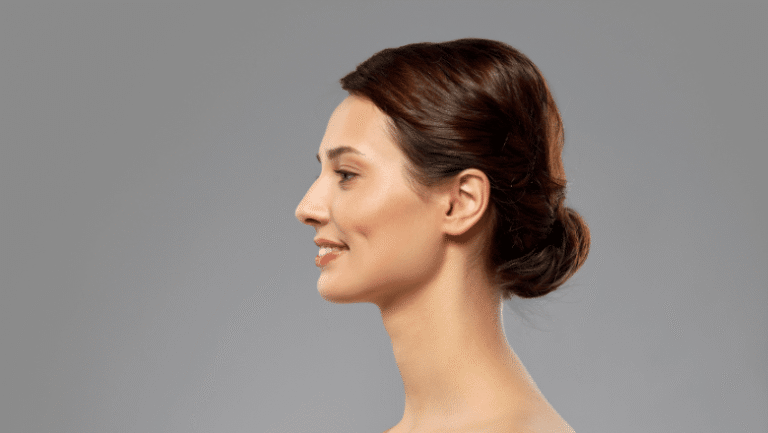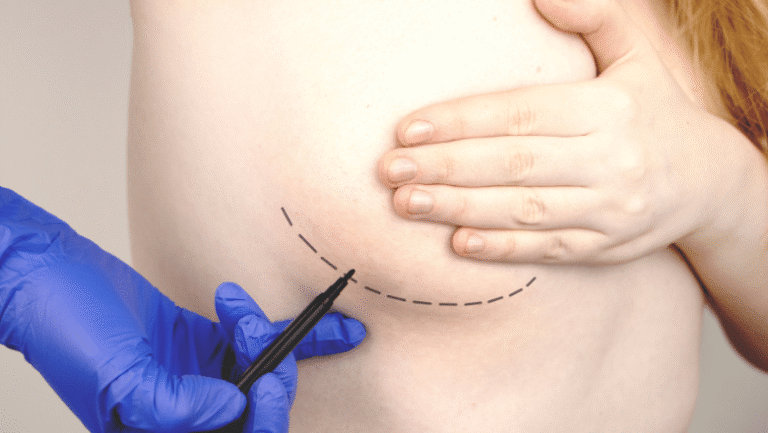

Morpheus8 and FaceTite are the two most powerful non-surgical skin tightening treatments offered at Centre for Surgery. Both use radiofrequency (RF) energy to remodel collagen and tighten skin. Both are minimally invasive alternatives to facelift surgery. But they work at different depths, through different delivery mechanisms, and produce results that are stronger in different ways. For patients researching which to choose, the answer depends on the severity of your skin laxity, your downtime tolerance, and whether you’d benefit from combining both.
This guide compares Morpheus8 and FaceTite directly across mechanism, results, recovery and cost, with honest guidance on when each is appropriate at our CQC-regulated Baker Street private hospital.
The fundamental difference: needles vs probe
Both treatments deliver RF energy, but they reach the target tissue through completely different routes.
How Morpheus8 works
Morpheus8 is a fractional RF microneedling treatment. Twenty-four insulated microneedles penetrate the skin from the surface to depths of 1–4mm. RF energy is delivered through the needle tips into the dermis at the chosen depth. The needles withdraw, the device repositions, and the process repeats across the treatment area.
The mechanism is essentially top-down: energy is delivered from above, reaching the dermis through the surface skin. Depth is controlled by needle length, energy density by the RF settings.
How FaceTite works
FaceTite is a bipolar RF tightening procedure that delivers energy through a thin probe inserted under the skin. A small entry point is made (typically near the ear or under the chin), and the probe is passed through the subcutaneous tissue. Bipolar RF energy passes between the probe tip and an external electrode on the skin surface, heating the tissue between them — the deep dermis and the subdermal connective tissue layer.
The mechanism is essentially bottom-up: energy is delivered from underneath the skin, heating the subdermal layer where structural tightening lives. Temperature is monitored continuously to ensure consistent therapeutic heating without exceeding safety thresholds.
Side-by-side comparison
| Factor | Morpheus8 | FaceTite |
|---|---|---|
| RF delivery | Through microneedles from surface | Through probe inserted under skin |
| Invasiveness | Minimally invasive (needles) | Minimally invasive (small entry point) |
| Anaesthesia | Topical, sometimes local injection | Local anaesthesia (tumescent infiltration) |
| Treatment depth | 1–4mm (dermis) | Subdermal layer (deeper) |
| Best for | Skin quality + mild-moderate laxity | Moderate skin laxity + jowling |
| Surface effect | Surface texture, scarring, pigmentation | None directly (deep tightening only) |
| Sessions needed | 3 sessions, 4–6 weeks apart | Usually one session |
| Downtime | 1–5 days redness, mild swelling | 1–2 weeks swelling and bruising |
| Time to visible results | 2–6 weeks | 4–12 weeks |
| Peak result | 3–6 months | 6 months |
| Duration of results | 12–18 months | 2–5 years |
| Cost (face, course of 3) | £2,200 | From £3,000 (single session) |
What Morpheus8 does best
Morpheus8 is the right primary choice when:
- Skin quality concerns dominate — fine lines, surface texture, pigmentation, enlarged pores
- Acne scarring needs addressing — fractional RF microneedling remodels atrophic scars effectively
- Mild-to-moderate laxity — early jowling, cheek sagging, neck laxity
- Body areas — Morpheus8 works across abdomen, thighs, arms; FaceTite is face/neck-focused
- Patients in their 30s–40s with early ageing
- Course-based commitment — gradual collagen remodelling over three sessions and several months
- Lower entry cost — course of three Morpheus8 sessions priced below a single FaceTite
For acne scarring specifically, Morpheus8 is one of the strongest non-laser options available. See our guide on does Morpheus8 help treat acne scars?
What FaceTite does best
FaceTite is the right primary choice when:
- Moderate skin laxity — pronounced jowling, neck banding, fuller cheeks sagging
- Patients wanting stronger tightening than Morpheus8 alone
- Single-session intervention preferred — FaceTite is typically one treatment rather than a course
- Longer-lasting results — 2–5 years vs 12–18 months for Morpheus8
- Patients close to needing surgery but wanting to delay
- Combination with liposuction — FaceTite is often performed alongside chin or jowl liposuction
- Patients in their 40s–60s with moderate but not severe laxity
FaceTite is the bridge treatment between Morpheus8 (mild-to-moderate laxity, course-based) and surgical facelift (significant laxity, single intervention). It delivers results closer to a small surgical lift than any other non-surgical treatment available.
The combined approach: Morpheus8 + FaceTite
For many patients, the strongest non-surgical result comes from combining both treatments — and this is one of our most-requested protocols at Centre for Surgery.
The clinical logic is straightforward: the two treatments work at different depths and address different concerns.
- FaceTite delivers deep subdermal tightening — the structural component
- Morpheus8 delivers superficial-to-mid-dermal renewal — the skin quality component
Done together, they address both the underlying tissue laxity and the surface quality of the skin in one comprehensive plan. Patients with both moderate laxity AND surface concerns (texture, mild scarring, pigmentation) get more from the combination than from either alone.
The combined protocol typically runs:
- FaceTite session — single procedure with tumescent local anaesthesia, performed at our Baker Street clinic
- Morpheus8 course — three sessions 4–6 weeks apart, starting 6–8 weeks after the FaceTite (once swelling has settled)
- Annual maintenance — single Morpheus8 session each year to extend the FaceTite result
The combined cost is bundled at consultation. Finance from 0% APR through Chrysalis Finance is available to spread the cost.
Recovery comparison
The biggest practical difference between the two is recovery.
Morpheus8 recovery
- Day of treatment — significant redness, mild swelling, characteristic grid pattern from the handpiece
- Day 1–2 — redness fading; mineral makeup can be applied
- Days 3–5 — most patients comfortable resuming work and normal activity
- Week 2 — full surface healing
FaceTite recovery
- Day of treatment — bandages and chin strap; significant initial swelling
- Days 1–3 — pronounced swelling and bruising; rest at home
- Week 1 — substantial swelling persists; not socially presentable yet
- Week 2 — swelling reducing; most patients return to work
- Weeks 3–6 — residual swelling continues to settle; final result emerges over months
FaceTite involves more downtime but a single procedure rather than a course. The total social downtime over the course of treatment is similar between the two when you account for Morpheus8’s repeat sessions.
How does each compare to surgery?
Both Morpheus8 and FaceTite are non-surgical alternatives to facelift surgery, but they sit at different points on the spectrum:
- Surgical facelift — most powerful, longest-lasting results; addresses significant laxity; requires general anaesthesia and full recovery
- Mini facelift — lighter surgical option for moderate jowling; local anaesthesia possible
- FaceTite — closest non-surgical to mini facelift; longer recovery than Morpheus8 but longer-lasting results
- Morpheus8 — least invasive of the powerful options; shortest downtime per session
- Light non-surgical (Fotona 4D, ultherapy) — surface or very gentle tightening for mild concerns
The decision tree is essentially: how much laxity do you have, how much downtime can you accept, and how invasive are you willing to go? For severe laxity, surgery delivers more. For moderate laxity, FaceTite (alone or with Morpheus8) is the right non-surgical answer. For mild laxity with skin quality concerns, Morpheus8 alone is sufficient.
Cost considerations
Both treatments are significant investments. The pricing structure differs:
| Treatment | Typical cost | Sessions | Maintenance |
|---|---|---|---|
| Morpheus8 (face, course of 3) | £2,200 | 3 sessions over 3 months | Annual maintenance £733 |
| FaceTite (face/neck) | From £3,000 | Usually 1 session | Maintenance not typically needed for 2–5 years |
| Combined Morpheus8 + FaceTite | Bundled at consultation | 1 FaceTite + 3 Morpheus8 | Annual Morpheus8 maintenance |
For full pricing detail, see our Morpheus8 cost guide and FaceTite cost guide.
Which one is right for your specific situation
Choose Morpheus8 if you have
- Mild to moderate skin laxity with focus on surface concerns
- Acne scarring as a primary or secondary concern
- Body areas you want to address alongside the face
- Darker skin (Fitzpatrick IV–VI) where laser tightening carries higher risk
- Lower initial budget
- Preference for course-based gradual treatment
- Lower tolerance for visible downtime per session
Choose FaceTite if you have
- Moderate skin laxity, particularly along the jawline and neck
- Pronounced jowling or beginning neck banding
- Preference for a single intervention over multiple sessions
- Tolerance for 1–2 weeks of recovery
- Desire for longer-lasting results (2–5 years)
- Patient wanting to delay or supplement surgery
- Combined fat reduction needs (FaceTite alongside chin lipo)
Choose both Morpheus8 + FaceTite if you have
- Moderate skin laxity AND surface concerns (texture, scarring, pigmentation)
- Goal of comprehensive non-surgical rejuvenation
- Budget and time for combined approach
- Patient close to surgery wanting maximum non-surgical effect first
Combining with other treatments
Both Morpheus8 and FaceTite combine well with other CFS treatments:
- Either + anti-wrinkle injections — tightening for static lines, toxin for dynamic lines
- Either + dermal fillers — collagen renewal plus volumetric correction
- FaceTite + chin liposuction — common combination for jawline definition
- Morpheus8 + Profhilo — collagen plus deep hydration
- Either + laser resurfacing — tightening plus surface remodelling
What we don’t recommend
- FaceTite for very mild laxity — over-treatment. Mild ageing responds well to Morpheus8 alone or to Fotona 4D.
- Morpheus8 alone for significant jowling — under-treatment. Moderate-to-significant laxity needs FaceTite or surgery.
- Either treatment in the same session — combined protocols always space the treatments 6–8 weeks apart for safety and best results.
- Skipping the Morpheus8 maintenance after FaceTite — Morpheus8 maintenance extends FaceTite results meaningfully.
- Promising facelift-equivalent results — neither treatment, even combined, fully replicates a surgical lift in patients with significant laxity.
Frequently asked questions
Is FaceTite more painful than Morpheus8?
Both are comfortable with appropriate anaesthesia. FaceTite is performed under tumescent local anaesthesia (numb throughout). Morpheus8 uses topical numbing cream, sometimes with local injection or Entonox for deeper settings.
Can I have Morpheus8 first then FaceTite later?
Yes — many patients start with Morpheus8 and progress to FaceTite if more tightening is needed. Wait at least 8 weeks between any Morpheus8 session and a subsequent FaceTite.
Do I need general anaesthesia for FaceTite?
No — FaceTite is performed under local anaesthesia at our outpatient clinic. You’re awake throughout; sedation can be added if preferred.
How long does FaceTite take?
The actual procedure takes 1–2 hours depending on areas treated. Total appointment time including preparation and recovery is approximately 3 hours.
Will I have scars from FaceTite?
The entry point for the probe is small — typically 2–3mm — and heals to a barely visible mark, usually hidden in the hairline or under the chin.
How many sessions of FaceTite do I need?
Usually one. Some patients benefit from a second session 12+ months later to enhance results, but most see their full result from a single session.
How long do FaceTite results last?
2–5 years on average, with significant individual variation. Patients who maintain skincare and sun protection see longer-lasting results. Morpheus8 maintenance sessions can extend FaceTite results further.
Can I have Morpheus8 or FaceTite if I’ve had a facelift previously?
Yes — both can be used to extend or enhance the results of a previous facelift. Wait at least 6 months after facelift surgery before either non-surgical treatment.
Why choose Centre for Surgery
Our Baker Street private hospital offers both Morpheus8 and FaceTite under one clinical team — meaning your consultation can establish exactly which approach (or combination) is right for your specific concerns. The full surgical pathway is available if surgery would deliver more. Both treatments use genuine InMode equipment delivered by GMC-registered medical practitioners.
For more, see our Morpheus8 service page, FaceTite service page, and the relevant cost guides.
Centre for Surgery · CQC-regulated · GMC specialist-registered surgeons · 95–97 Baker Street, Marylebone, London W1U 6RN · 0207 993 4849 · Book a consultation · Finance from 0% APR