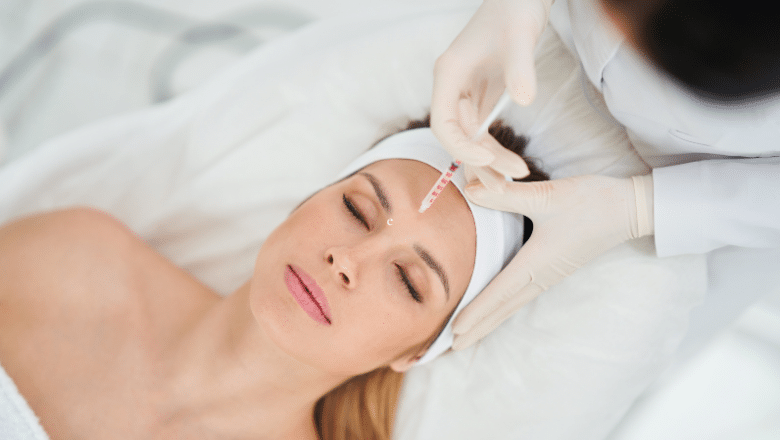
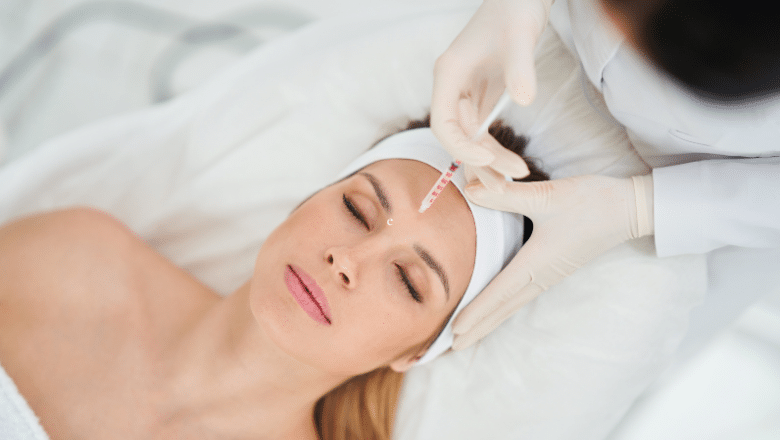
Anti-wrinkle injections are the most commonly performed cosmetic treatment in the UK. They work by using small amounts of botulinum toxin to relax specific facial muscles, softening the dynamic lines they create when contracted. The treatment is well-evidenced, predictable, and — in the hands of an experienced injector — has a low risk profile.
This is a comprehensive answer to the questions patients most often ask in consultations: what the treatment actually does, who it suits, what to expect, how long it lasts, what it costs, what to avoid afterwards, and where its honest limits are.
How do anti-wrinkle injections work?
Botulinum toxin temporarily blocks the chemical signal (acetylcholine) that tells a muscle to contract. When the muscle can’t contract, the skin overlying it isn’t repeatedly folded and the dynamic line it was creating softens or disappears. Over time, with consistent treatment, this can prevent dynamic lines from becoming permanent static wrinkles.
The toxin is delivered in tiny quantities through a fine needle directly into the specific target muscle. It doesn’t travel through the body and has no general systemic effect at cosmetic doses. The effect is localised, temporary, and reverses as the body metabolises the product over three to four months.
For a fuller explanation of how lines develop and which treatments suit which stage, see our guide to fine lines versus wrinkles.
Which areas can be treated?
Anti-wrinkle injections work best on dynamic lines in the upper face, where movement-driven wrinkles dominate. The most commonly treated areas are:
Forehead lines — the horizontal lines caused by the frontalis muscle when raising the brows.
Glabellar lines (“the elevens”) — the vertical lines between the brows caused by the corrugator and procerus muscles. See our dedicated guide on frown lines and forehead wrinkles.
Crow’s feet — the lines radiating from the outer corner of the eye, caused by the orbicularis oculi. Our guide on crow’s feet without injections covers the alternatives, but injectables remain the most direct treatment.
Bunny lines — the diagonal lines on the sides of the nose from the nasalis muscle. Our bunny line treatment guide covers this in detail.
Non-wrinkle uses include jaw slimming (relaxing an overactive masseter muscle), softening a gummy smile, lifting the brow by one to two millimetres (covered in our non-surgical brow lift article), treating platysmal banding in the neck, and reducing chin dimpling.
Medical uses include hyperhidrosis (excessive sweating), chronic migraine, bruxism (jaw clenching and grinding), and Bell’s palsy asymmetry.
How quickly do anti-wrinkle injections work?
The initial effect appears at days three to five — you’ll notice the treated muscle becoming less mobile when you try to frown or raise your brows. The full result is visible at around 14 days.
Patients often book follow-ups at day two or three worried that the treatment hasn’t worked. Almost always, it just hasn’t finished settling. Wait the full two weeks before assessing or requesting any adjustment.
How long do the results last?
Most patients see meaningful effect for three to four months. Some experience longer duration — occasionally up to five months — depending on the dose used, how strong the target muscles are, and individual metabolism.
There is some evidence that with consistent treatment over time, the treated muscles soften and patients may need slightly less product or longer intervals between sessions to maintain the result. This effect is real but modest, and you shouldn’t expect dramatic changes in dosing requirements after a few sessions.
Should I let my anti-wrinkle injections wear off completely before the next session?
For most patients aiming to maintain a steady, refreshed appearance, no — the most effective approach is to schedule the next treatment just as the effect begins to wane, typically around the three-month mark. There are three reasons for this:
Consistency of result. Maintenance treatments build on the existing baseline rather than starting from scratch each time. An experienced injector can fine-tune doses based on what worked in the previous session.
Muscle weakening over time. Consistent treatment at regular intervals leads to a gradual softening of the treated muscles. Patients who maintain a steady schedule generally need slightly less product over time. Those who let the effect wear off completely between sessions don’t benefit from this cumulative effect.
Avoiding secondary non-response. There is evidence that repeated full lapses in treatment may, in some patients, trigger the production of antibodies against the toxin, reducing future effectiveness. Consistency reduces this risk.
That said, letting the effect wear off completely is a legitimate choice for some patients. Common reasons include:
- Reassessing the result — patients who weren’t fully happy with how they looked after the previous session and want to return to baseline before deciding what to do next.
- Trying a different approach — wanting to focus treatment on a different area in the next session.
- A break from treatment — for personal reasons, holidays, or pregnancy planning.
Neither approach is medically wrong. The decision depends on what you’re trying to achieve.
How often will I need treatment?
Every three to four months on average. Patients on a consistent schedule sometimes find the interval can stretch slightly over time. Patients with very strong facial muscles, particularly male patients, may need more frequent treatment to maintain the same effect.
Will my face look “frozen”?
Not when treated by an experienced injector using a conservative dose. The frozen look comes from over-treatment — using too much product or treating too many muscles at once. Good treatment preserves natural expression while softening the dynamic lines.
The first session is typically conservative for this reason: it’s far easier to add a small top-up at two weeks if more relaxation is needed than to reverse an over-treated result, which has to be waited out.
Does the treatment hurt?
Most patients describe it as a brief pinprick at each injection point. No numbing cream is needed for upper-face treatment because the needles used are very fine and the injections are quick. Mild bumps appear at each site and settle within 15 minutes.
Mild bruising is possible — particularly for crow’s feet, where small superficial vessels can be nicked. If a bruise occurs, it usually resolves within a few days. Avoiding alcohol, anti-inflammatories like ibuprofen, and fish oil supplements for 24 hours before treatment reduces bruising risk.
What should I avoid after treatment?
The first 24 hours matter most. Avoid:
- Lying flat for four hours after treatment
- Strenuous exercise (gym, running, cycling)
- Facials, facial massage, or pressure on the treated area
- Saunas, steam rooms, and very hot environments
- Touching, rubbing, or scratching the area
These restrictions exist to prevent the product from migrating to nearby muscles before it has bound to its target. For a full guide, see injectables aftercare and common mistakes to avoid.
How much does it cost?
Pricing depends on how many areas are treated and the number of units required. As a guide, treatment of one area (forehead, glabella, or crow’s feet) typically starts from around £200. Treating all three together usually works out more cost-effective than booking each area separately, and produces a more balanced result.
Finance options through Chrysalis Finance, including 0% APR, are available to spread the cost across a treatment plan.
Who is a good candidate?
Anti-wrinkle injections suit:
- Patients with dynamic upper-face lines that disappear when the muscle relaxes
- Patients with early static lines that haven’t yet fully etched into the skin
- Patients who want a preventative approach to lines that are starting to set
- Patients seeking specific non-wrinkle uses (jaw slimming, brow lift, hyperhidrosis, bruxism)
The treatment is less effective for:
- Deep static lines that are visible even with the muscle fully relaxed — these often need additional dermal filler or energy-based skin treatments
- Lines driven primarily by volume loss rather than muscle activity (such as marionette lines or nasolabial folds)
- Significant skin laxity or hooding — these need surgical solutions like brow lift or blepharoplasty
A consultation establishes which combination of treatments matches your actual concerns.
Who should not have anti-wrinkle injections?
The contraindications are:
- Pregnancy and breastfeeding
- Known allergy to botulinum toxin or any of the formulation excipients
- Active infection at the planned injection sites
- Neuromuscular conditions affecting facial muscles, including myasthenia gravis, Lambert-Eaton syndrome, and motor neuron disease
- Patients on certain medications that interact with neuromuscular transmission — these include aminoglycoside antibiotics and some muscle relaxants
- Patients under 18 — Centre for Surgery does not treat cosmetic anti-wrinkle requests in this age group
For more on the age question, see our guide on how young is too young for anti-wrinkle injections.
What are the risks and side effects?
The most common side effects are mild and short-lived: small bruising or bumps at injection sites, mild headache for 24 hours, and occasionally a sensation of heaviness in the forehead during the first week as the muscle settles into its relaxed state.
The most concerning rare complication is product migration to nearby muscles — particularly the levator palpebrae superioris (the muscle that lifts the eyelid), which can cause temporary eyelid droop (ptosis) lasting several weeks. This is rare with careful technique and good post-treatment care. If it occurs, prescription eyedrops can help in some cases, but the underlying issue resolves only when the toxin wears off.
Asymmetry is occasionally noticed at the two-week mark — one side has responded more than the other. This is straightforward to address with a small top-up.
Allergic reactions to botulinum toxin formulations are extremely rare but have been reported. Any unusual symptoms following treatment — significant swelling, breathing difficulty, generalised rash — should prompt immediate medical attention.
Can I combine anti-wrinkle injections with other treatments?
Yes — and the most balanced results often come from combination treatment. Common combinations include:
With dermal filler. Where deep static lines exist alongside dynamic lines (most commonly the glabella), a small amount of filler placed within the static line itself completes what muscle relaxation alone can’t smooth. Dermal fillers also address volume loss in the cheeks, temples, and tear troughs that anti-wrinkle injections can’t.
With energy-based skin treatments. Fotona 4D and Morpheus8 address skin quality, texture, and pigmentation — the surface-level changes that injectables don’t influence. Combining muscle relaxation with energy-based treatment produces a more complete result than either alone.
With biostimulators. Profhilo and polynucleotide treatments improve dermal quality from within, complementing the muscle work done by anti-wrinkle injections.
With surgery. Anti-wrinkle injections are commonly used as maintenance after surgical procedures like brow lift or facelift to maintain the result.
How is the consultation structured?
At Centre for Surgery, a typical first consultation includes:
- A discussion of what’s bothering you and what you want to achieve
- Assessment of your facial movement, muscle activity, and skin quality
- Photographs taken in standard lighting for the medical record
- A recommendation of the right approach — which may or may not include injections
- An honest discussion of what the result will and won’t deliver
We don’t push treatment on patients who don’t need it. If your concerns would be better addressed by skincare, surgery, or non-treatment, we say so. The aim is the lightest intervention that genuinely helps.
For complex cases or where the question is whether surgery would be more appropriate, you may be seen by one of our specialist plastic surgeons including Dr Spyridon Vlachos.
How do I book?
Call 0207 993 4849 or contact us through the form on our website. We’ll arrange a consultation at our Baker Street clinic. Many patients have their first treatment the same day if they choose to proceed.
RELATED: Anti-Wrinkle Injections vs Dermal Fillers | Injectables Aftercare
Centre for Surgery · CQC-regulated · GMC specialist-registered surgeons · 95–97 Baker Street, Marylebone, London W1U 6RN · 0207 993 4849 · Book a consultation · Finance from 0% APR
Medically reviewed by Dr Spyridon Vlachos, GMC 7522950.