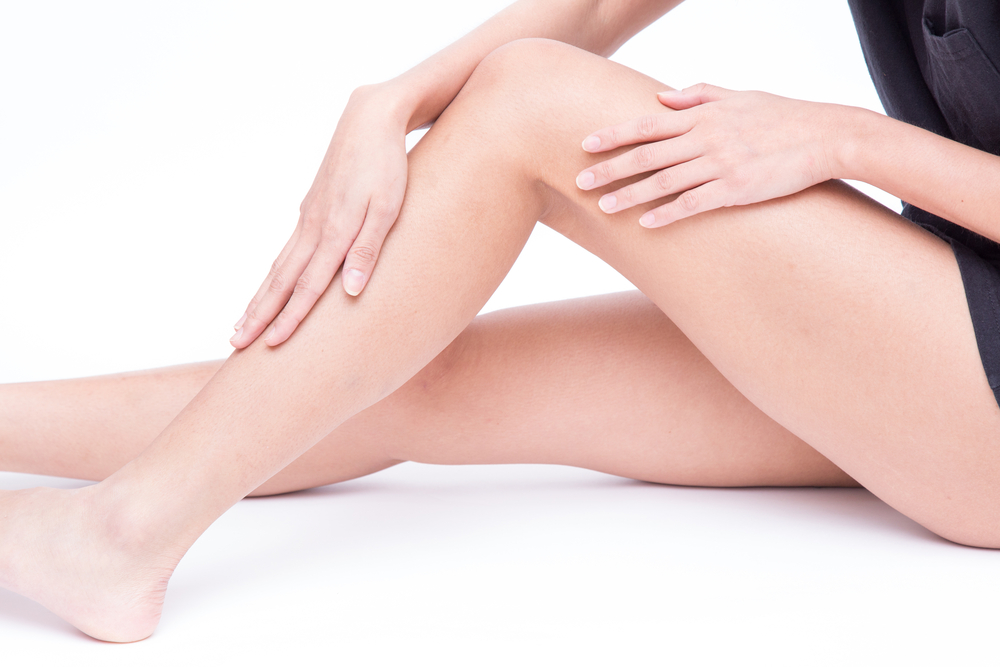
Calf liposuction and ankle liposuction are specialist types of liposuction procedures designed to get rid of fat calves and fat ankles. Patients who undergo this procedure often tell us that their self-confidence has significantly improved. Many patients desire increased definition of the calves and ankles, often complaining of so-called ‘cankles’. Cankle liposuction is an excellent way to reduce the appearance of chubby-looking ankles and calves.
In some cases, patients may have asymmetry of the calves and ankles, often due to a previous injury or because of a congenital deformity present from birth. Calf implants can effectively correct calf asymmetry where the underlying cause is insufficient muscle volume rather than excess fat — the two approaches address fundamentally different problems and are sometimes combined in patients who need both fat reduction and volume enhancement. Liposuction is an excellent way to restore symmetry and produce an improved size and shape on each side where fat is the primary concern. Calf and ankle liposuction patients experience a significant improvement in emotional well-being. Many patients tell us they are restricted in wearing certain clothing styles, including shorts, swimwear, and above-knee skirts. Ankle and calf liposuction can contour and sculpt the lower leg to achieve natural-looking results, allowing you to regain your sense of style and wear the full range of clothing.
Lipedema most commonly affects women and can result in significant leg fullness, including the ankles and calves. Calf liposuction can effectively treat this condition using power-assisted liposuction for patients affected by this potentially disabling medical condition.
Cellulite commonly affects the thighs, buttocks, and legs, leading to an unsightly appearance due to dimpled, pitted skin. Remember that any type of liposuction, including calf liposuction, is not an effective cellulite treatment. Centre for Surgery is proud to have highly effective cellulite treatments, including CelluTite, for permanent cellulite removal. The treatment can be combined with calf and ankle liposuction to remove fat and treat cellulite simultaneously. The results of calf liposuction often depend on the structure of the leg muscles. Patients who have highly developed leg muscles should be aware that liposuction is only effective for localised areas of fat and does not reduce the size of bulky or muscular legs.
What does the ‘cankle lipo’ procedure involve?
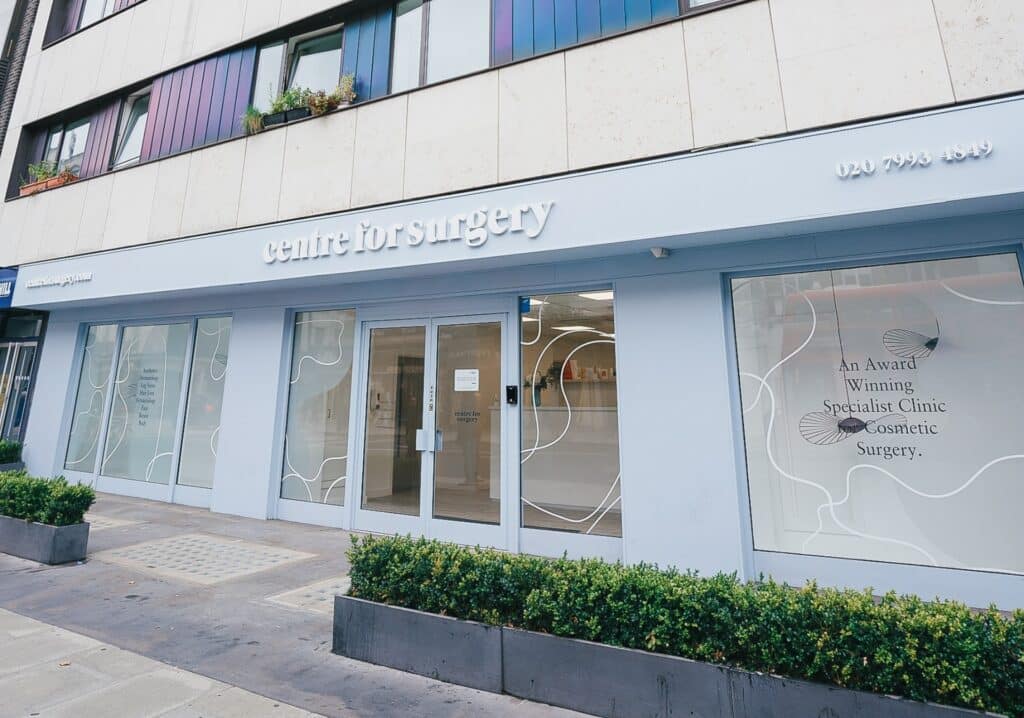
Calf and ankle liposuction is carried out at our state-of-the-art clinic on Baker Street in central London. Once you are admitted for the procedure, you will be anaesthetised before the procedure begins. The surgeon will make tiny incisions through the skin to permit the insertion of specialised liposuction cannulas to break up the fat. Once the fat cells have been broken up, they are removed with vacuum suction. The procedure will be performed on the other side, and your surgeon will continuously assess symmetry throughout. Once the procedure is complete, your surgeon will apply sterile dressings, followed by bandages. Once you are medically fit for discharge, you can go home with a responsible adult escort who must also look after you for the first 24 hours after your calf and ankle liposuction procedure.
Our surgeons are often asked whether fat cells grow back after removal. After any liposuction, fat cells do not regenerate. As long as you maintain a healthy lifestyle with sensible eating and regular exercise, you will keep the results of your slim calves and ankles for a long time.
Once the procedure is complete, following your surgeon’s aftercare instructions is essential to ensure a smooth liposuction recovery and quick healing. You should avoid starting strenuous exercise too soon, and your surgeon recommends wearing the liposuction compression garment for at least six weeks. Calf and ankle liposuction generally takes six weeks for a full recovery. You will see your surgeon for further recommendations to optimise the final results, which should become evident between three and six months after the ankle and calf liposuction procedure.
Can I have liposuction of my calves and ankles?
The calf liposuction and ankle liposuction procedures are considered minimally invasive with a low risk of complications, provided you meet the criteria below:
- Patients should be healthy and, ideally, have a body mass index below 30.
- You have a confirmed diagnosis of lipedema, which is causing you significant pain and discomfort.
- You have tried diet and exercise and have failed to eliminate calf and ankle fat.
- You have researched the procedure and have realistic expectations for the results of ankle and calf liposuction.
- You are distressed at the appearance of having fat ankles or fat calves.
- You have good skin elasticity and have not lost significant weight, so you are not at risk for loose skin.
- You are in good physical health with no chronic medical conditions.
It is important to understand that calf and ankle liposuction addresses excess fat — it does not add volume to underdeveloped or thin calf muscles. Patients who are troubled by flat or skinny calves rather than excess fat are better candidates for calf augmentation with implants or calf augmentation with fat transfer. Our guide to the differences between calf implants and fat transfer helps clarify which approach is most appropriate for different presentations. Your surgeon will assess your specific anatomy at consultation and recommend the right treatment for your goals.
Can ankle and calf liposuction be combined with other procedures?
Both ankle and calf liposuction can be easily combined with other cosmetic surgery procedures, and liposuction can be performed on different body areas such as the stomach, thighs, knees, love handles, or the back. Calf and ankle liposuction is most commonly combined with liposuction of the thighs and inner knees to achieve overall improvement, creating slimmer, more contoured, sculpted legs with natural-looking results.
Calf and ankle fat that has been extracted using liposuction can also be used as part of a fat transfer procedure to enhance volume in other parts of the body. Fat transfer involves performing liposuction as a first step to remove unwanted fat, purifying it, and reinjecting it into the breasts or buttocks to enhance body contours. Fat transfer to the face can also be performed in the most common areas, including the lips, cheeks, chin, and temples. This dual approach — slimming the lower legs while using the harvested fat to enhance volume elsewhere — is an efficient and popular option. Patients who are specifically interested in using their harvested fat to add shape to the calf muscles themselves should explore calf augmentation with fat transfer in more detail.
Women concerned by the appearance of cellulite can also combine calf and ankle liposuction with CelluTite. CelluTite is a radiofrequency skin-tightening procedure combined with cellulite subcision to break up the vertical bands that create dimpled, puckered skin. The ideal result is smoother, firmer skin with improved overall calf and ankle contour.
Why choose Centre for Surgery?
Centre for Surgery is known as a centre of excellence for liposuction, offering procedures from our state-of-the-art Baker Street clinic in London.
- We have a satisfaction rating of more than 95%, with many patients referring their friends and family to us.
- We have hundreds of verified five-star Google and Trustpilot reviews, with many video testimonials for you to view at your consultation.
- Our surgeons are specialists in calf and ankle liposuction, performed only by the most highly trained liposuction surgeons.
- Our anaesthetists are trained in the most advanced anaesthetic techniques to ensure your recovery from calf liposuction is quick and free of side effects such as sickness, dizziness or drowsiness.
- Our preoperative and postoperative nursing teams are renowned for providing high-standard medical care both before and after your ankle lipo procedure.
- After the procedure, all patients have access to a 24-hour emergency number for any questions or concerns.
- Our Baker Street clinic is purpose-built to offer a full range of cosmetic surgery procedures.
- We were one of the first liposuction clinics in the UK to perform specialist fat transfer to the buttocks and calves.
How much does calf liposuction cost?
Calf liposuction starts from £2,995 at Centre for Surgery in London. If you combine this procedure with liposuction in other areas, the cost will increase.
Many patients are increasingly choosing 360 liposuction of the thighs and legs, and this procedure starts from £5,495. Your ankle and calf liposuction procedure includes all preoperative and post-operative care, unlimited surgeon follow-up appointments, and facility and anaesthetic fees. You will also be allocated an expert patient coordinator who will be able to assist you throughout your journey with us at Centre for Surgery. Our liposuction prices are among the most competitive in London because we own and operate our own cosmetic surgery facility, unlike most other cosmetic surgery providers.
Any prices shown online should be viewed as a rough guide only. Once you have had a consultation with a Liposuction Surgeon, you will be seen by your patient coordinator, who will give you an accurate quotation for your calf liposuction and ankle liposuction procedure. Finance options including 0% APR are available through our partner Chrysalis Finance — visit our Finance Options page for details.
The NHS does not provide cosmetic surgery of any type, and we recommend seeking treatment at a private clinic such as Centre for Surgery. In rare cases, depending on your local clinical commissioning group (CCG), you may be eligible for funding to treat lipedema. We would advise consulting with your GP first to explore this possibility. Our surgeons are experts in performing private lipedema surgery.
What are the causes of fat calves and fat ankles?
Fat calves and ankles are also known as ‘cankles’. There are several different causes of fat calves and fat ankles. Genetics is one of the most significant influences on how the calves and ankles appear. If you have a first-degree relative, such as a parent, with large calves and ankles, you are more likely to have ankle fat. Many patients may engage in regular physical exercise but still cannot develop well-defined calf muscles. As a result, patients may develop an unsightly appearance referred to as ‘cankles’.
Lipedema is a condition which primarily affects women, with over one in ten women in the UK suffering from lipedema affecting the lower legs. Lipedema results in the development of fat ankles and calves and, in many cases, can be very painful due to excessive fat accumulation in these areas. For many people, lipedema may have a genetic predisposition and can also be triggered by hormonal fluctuations during puberty, pregnancy or menopause. Lipedema may also develop in women who take the oestrogen-containing contraceptive pill.
Obesity is also a well-known cause of fat ankles and fat calves. People most commonly become overweight or obese through consuming excessive calories in a poor diet with an associated lack of physical exercise. Nutritionally poor diets contain high quantities of refined sugar, often found in sweetened fizzy drinks, cakes, biscuits and other types of confectionery. Processed meat and white bread also contribute to weight gain. The best approach is to consume whole-grain foods, such as wholemeal bread and brown pasta. Other foods include nuts, seeds, beans, vegetables and fruit. These foods help you feel fuller for longer and prevent excess fat from accumulating.
Minimal physical exercise increases the risk of becoming overweight or obese. We would recommend at least 30 minutes of physical exercise five days a week, in line with NHS national recommendations of 150 minutes of physical activity each week. Poor sleep routines, coupled with high levels of stress, lead many people to choose unhealthy food, and foods high in salt place a significant sodium load upon the body, leading to fluid retention which can make cankles appear more pronounced. Women often develop cankles during pregnancy as a result of fluid retention, and sometimes pregnancy-related calf fat and ankle fat do not fully resolve afterwards.
The best way to identify the cause of fat ankles or calves is to consult with one of our expert surgeons. A thorough medical assessment is essential, as some causes may be related to a significant underlying medical condition that requires specific treatment.
What is the best way to lose calf and ankle fat naturally?
The most effective methods for reducing excess fat on the ankles and calves involve weight loss through a healthy, nutritious diet and increased physical exercise. Eliminating sugary snacks, alcohol, junk food, and high-salt processed foods while increasing intake of vegetables, fruit, whole grains, and lean protein helps to reduce body fat including in the lower legs. Following recommendations of 30 minutes of exercise five times a week will help shed fat and produce slimmer calves and ankles. If you have an office-based job, try to get up occasionally and do gentle exercises to tone and strengthen your lower legs.
Specific calf exercises such as standing heel raises and calf stretches can also help to tone the area over time. One of the most modern advances in physical exercise is high-intensity interval training (HIIT), which is a great way to lose body fat in a short workout of 15 to 20 minutes or less. Any form of resistance training can be easily combined with jogging, swimming, or rowing to tone the ankle and calf muscles.
Even with all the effective non-surgical treatments outlined above, it is not uncommon for resistant calf fat to persist despite a balanced diet, regular exercise, and a healthy lifestyle. Our surgeons recommend calf and ankle liposuction as the most effective technique for removing this excess fat, offering a quick, straightforward, and permanent solution. For patients whose primary concern is insufficient calf volume or asymmetry rather than excess fat, calf implants for skinny legs may be the more appropriate treatment route — your surgeon will advise at consultation.
To learn more about getting rid of unsightly calf and ankle fat, don’t hesitate to get in touch with us today to book a face-to-face consultation with an expert UK liposuction specialist at our London clinic.
Related Guides
RELATED: Calf Implants at Centre for Surgery
RELATED: Calf Augmentation with Fat Transfer
RELATED: Calf Augmentation Before & After Photos
RELATED: How Much Do Calf Implants Cost in the UK?
RELATED: Recovery After Calf Implant Surgery
RELATED: Do Calf Implants Need To Be Replaced?
RELATED: Calf Implants vs Fat Transfer — Which Is Right for You?
[contact-form-7 id=”256″ title=”Treatments form”]