

Are you considering getting breast implants and are unsure about the size that would be best for you? This guide is here to help you make an informed choice. It’s essential to remember that the ideal size for one person may differ from another’s. Finding the perfect fit for your body and your preferences can be a bit challenging, but don’t worry!
Your first step should be to arrange a meeting with a professional plastic surgeon, especially one from Centre for Surgery in London. They will provide expert advice tailored to your unique needs. Only after this consultation will you be able to make a final decision confidently. It’s always best to get the opinion of an expert when considering such an important decision for your body.
One of the most common questions patients ask our plastic surgeons involves determining the correct size of the breast implant as part of a breast augmentation procedure. For patients who want to choose bigger breast implants, the question is how big they can go. Many patients want to know what volume will give that desired increase in cup size. The obvious concern with any breast augmentation procedure is choosing a breast implant that you feel is not big enough and, therefore, regretting your choice of implant size in the postoperative period.
RELATED: How to Prepare For Your Breast Augmentation Consultation
There are several factors to consider when deciding to undergo a breast augmentation in London. We always recommend that all patients undertake as much research as possible and speak with friends or family who may have had breast augmentation previously. You may already have an idea of the approximate size of the implant you would like to have. For many patients, this is when they begin to feel very excited, as having a breast augmentation is an investment in themselves for renewed self-confidence.
At the face-to-face consultation with the surgeon, a key aspect of the discussion will centre around an emphasis on the maximum size limit of breast implants for your anatomy. Many patients can feel a little disheartened if their anticipated implant size does not align with their surgeon’s advice. This is the point where many patients will ask, “Why can’t I go bigger?”
RELATED: Pregnancy and breastfeeding after breast enlargement
Understandably, patients may be a little disappointed at this point, but fortunately, this does not mean that you will not be able to get the result that you have been aiming for. In virtually all cases, there are well-founded reasons why your surgeons may advise against a particular size of breast implant, and these include both the effect on your soft tissues as well as the risk of implant-related complications.
RELATED: 7 Things to Consider Before Breast Augmentation
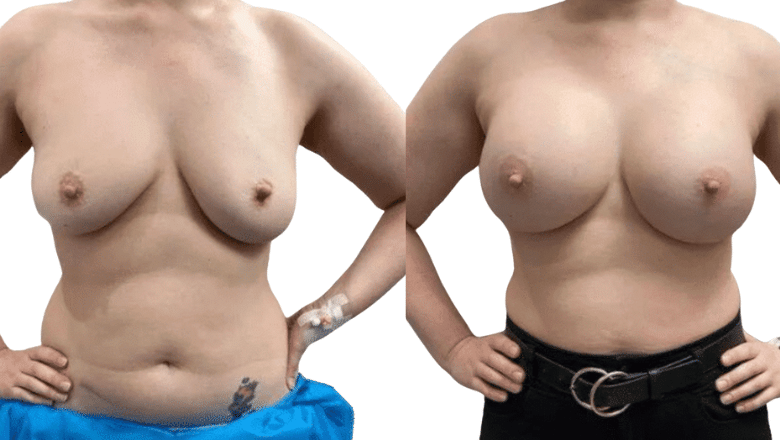
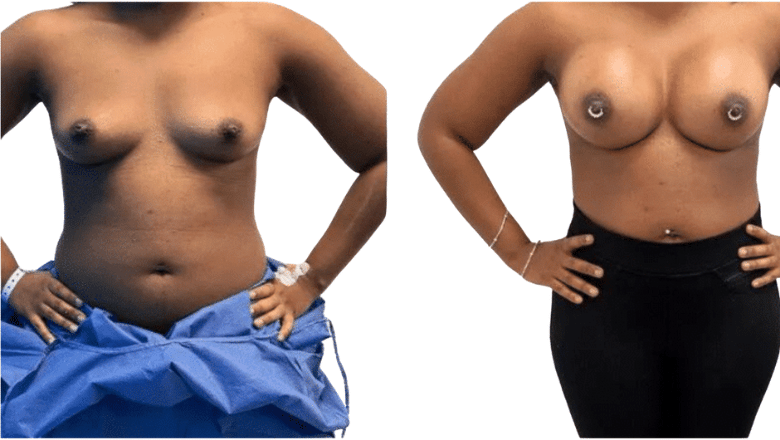
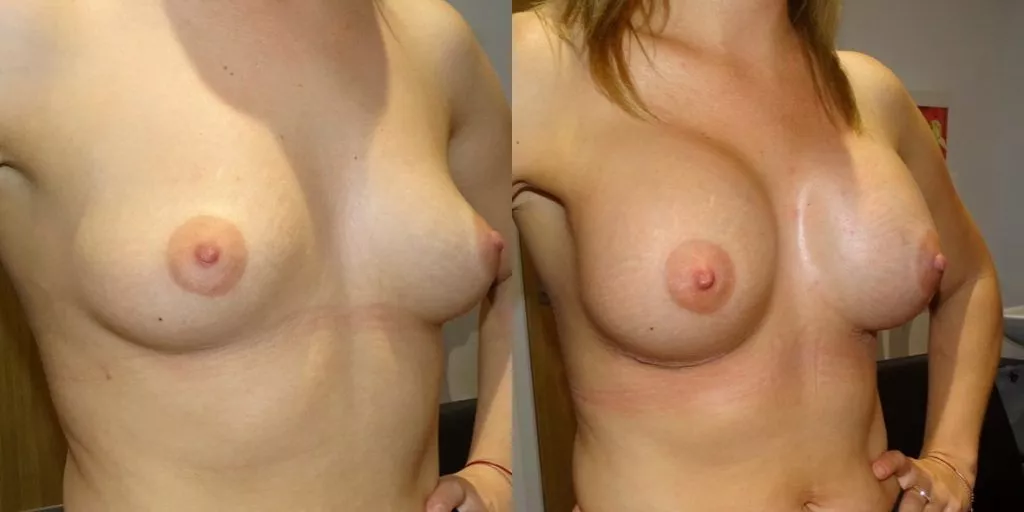
The risks of choosing overly large breast implants
The patient’s chest anatomy will be the most important factor in determining the most appropriate breast implant size for you. At the consultation, your surgeon will take several key measurements of your chest to provide a customised treatment tailored to you, delivering the very best possible results safely. The anatomy of your chest wall determines many factors, including the type of breast implant used, the implant position (subglandular or dual-plane), and the type of incision used for breast augmentation. The most common type of incision for breast augmentation surgery is the inframammary approach.
RELATED: Breast implant incisions and positioning
Many patients have minimal breast tissue and may also have a tighter skin envelope. This means there are fewer options for implant sizing than for a patient with more breast tissue and less taut skin covering. It’s important to emphasise to patients in the first category that the surgeon prioritises their health and safety and ensures results that are both significant and natural-looking for their body shape. In both types of patients, if the surgeon were to insert an oversized breast implant with the patient’s anatomy, then there would be a significantly increased risk of complications that may not look aesthetically pleasing and could lead to medium to long-term issues in the worst-case scenario.
One of the key risks in inserting oversized breast implants involves possible implant malposition, where the implant does not sit in its desired position. In severe cases, there is even a risk of developing a condition called symmastia, also known as a “uni-boob”. Symmastia is the term used to describe a lack of cleavage between the breasts and is often due to excessive pressure exerted by the implants on the soft tissue. Very large breast implants can also end up dropping a lot lower than the inferior breast fold, and this is also referred to as a “double bubble” appearance. The risk of implant bottoming out can also occur when the underlying soft tissues lose structural support due to the weight of the implant. This then leads to nipple malpositioning, whereby the nipple tends to point upwards and a lack of upper pole fullness.
Large breast implants that are too big for your body frame also carry risks of visible skin rippling, and the edges of the implant may be felt or even seen. Most patients and their surgeons will agree that these are not cosmetically acceptable outcomes and can also lead to a significant degree of social embarrassment as well as a great deal of pain and discomfort. Often, these patients will require breast implant replacement surgery to address the problem of oversized breast implants. Our philosophy at Centre for Surgery in London is to thoroughly assess patients and formulate a sensible treatment plan to ensure they achieve the results they deserve without needing a revision procedure three months later. This is why doctors will emphasise that there is a size limit to choosing the right size of breast implant for you.
In the most serious cases, there may be a risk of reduced blood circulation to the breasts. This is due to the very large breast implant exerting a high level of compression on the surrounding tissues, which can impair blood flow and, in the most severe cases, lead to skin necrosis or skin loss. This is a complication that can be avoided by choosing breast implants that are not too big for your frame.
The importance of correct planning for breast implant sizing
At Centre for Surgery in London, our surgeons are highly experienced in all types of breast augmentation surgery, including complex revision surgery. They have advanced tools for accurate breast implant sizing and always aim to provide bespoke planning for every breast implant surgery they perform, as each patient has unique characteristics and different expectations for treatment.
Breast implants do impart changes to the breast over time. All breast implants we use come with the most comprehensive warranty against capsular contracture and implant rupture. Our surgeons use both Mentor breast implants and Sebbin breast implants. Your surgeon plans for not only the immediate post-operative appearance but also how your implants could look 5 to 10 years postoperatively. Choosing the most appropriate-sized implant will help minimise the impact of excessive thinning or stretching of the breast’s soft tissues. Both of these soft-tissue changes can lead to more visible implant edges, breast ptosis (sagging), and visible implant rippling.
How breast implants are measured
The first thing to know is precisely how breast implant sizes are measured. Many women will have an idea of how large they want their breasts to be based on bra size—they may want to increase one or two cup sizes. However, bra sizes vary from store to store, so this is not the measurement system used for implants.
RELATED: Ideal Breast Size Based on Height and Weight
Instead, implants are measured in cubic centimetres (CCs). Implants range from 120cc to 850cc. When you book a consultation, you will be able to see sample implants and see the different sizes. You will even be able to put the sample implants into a bra and try them on. This will help you gauge an idea of the best size breast implants for you. During your consultation, the surgeon will also use 3D reconstruction techniques to show you exactly how the implants will look on you.
The rice test
You can do various other things to understand the exact size of the implants. One of these is known as the rice test. This involves filling a stocking with rice (remember that 30 cc’s is one ounce). Flatten the rice and place it in a non-padded bra. This can help you get an idea of the implants’ actual size before your consultation with the surgeon. Some women may wish to use water and ziplock bags instead of rice for this test.
However, knowing the sizes and trying on samples are not the only factors influencing which size implants you eventually decide to get. You will have to consider many questions before settling on a final size.
Critical questions which will alter the size of the implants include:
What will the implants be made of?
At Centre for Surgery, we use silicone-based implants approved by the UK Medicines and Healthcare Products Regulatory Agency (MHRA). Saline breast implants are no longer used in the UK.
Silicone implants consist of a cohesive silicone gel which holds them together. This feels more natural and more closely resembles breast tissue than saline implants.
What breast profile can I have?
A breast profile means how far the implants will protrude from your chest. A low profile is fairly flat, while a high profile is more prominent and may appear unnatural. Those who want to be larger without appearing unnatural may choose a medium profile.
Which implant shape can I have?
You will also have to decide on which implant shape to have. This will either be round or teardrop. Round implants tend to be more popular as they provide more fullness in the cleavage area.
The size of your body
The surgeon will measure the base width of your breasts. The surgeon will also note the width of your chest and the space between your breasts. The surgeon will also assess your skin elasticity and the amount of skin and tissue available. This will help the surgeon determine the maximum implant size you can have.
Problems with larger sizes
Some women may wish to choose larger implants. However, before doing so, it is essential to consider whether or not the larger size is right for you. While larger sizes may be perfect for some women, they may not suit others. If you have a small body frame and less skin and tissue available, you may not be able to have large implants. If you choose to have them, the edges of the implants may become visible after surgery. Large implants can also cause other problems, such as back and neck pain.
It is also essential to consider your lifestyle. Doing a lot of physical exercise, huge implants, may interfere and become problematic. You may also wish to conduct the rice test on a large scale and test it on various types of clothing. In certain clothing, particularly clothing that is not tight-fitting, large implants can make some women appear as if they have gained more weight.
Breast Augmentation at Centre for Surgery
The main priority with correctly performed breast augmentation surgery is to create results that both look and feel natural using tried and tested techniques involving the lowest risk profile. Our medical practice is centred around optimising aesthetic results and your health and safety with every procedure we carry out. Everyone at Centre for Surgery focuses on ensuring you get your desired appearance. By coming in for a face-to-face consultation with the surgeon at Centre for Surgery, you will receive honest and accurate medical advice based on your needs and preferences. In virtually all cases, you may be asked to try on various implant sizes to get an idea of how you could look after surgery, and your dedicated patient coordinator will be able to act as your point of contact throughout all stages of your patient journey.
[contact-form-7 id=”256″ title=”Treatments form”]