

Nose surgery is something that involves many different factors. So, we’ve put together an article to help you understand everything you need to know about the way the nose is built, the usual shapes of noses, common problems, and a list of words that might be useful to know. This will not just assist you in explaining to your surgeon exactly what you want but will also make it clearer what can and can’t be done through surgery.
The way your nose looks is a big deal when it comes to appearance and beauty. Everyone’s nose has its own unique shape, and a lot of people are not pleased with how their nose looks. Rhinoplasty is the name for a type of surgery that’s done to change the shape of the nose to make it look better.
RELATED: What Makes a Beautiful Nose?
Getting a nose job isn’t something simple, and it takes a really talented surgeon to get the results just right. At Centre for Surgery, our plastic or ENT (Ear, Nose, and Throat) surgeons will have to think about lots of things when they’re doing the operation. This is because every nose is unique, and each person wants their nose to look different.
Anatomy of the Nose – What You Can See on the Surface
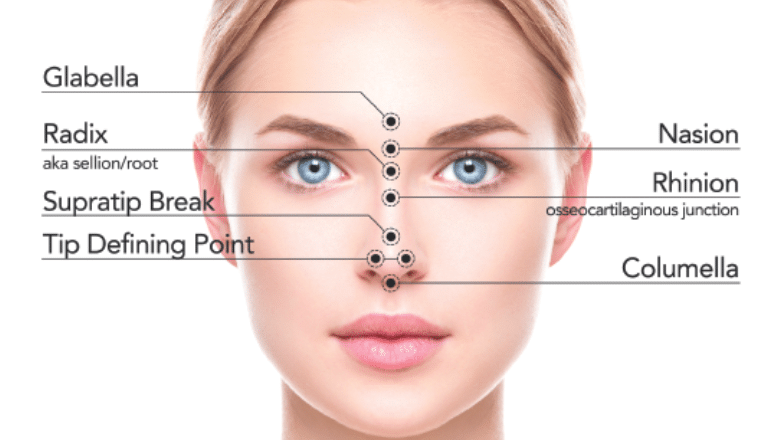
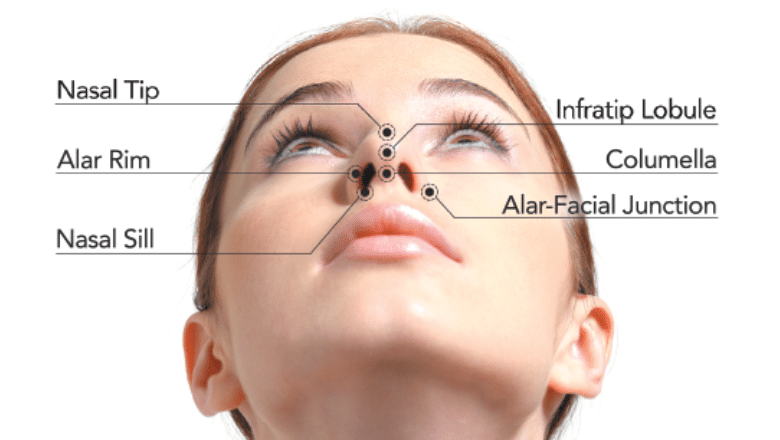
First, let’s talk about the surface anatomy, which means the parts of the nose that you can see, without looking at the inner structures that make it up. Here’s what you can see when you look at a nose:
- The Radix: This is the top part of the nose, right in the middle between your eyes.
- The Dorsum: You might hear this called the bridge as well. It’s the part of the nose that goes from the radix (the top part) down to the tip of your nose.
- The Columella: This is the straight piece that you can see between your two nostrils.
- The Alae: These form the sides of the nostrils. If you’re talking about just one side, it’s called an “Ala.” If you’re talking about both sides together, you use the plural, which is “Alae.”
Anatomy of the Nose – What’s Below the Surface
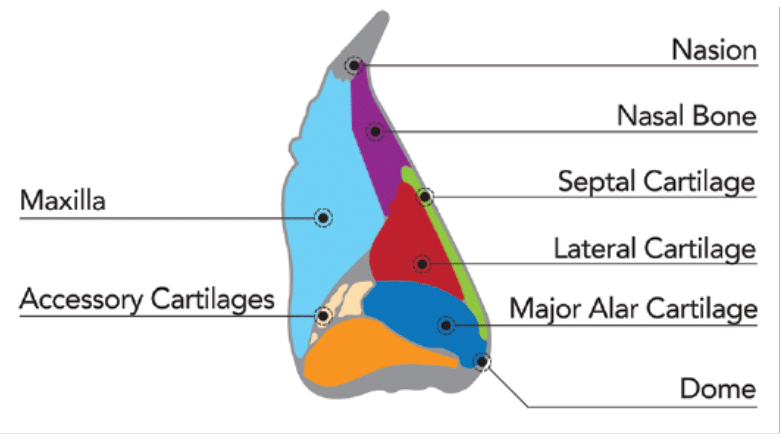
Below the parts of the nose you can see, there are bones and cartilage that actually give the nose its shape. We can split the nose vertically into three sections. The top third is made of nasal bones, the middle third has what’s called the upper lateral cartilages, and the bottom third consists of alar cartilages:
- Nasal bones: These bones aren’t very hard and are often shaped or shaved during a nose job to get the desired appearance. They are what give the bridge of your nose its particular shape and how far it sticks out.
- Upper lateral cartilages: This is a type of tissue that’s firm but not as hard as bone. It starts just under the nasal bone in the middle part of your nose. These cartilages make sure the nostrils stay open and wide. If they’re weak, your nose might look like it’s pinched.
- Alar cartilages: These are really crucial because they help give the tip of your nose its shape. Surgeons often work on these cartilages during rhinoplasty.
- Nasal septum: This is like a wall in the middle of your nose that separates the right and left sides from each other. You might have heard the phrase “deviated septum.” This refers to an issue with the nasal septum.
Who Might Need a Nose Job?
Rhinoplasty, or what we commonly call a nose job, can be done for either cosmetic reasons or medical needs. Here’s a list of some problems with the nose that might make you think about having this type of surgery:
Problems with the Dorsum (Bridge of the Nose)
The dorsum is the area that runs from the top of your nose down to the tip. Ideally, it should be fairly straight with just a bit of curve. Here are some of the typical problems with the dorsum:
- Large dorsal hump: This is when the dorsum sticks out too much and is curved outward, forming a bump or hump. This common problem can be caused by the nasal bones and cartilages being too large.
- Wide nose: This could be that the nose is too wide at any point, whether it’s the upper part of the dorsum, the middle part, the tip, or even the nostrils.
- Under-projected dorsum: This is related to the dorsum being short and not sticking out far enough from the face.
- Saddle deformity: This can happen when a large dorsal hump has been over-corrected during surgery, and too much tissue has been removed. It makes the dorsum look like a ski slope, with an inward curve.
Problems with the Tip of the Nose
The tip of the nose is shaped by something called alar cartilages. There are several problems that can affect the tip of the nose:
- Droopy tip: This occurs when the tip of the nose points downwards.
- Over-projecting tip: Sometimes referred to as a “Pinocchio Nose,” this is when the tip of the nose sticks out too far from the face.
- Under-projecting tip: This happens when the tip of the nose doesn’t stick out far enough.
- Bulbous tip: This is when the tip of the nose appears too big or too wide, giving the nose a rounded appearance.
- Boxy tip: If you look at a typical nose from below, it should look like a triangle, with the tip of the nose as the top corner and the alae forming the other two corners. But if the nose looks more like a rectangle, it’s described as having a boxy tip.
Problems with the Alae (Sides of the Nostrils)
The alae are the sides of your nostrils, and they can have some issues that affect the appearance of the nose:
- Wide alae: This happens when the alae stick out too much to the sides, making the nostrils look overly wide.
- Notched alae (nasal flaring): This is when the alae are positioned higher than normal, so that the columella is visible from the sides.
- Asymmetric alae: This occurs when the right and left sides of the nostrils are not the same shape or size.
Other Nose Problems
- Deviated Nose: A deviated nose means that the nose is leaning to one side of the face. This can happen if you have a deviated septum, deviated nasal bones, a deviated tip, or deviated upper lateral cartilages.
- Airway Obstruction: If you find it difficult to breathe through your nose, there might be something blocking the way. This could be due to a deviated septum, enlarged turbinates, or another problem such as nasal polyps.
Different Types of Rhinoplasty: Open and Closed Techniques
Rhinoplasty, commonly referred to as a “nose job,” can be performed using two different techniques: open rhinoplasty and closed rhinoplasty.
RELATED: Nose Surgery FAQs – Q&A about Rhinoplasty
Open Rhinoplasty
Open rhinoplasty is often chosen when the problem that needs addressing is in the tip of the nose or the alae. The surgeon makes a small cut in the skin of the columella, removes and reshapes excess tissue, then closes the incision. This method provides better visibility and access to the underlying structures of the nose.
Closed Rhinoplasty
Closed rhinoplasty is typically chosen when the main issue is in the dorsum of the nose. A small cut is made inside the nostrils, so the skin on the outside of the nose is left untouched. Since the incision is made inside the nose, there’s no external scarring, and recovery may be quicker.
RELATED: Types of Rhinoplasty
RELATED: Open vs Closed Rhinoplasty
RELATED: Does A Nose Job Change Your Smile?
What to Expect After a Nose Job
Having a nose job, or rhinoplasty, is a significant decision, and understanding what to expect during recovery is an essential part of the process. At Centre for Surgery, we pride ourselves on housing some of the leading rhinoplasty surgeons in the UK.
Before the Surgery
Before undergoing surgery, you’ll have a consultation with one of our experienced surgeons. During this meeting, the surgeon will discuss your concerns and what you don’t like about your nose, and will explain how they plan to make your nose more appealing and in proportion with the rest of your face.
After the Surgery
Following the procedure, here’s what you can typically expect:
- Immediate Aftermath: You may experience discomfort, swelling, pain, congestion, and some bleeding during the first week or two.
- Recovery Time: While the initial discomfort should diminish within a week or two, full recovery takes longer. Your nose may not settle into its final shape for several months.
- Follow-up Care: Regular follow-up appointments with your surgeon will be scheduled to monitor the healing process.
RELATED: Recovery After Rhinoplasty – Top Tips
Is Rhinoplasty Worth it?
Having a rhinoplasty can lead to a significant improvement in both the appearance and functionality of your nose. It’s an investment in your self-confidence and well-being. However, patience is key, as full recovery and the emergence of the final result will take time.
RELATED: Is A Nose Job Worth It?
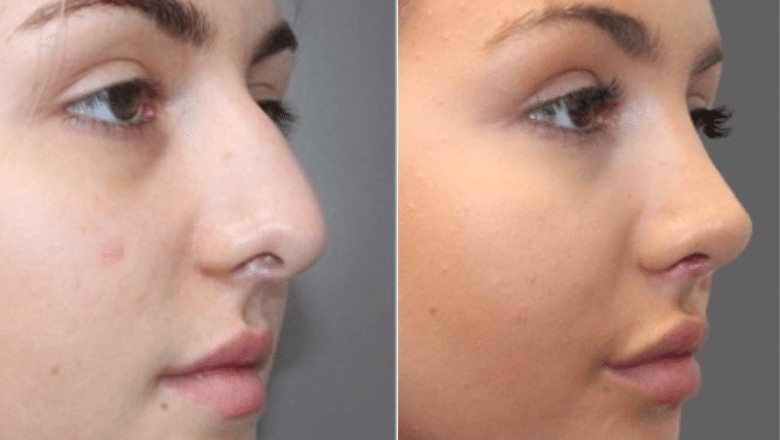
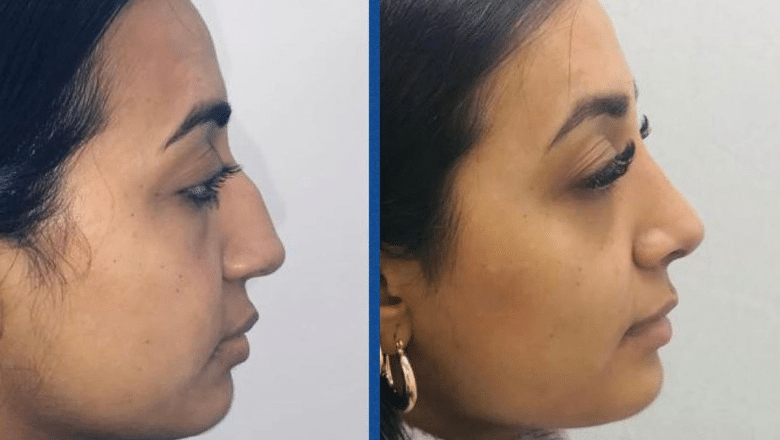
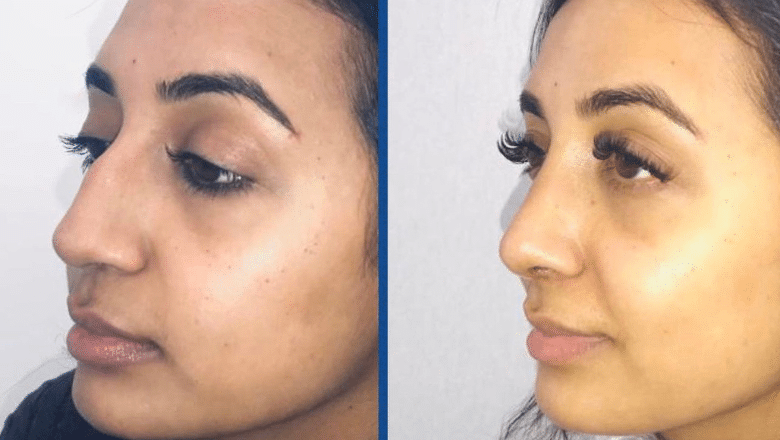
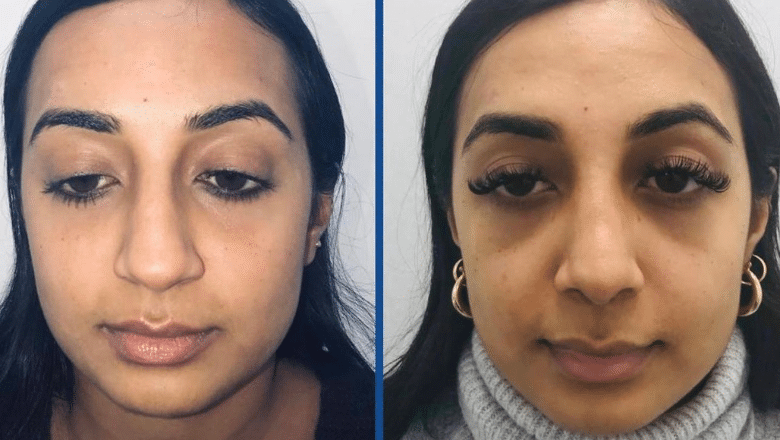
Before and After Photos of Nose Surgery
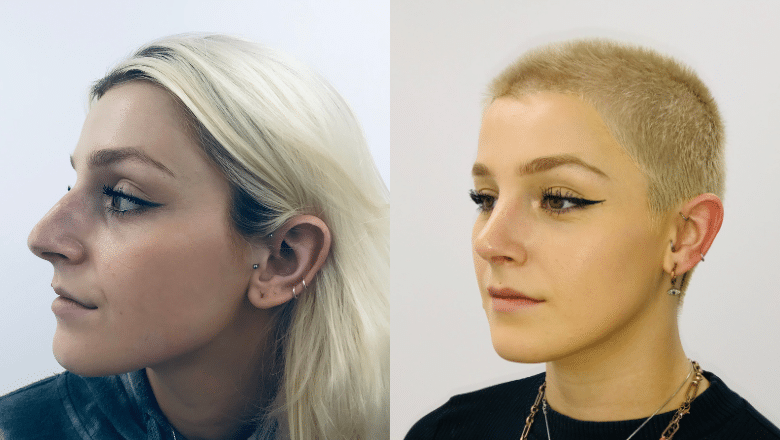
Seeing nose job before and after photos can provide a powerful insight into the potential outcomes of nose surgery. Below are some before and after images of actual patients who have undergone nose surgery at our Centre for Surgery.
Case 1:
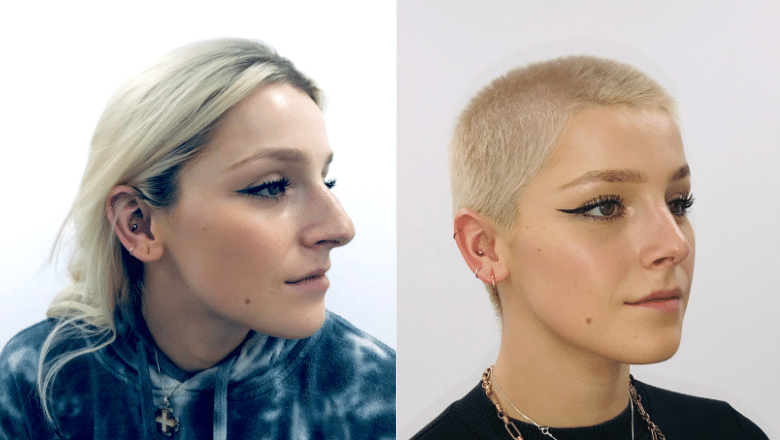
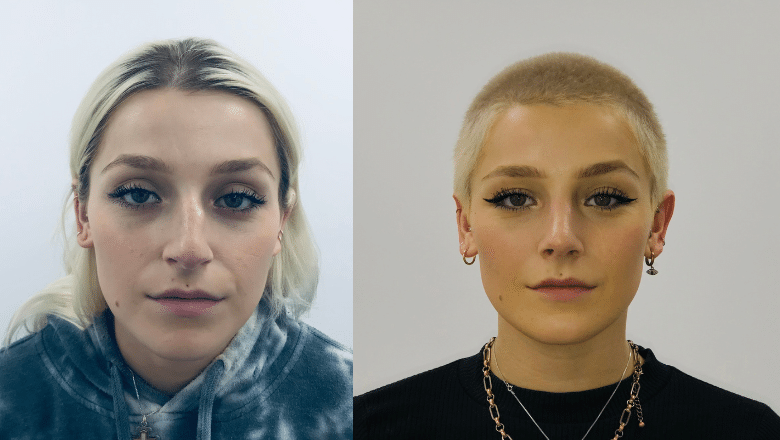
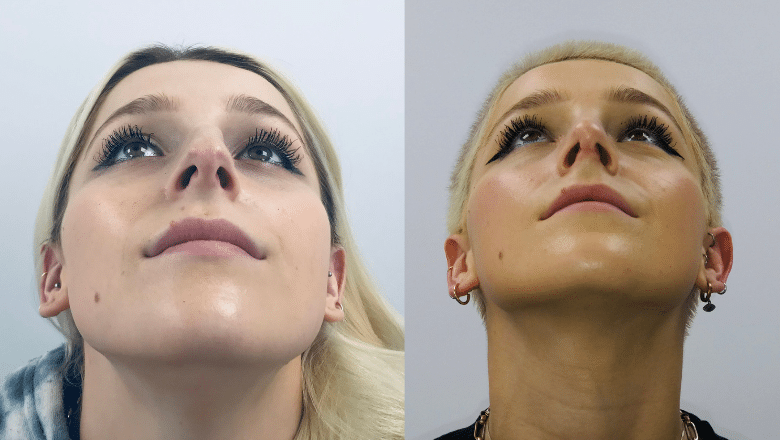
Case 2:
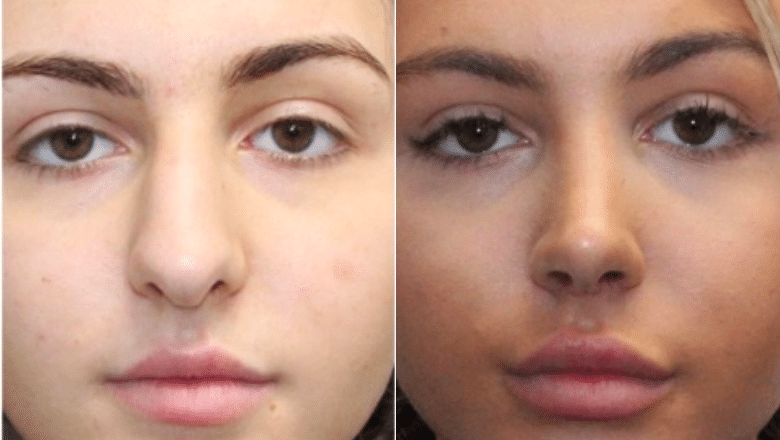
Case 3:
Comprehensive Rhinoplasty and Nose Surgery Glossary
Understanding the terminology can make the process feel less daunting when it comes to rhinoplasty and nose surgery. Here’s a comprehensive glossary of terms and phrases commonly used in the field:
- Alae (singular: Ala): The sides of the nostrils.
- Alar Cartilages: The flexible structures that give the tip of the nose its shape.
- Bulbous Tip: When the tip of the nose is overly large or wide.
- Closed Rhinoplasty: A surgical technique where the incisions are made inside the nose.
- Columella: The tissue that separates the nostrils.
- Deviated Septum: A condition where the wall that separates the nostrils is misaligned.
- Dorsum: The bridge of the nose.
- Droopy Tip: When the tip of the nose points downward.
- Enlarged Turbinates: Swollen structures within the nose that can cause breathing issues.
- Open Rhinoplasty: A surgical technique where an incision is made on the skin between the nostrils.
- Over-Projecting Tip: When the tip of the nose protrudes too far from the face.
- Radix: The uppermost point of the nose, located between the eyes.
- Rhinoplasty: A surgical procedure to reshape the nose.
- Septoplasty: Surgery to correct a deviated septum.
- Saddle Deformity: An inward curve of the bridge of the nose, resembling a ski slope.
- Under-Projecting Tip: When the tip of the nose does not protrude far enough from the face.
- Wide Alae: When the sides of the nostrils project too widely.
- Boxy Tip: When the tip of the nose appears more rectangular than triangular.
Rhinoplasty at Centre for Surgery: Transforming Lives, One Nose at a Time
At Centre for Surgery, we understand that the decision to have rhinoplasty is more than just a cosmetic choice; it’s a personal journey to enhance your confidence, improve your appearance, and sometimes even address medical issues.
A Team of Experts
Our surgeons are among the top rhinoplasty experts in the UK, boasting years of experience, extensive training, and a commitment to achieving outstanding results.
State-of-the-Art Facilities
We invest in cutting-edge technology and maintain the highest standards of safety and hygiene at our Baker Street clinic.
Comprehensive Consultation
We believe that the success of a rhinoplasty procedure starts with a detailed consultation. Our surgeons will spend time with you, discussing your expectations, evaluating your nose’s structure, and explaining all available options.
Aftercare Support
Rhinoplasty is not just about the surgery itself but also the care that follows. Our dedicated aftercare team will be with you every step of the way, providing guidance, support, and follow-up appointments to monitor your healing.
Visit Us Today
Considering rhinoplasty? We invite you to schedule a consultation at Centre for Surgery. Our friendly staff and world-class surgeons are here to answer all your questions and guide you on the path to a new you.
[contact-form-7 id=”256″ title=”Treatments form”]