
Ultrasonic rhinoplasty, commonly known as Piezotome rhinoplasty, is a modern, less invasive alternative to traditional nose surgery. This advanced technique significantly lowers the risks associated with conventional rhinoplasty procedures.
In traditional nose surgery, surgeons reshape the nasal bones and cartilage using instruments such as rasps, hammers, and chisels. While effective, these tools can inadvertently harm the nasal structure and nearby tissues. This can lead to increased bruising and swelling after the operation, potentially impacting the final aesthetic outcome.
The Piezotome or ultrasonic approach to rhinoplasty addresses these concerns. It utilises specialised piezoelectric inserts that generate ultrasonic vibrations. These vibrations enable plastic surgeons to cut through bone and hard cartilage with remarkable precision and safety.
RELATED: How To Make Your Nose Smaller
At Centre for Surgery, we pride ourselves on being at the forefront of cosmetic rhinoplasty advancements. As one of the select plastic surgery clinics in the UK offering this innovative ultrasonic technique, we provide our patients with an option for nose reshaping that ensures unparalleled accuracy, minimal swelling and bruising, and a quicker recovery period.
RELATED: Nose Surgery FAQs – Q&A about Rhinoplasty
Piezotome Rhinoplasty
Piezotome rhinoplasty, also known as ultrasonic rhinoplasty, is a modern, advanced form of nose reshaping surgery. Its primary goal is to reduce the size of the nose, enhancing its aesthetic appearance. What sets this technique apart is its use of high-speed ultrasonic sound waves. These sound waves allow for precise cutting and shaping of bone and dense cartilage in the nose, without harming the surrounding soft tissues.
This method is employed to:
- Refine the nose’s contour for a more aesthetically pleasing shape.
- Narrow the nasal bridge with remarkable accuracy.
- Remove or diminish the presence of a dorsal hump.
- Correct a crooked nose, ensuring straightness.
- Reduce the overall size of a large nose.
- Adjust the nose profile for a balanced facial symmetry.
Ultrasonic Rhinoplasty Versus Traditional Rhinoplasty

Ultrasonic rhinoplasty, employing piezoelectric instruments, has revolutionised the approach to reshaping the nose’s bones and cartilage, offering a gentler, more atraumatic technique.
RELATED: Risks Of Rhinoplasty Surgery – How To Have A Safe Nose Job
In traditional hump reduction rhinoplasty, surgeons typically use tools such as rasps, chisels, and hammers. These instruments present several risks including accidental nasal bone fractures and increased trauma to surrounding tissue. On the other hand, ultrasonic rhinoplasty offers a refined approach with significantly reduced risk of injury to surrounding soft tissues and prevention of accidental fractures or splintering.
Benefits of Piezotome Rhinoplasty
Reduced Pain and Discomfort After Surgery
- The use of ultrasonic piezo inserts significantly reduces the risk of radiating fracture lines, a common complication of traditional nose jobs.
- Patients typically experience minimal pain and discomfort following piezotome rhinoplasty, leading to reduced or no need for pain medication.
Accelerated Healing Process
- Piezoelectric technology minimises damage to surrounding soft tissues, leading to less swelling and bruising.
- Post-operative facial puffiness, bruising, and swelling diminish more quickly compared to traditional rhinoplasty.
Enhanced Cosmetic Results
Piezotome rhinoplasty allows for extremely accurate modifications to the nasal structure, typically results in less scarring, and facilitates more detailed cosmetic outcomes leading to results that appear more natural. It is also a suitable option for revision rhinoplasty procedures.
Identifying Ideal Candidates for Piezoelectric Rhinoplasty
Piezoelectric rhinoplasty is especially beneficial for those who require detailed and precise alterations to their nasal structure, including individuals seeking to remove a dorsal hump, smooth bony irregularities, reshape the nose pyramid, or address breathing problems associated with a deviated septum.
Ultrasonic Rhinoplasty Procedure
Ultrasonic rhinoplasty is a sophisticated outpatient procedure performed under general anaesthesia. The surgeon begins by making a careful incision within the nostrils, extending across the columella (open rhinoplasty technique). The skin is delicately lifted, piezo inserts are strategically placed, ultrasonic waves are applied for precise bone cuts, and the procedure concludes with specialised suturing techniques.
Recovery Process Following Ultrasonic Rhinoplasty

The recovery period typically spans one to two weeks. Patients can expect some pain or discomfort (manageable with oral painkillers), bruising and swelling (notably less than traditional rhinoplasty, subsiding significantly within 14 days), and minor nosebleeds and itching.
RELATED: Is Rhinoplasty Worth It?
Related Rhinoplasty Guides
- Rhinoplasty Before & After Photos
- How Much Does a Nose Job Cost?
- Rhinoplasty FAQs
- Ethnic Rhinoplasty
- Revision Rhinoplasty
- Nasal Tip Surgery
- Septorhinoplasty — Combining Rhinoplasty & Septoplasty
Ultrasonic Rhinoplasty at Centre for Surgery
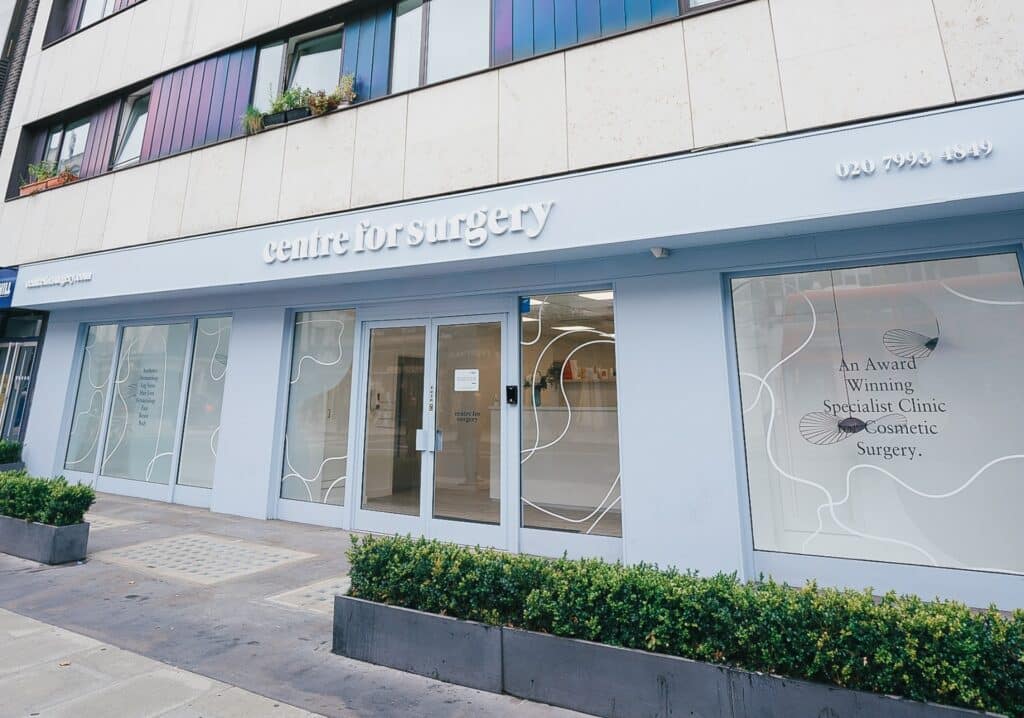
At Centre for Surgery, we specialise in ultrasonic rhinoplasty, an advanced technique that redefines the art of nose reshaping. Our Baker Street clinic in London is renowned for combining state-of-the-art technology with exceptional surgical expertise.
- Consultation Booking: To start your journey, contact us at 0207 993 4849 or email contact@centreforsurgery.com.
- Finance Options: Explore our financing solutions, including 0% APR with Chrysalis Finance, on our Finance Options page.
- Visit Our Clinic: 95-97 Baker Street, London W1U 6RN.
[contact-form-7 id=”256″ title=”Treatments form”]