Should you have ‘En Bloc’ Removal of your Breast Implant?
Many women have become increasingly concerned with textured implants and their link to Breast Implant-Associated Anaplastic Large Cell Lymphoma (BIA-ALCL). Some women have also experienced symptoms of Breast Implant Illness (BII), which can include chronic fatigue, joint pain, and other health issues.
For those women who want to have their breast implants removed, may wish to consider the En-Bloc technique, which involves removing the entire capsule that surrounds the implant in one piece. This technique is useful in cases where the implant is textured, as it helps minimise the risk of residual implant material or capsule fragments that could cause complications.
Another option is a partial capsulectomy, where only a portion of the capsule is removed. This technique is more suitable for patients with smooth implants or when the capsule is not too thick or calcified.
Total capsulectomy removes the entire capsule, and it can be combined with implant removal or replacement. This technique is often used in cases with significant capsule calcification or when the implant is ruptured.
What causes Implant Capsule Formation?
Capsular formation is a natural response of the body to foreign objects such as breast implants. When a breast implant is inserted, the body’s immune system identifies it as a foreign object and begins to create a protective layer of tissue around it. This tissue is known as the capsule. The capsule’s thickness and density can vary from patient to patient and be influenced by factors such as the type of implant used, surgical technique, and the individual’s body’s healing responses.
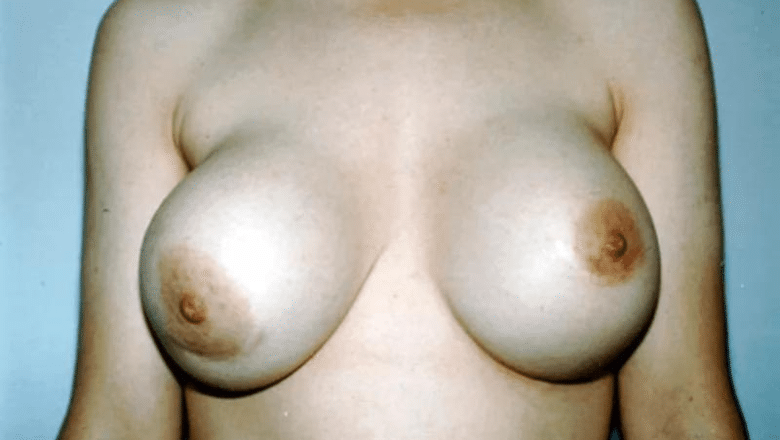
Capsular contracture occurs when the capsule around the implant becomes too thick, hardens, and becomes tight. This can cause the breast implant to feel hard, distorted, or uncomfortable. This may be painful for some patients and could cause other complications, so it may require surgical intervention to correct.
RELATED: Do I have capsular contracture, and can I treat it?
Capsular calcification is another possible complication, where calcium deposits form in the capsule around the implant. This leads to a hard and lumpy texture or sometimes causes the implant to rupture. In this case, removal of the implant and capsule is required to prevent further complications.
What is En Bloc Breast Implant Removal?
En Bloc is a surgical technique that removes the capsule intact, with the implant still inside, to minimise any potential contamination of the surrounding tissues. The surgeon normally would inspect the capsule and implant for any signs of damage. If any damage or rupture is found, the surgeon may need to perform additional procedures to remove any remaining implant material or capsule fragments.
The En Bloc technique is used when there are concerns about the implant’s safety or when the patient has developed complications, such as Breast Implant-Associated Anaplastic Large Cell Lymphoma (BIA-ALCL) or capsular contracture. It is also used when the patient is experiencing Breast Implant Illness (BII) symptoms or when there is concern about the integrity of the implant.
En Bloc breast implant removal can be performed as a standalone procedure or it can be combined with other breast surgeries, such as a breast lift or breast reduction. As with any procedure, risks and complications are involved, and you should discuss this with your surgeon when deciding to undergo an En Bloc implant removal.
What are the results of En Bloc Technique Breast Implant Removal?
En Bloc Technique Breast Implant Removal results can vary depending on the patient’s individual circumstances, such as the type of implants, how long they have had the implants, and any complications they have experienced.
After the En Bloc Technique, patients can expect some swelling, bruising, and discomfort. A compression garment may be required for several weeks to help with swelling and support the breasts. Recovery time varies from patient to patient, but most patients can return to work and other normal activities within a few days to a week after the procedure.
RELATED: Recovery After Breast Implant Removal Surgery
Removing the breast implants and the capsule can result in a change in breast size and shape. In some cases, patients may decide to have additional breast surgery, such as a breast lift or breast reduction, to achieve a more desired look.
RELATED: Breast Implant Removal FAQs – Q&A about Explant Surgery
En Bloc Removal and concerns about BIA-ALCL
BIA-ALCL is a rare form of lymphoma that has been linked to textured breast implants, and while the risk of developing this condition is low, some patients may still choose to have their implants and capsules removed. Patients who have their capsule removed typically would also have their tissues tested for BIA-ALCL to ensure they do not have the condition. It’s important to note that the risk of developing BIA-ALCL is significantly lower than the risk of developing breast cancer, and the risk varies between different brands of implants.
Patients who are concerned about the safety of their breast implants should discuss their options with a qualified plastic surgeon. The surgeon can provide advice and guidance on the most appropriate options based on the patient’s individual needs and goals.
Why Centre for Surgery chooses Mentor Implants
Centre for Surgery chooses Mentor implants because they have a proven safety and efficacy track record. Mentor is a leading manufacturer of breast implants, and their products are widely used in breast augmentation surgery worldwide.
RELATED: 3 breast implant safety considerations to know about
Mentor Siltex implants have a micro-textured surface that has been shown to reduce the risk of complications, such as capsular contracture, while providing a more natural look and feel to the breast. The micro-textured surface of Mentor implants is perceived by the body as a smooth surface, which reduces the risk of biofilm formation and the potential for BIA-ALCL.
It’s important to note that the risk of developing BIA-ALCL is extremely low, and there have been no reported cases of the condition in patients who have only had smooth breast implants. However, Mentor implants are designed to minimise the risk of complications and provide patients with safe, effective, and natural-looking results.
At Centre for Surgery, patient safety is a top priority, and using Mentor implants is just one example of our commitment to providing patients with the highest standards of care. Patients can be assured that all surgical procedures, including breast augmentation surgery, are performed by qualified and experienced plastic surgeons using the latest techniques and technology to ensure optimal outcomes.

[contact-form-7 id=”256″ title=”Treatments form”]