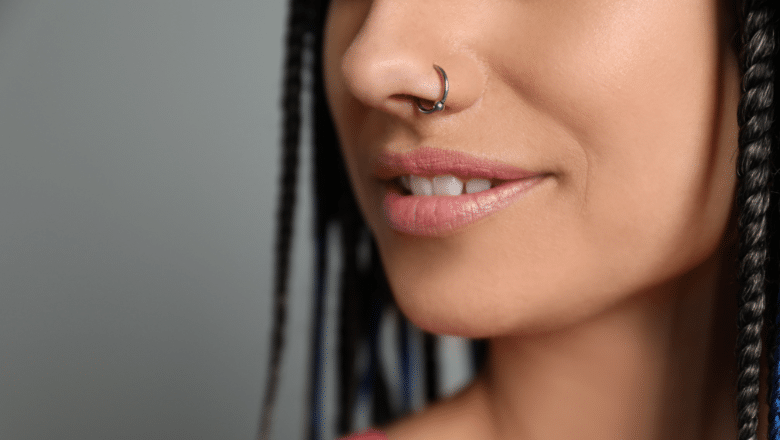

Getting a bump on a new nose piercing is extremely common — and in most cases it is part of the normal healing process rather than a complication. Nose piercings disrupt skin, cartilage and small blood vessels in an anatomically tricky area, and the body’s healing response can produce visible swelling, fluid-filled bumps, or small pieces of granulation tissue around the piercing site. The great majority of these resolve with simple home care over weeks to a few months. A smaller minority — particularly true keloid scars and persistent inflammatory bumps — need professional assessment and treatment.
This guide covers the different types of nose piercing bump, how to tell them apart, what to do for each, and when to seek specialist help at Centre for Surgery’s CQC-regulated Baker Street private hospital.
The different types of nose piercing bump
Normal swelling and inflammation
In the first few weeks after a new piercing, some swelling and redness around the piercing site is entirely expected. The skin and underlying tissue have been broken and the body’s natural inflammatory response is active. This kind of bump is diffuse rather than discrete, usually pink or red, and gradually settles over 2–4 weeks as the wound heals. No specific treatment is needed beyond good piercing aftercare.
Hypertrophic scar
A hypertrophic scar is a raised, firm bump confined to the original piercing site. It develops over the early weeks to months of healing, often peaks at 3–6 months, then slowly improves over 1–2 years. The bump is typically pink or red, firm to the touch, and may itch or feel tender. The key distinguishing feature: it stays within the boundaries of the original piercing hole rather than growing beyond.
Hypertrophic scars respond well to silicone gel or sheeting, intralesional steroid injection, and sometimes laser treatment. For more on the natural history and treatment of these scars, see do hypertrophic scars go away?
Keloid
A keloid is similar to a hypertrophic scar but more aggressive — it extends beyond the boundaries of the original piercing site, growing into previously healthy skin. Keloids do not improve spontaneously the way hypertrophic scars do; they tend to persist or continue growing for months to years. They are more common in patients with darker skin types (Fitzpatrick IV–VI), and there is often a family history.
Keloids need active treatment rather than watchful waiting. Options include intralesional steroid injection (the first-line treatment, given as a course of injections every 4–6 weeks), silicone gel or sheeting, surgical excision combined with post-operative steroid injection or radiotherapy in severe cases, and adjunctive laser. For more detail on keloid management on the ear and face, see how do I get rid of a keloid on my nose piercing? and how to treat and prevent keloids on the ear.
Granuloma
A pyogenic granuloma is a rapidly growing, bright red, vascular lesion that can develop at a piercing site. It bleeds easily — sometimes alarmingly — and tends to grow over weeks to months. Despite the name, it is not infected; the “pyogenic” part is a misnomer. It is a benign vascular overgrowth that responds to surgical excision, sometimes combined with cautery or laser. For full discussion, see pyogenic granuloma removal.
Infection
An infected piercing is red, hot, swollen, painful, and may discharge pus. There is sometimes systemic upset — fever, malaise. This needs prompt medical treatment rather than home management: antibiotics, sometimes formal drainage, and removal of the piercing if the infection is severe. Don’t mistake a routinely inflamed piercing for an infected one; the key distinguishing features of infection are pus, significant pain, and rapid worsening over days.
Allergic reaction
Nickel allergy is common, and a piercing with a nickel-containing post can produce persistent itching, redness, swelling and sometimes weeping at the piercing site. The bump in this case is more diffuse and often itches more than it hurts. Switching to a hypoallergenic post (titanium, niobium, surgical steel, or solid gold) usually resolves the issue. Patients with persistent piercing problems should consider an allergy as a possible cause.
Contact irritation
Make-up, skincare, perfumes, certain soaps, and even some piercing aftercare products can irritate the wound and produce localised swelling. This typically improves quickly once the irritant is identified and removed.
Embedded jewellery
If the piercing post is too short for the swelling, or if the jewellery has been pushed too far in, the skin can heal over the post — embedding it. This produces a persistent bump that does not resolve until the jewellery is removed and the wound managed appropriately.
How to tell which type of bump you have
The first questions to ask yourself are:
- How long has the piercing been there? Bumps in the first few weeks are usually normal inflammation; persistent bumps after 2–3 months need closer assessment.
- Where is the bump? Confined to the piercing hole (hypertrophic scar) or extending beyond it (keloid)?
- What does it feel like? Firm and stable (scar tissue), vascular and bleeding (granuloma), hot and painful (infection)?
- Is there discharge? Clear fluid is usually normal healing; pus suggests infection.
- Has it grown? Stable size suggests a settled scar; rapidly growing suggests granuloma, keloid, or infection.
- How does it look? Pink or red (active healing or inflammation), pale (mature scar), bright red (vascular), tan/brown (older fibrous tissue).
For any bump that is unusual, persistent beyond a few months, growing, or causing concern, professional assessment is appropriate.
Home care that helps
For routine inflammation and early bumps, simple home care usually settles the issue:
Saline soaks
Sterile saline (or homemade salt water using a quarter teaspoon of non-iodised sea salt to a cup of warm boiled water that has cooled) applied as a brief soak with a clean cotton pad twice daily helps clean the area and supports healing. This is the foundation of most piercing aftercare protocols.
Avoid disturbing the piercing
Don’t twist or rotate the jewellery — modern piercing guidance has moved away from this practice. Twisting disrupts the healing tissue and prolongs the process. Leave the piercing alone except for cleaning.
Keep make-up, skincare and hair products away from the piercing
These products can irritate the wound. Apply skincare to the rest of the face but avoid the immediate piercing area until fully healed.
Sleep position
Avoid sleeping directly on the piercing site. Pressure during sleep can increase swelling and prolong healing.
Change to hypoallergenic jewellery if needed
If the piercing has been done with a metal that may contain nickel, switching to titanium, niobium, surgical steel, or solid gold can resolve allergy-related irritation.
Silicone gel for hypertrophic scars
Once the piercing wound has fully closed (typically several weeks after the piercing was done), silicone gel can be applied to small hypertrophic scars. Silicone is the only topical treatment with strong evidence for improving the final scar; it can be continued for 3 months or more. For full discussion, see do silicone strips help cosmetic surgery scars heal better?
When to seek professional assessment
Several scenarios warrant professional review rather than continued home management:
- Suspected infection — pus, significant pain, redness spreading away from the piercing, fever — needs prompt medical attention
- Suspected keloid — bump extending beyond the piercing site, growing rather than settling — needs active treatment
- Granuloma — bright red vascular bump that bleeds easily — needs surgical or laser treatment
- Persistent bump after 3+ months of conservative care — not resolving with home management
- Embedded jewellery — needs careful removal by an experienced practitioner
- Recurrent inflammation after every attempted healing — suggests an underlying issue (allergy, retained foreign material, or anatomical problem)
For specialist assessment of persistent or problematic piercing bumps, particularly those affecting cosmetic appearance, plastic surgical input is valuable. The treatment plan depends on what the bump turns out to be.
Treatment options for problematic piercing bumps
Intralesional steroid injection
For hypertrophic scars and keloids, triamcinolone steroid injection delivered directly into the bump is the first-line treatment. Given as a course of injections at 4–6 week intervals, it gradually reduces the scar by suppressing collagen overproduction. Multiple injections are usually needed. The procedure is performed under topical anaesthesia and takes only a few minutes per session.
Silicone treatment
Silicone gel or sheeting applied to the bump for 12 hours or more per day, continued for 3 or more months, has the strongest evidence base of any topical treatment for hypertrophic scars and keloids.
Surgical excision
For persistent keloids that do not respond to injection, or for granulomas, surgical excision can be performed. Keloid surgery alone has a high recurrence rate — it is usually combined with post-operative steroid injection or, for severe cases, post-operative radiotherapy. Granuloma excision is more straightforward and typically definitive.
Laser treatment
Pulsed-dye laser can reduce redness in vascular scars and granulomas. Fractional CO2 or erbium laser can help with textural improvement. Laser is usually adjunctive rather than primary treatment.
Removal of the piercing
In some cases — particularly with recurrent infection, persistent allergy, or large keloids — the most effective treatment is removal of the piercing itself. Once the piercing is gone, the bump usually settles substantially, though the original scar may persist.
Prevention — minimising the risk in the first place
If you are planning a nose piercing:
- Choose an experienced, reputable piercer using sterile technique and high-quality jewellery
- Start with hypoallergenic jewellery — titanium, niobium, or solid gold — rather than basic surgical steel
- Follow aftercare instructions — saline soaks, leave the jewellery alone, avoid disturbing the area
- Allow adequate healing time — nose piercings typically take 4–6 months to fully heal, sometimes longer
- If you have a personal or family history of keloids, consider carefully whether to proceed — keloid formation is more likely and can be substantial
- Keep make-up, hair products and skincare away from the piercing during healing
If you have already had multiple problematic piercings, particularly with keloid formation, further piercings in the same anatomical area are likely to cause similar problems.
What we don’t recommend
- “Drying out” the piercing with alcohol or hydrogen peroxide — damages the healing tissue and delays healing. Saline soaks are the appropriate cleaning method.
- Twisting or rotating the jewellery — modern piercing guidance has moved away from this. It disrupts healing tissue.
- Tea tree oil, aspirin paste, toothpaste and other home remedies for piercing bumps — none has good evidence; some are actively irritating.
- “Popping” or squeezing a piercing bump — particularly granulomas, which bleed dramatically when disturbed and refill rapidly.
- Removing jewellery as the first step for problematic piercings — sometimes appropriate but not always; the piercing track can heal closed and re-piercing later is more difficult. Discuss with a professional first.
- Ignoring signs of infection — pus, significant pain, fever or spreading redness all warrant prompt medical attention.
- Ignoring a growing bump beyond the piercing site — likely a keloid that will not resolve without active treatment. Earlier intervention produces better results.
- Continued piercing of the same area after previous keloid — high recurrence risk.
Frequently asked questions
Is a bump on my new piercing normal?
Often yes — some swelling and redness is part of normal healing in the first few weeks. Persistent or growing bumps after 2–3 months are more likely to need specific treatment.
How do I tell if it is a keloid?
A keloid extends beyond the boundary of the original piercing into the surrounding skin and tends to grow over time. A hypertrophic scar stays within the piercing site and typically settles over months to a year or two. Family history and skin type are useful clues.
Will my piercing bump go away on its own?
Hypertrophic scars usually do, slowly, over 1–2 years. Keloids rarely do. Granulomas usually need active treatment. Normal inflammation settles within weeks.
Can I keep the piercing if I treat the bump?
Often yes — many bumps can be treated while the piercing remains in place. For some cases, particularly large keloids or recurrent infections, removal of the piercing may be needed.
How much does professional treatment cost?
Treatment cost depends on what is needed — steroid injection courses, surgical excision, laser treatment. We discuss this at consultation with a written quotation.
Is the treatment painful?
Steroid injections sting briefly but are otherwise well tolerated. Surgical procedures are performed under local anaesthetic and are painless. Most treatments are well managed with paracetamol for any post-procedure discomfort.
Can I have the piercing redone after the bump has been treated?
In some cases yes, in others no. Repeat piercing after a keloid carries a high risk of recurrent keloid formation. Repeat piercing after a non-keloid bump can sometimes be considered after a period of healing, but should be discussed individually.
Does Centre for Surgery do nose piercings?
No — Centre for Surgery is a plastic surgery clinic. We treat complications of piercings (keloids, granulomas, persistent bumps, scarring) but do not perform piercings themselves.
Piercing bump assessment at Centre for Surgery
Centre for Surgery is a CQC-regulated plastic surgery clinic at 95–97 Baker Street, Marylebone. Treatment of problematic piercing bumps — keloids, granulomas, hypertrophic scars, and other persistent issues — is performed by GMC-registered consultant plastic surgeons. Steroid injection, surgical excision, laser treatment, and combination approaches are all available. No GP referral is required.
For related guides, see how do I get rid of a keloid on my nose piercing?, how to treat and prevent keloids on the ear, do hypertrophic scars go away?, pyogenic granuloma removal, and scar revision.
Centre for Surgery · CQC-regulated · GMC specialist-registered surgeons · 95–97 Baker Street, Marylebone, London W1U 6RN · 0207 993 4849 · Book a consultation · Finance from 0% APR