If you have been researching ways to refresh the appearance of your eyes, you will likely have come across both blepharoplasty and the Trifecta Lift. While both procedures address signs of ageing around the eyes, they are not interchangeable — the Trifecta Lift is a more comprehensive, combined approach built around lower blepharoplasty, while standalone blepharoplasty is a more focused, singular procedure. Understanding the distinction helps you have a more informed conversation with your surgeon about which approach genuinely fits your concerns.
At Centre for Surgery in London, our GMC-registered consultant surgeons perform both the Trifecta Lift and standard cosmetic blepharoplasty at our CQC-regulated Baker Street clinic. In this guide, we explain how each approach works, what each addresses, and how to determine which is the right fit for your specific concerns.
What Is Blepharoplasty?
Blepharoplasty is eyelid surgery designed to address excess skin, fat, and muscle laxity around the eyes. It can be performed on the upper eyelid, the lower eyelid, or both. Upper blepharoplasty removes excess hooding skin that droops over the eyelid crease, sometimes obstructing the upper field of vision. Lower blepharoplasty addresses under-eye bags, puffiness, and loose skin in the lower eyelid, often improving the tired or aged appearance that excess lower lid tissue can create. As covered in our post on the difference between upper and lower eyelid surgery, the two procedures target different concerns and are frequently performed together when both areas show signs of ageing.
Standard blepharoplasty is a focused, single-procedure operation. It is highly effective for patients whose primary concern is excess skin, fat, or muscle laxity confined to the eyelids themselves, without significant volume loss or skin quality concerns in the surrounding midface.
What Is the Trifecta Lift?
The Trifecta Lift is a combined procedure built around three complementary techniques performed together in a single surgical session: lower blepharoplasty to address excess skin, fat herniation, and tear trough hollowing in the lower eyelid; facial fat grafting to restore lost volume in the midface using the patient’s own fat; and laser skin resurfacing to improve overall skin texture, tone, and fine lines around the eye area. In some cases, this is further extended into a Quadfecta Lift by adding an upper blepharoplasty or brow lift, addressing an even broader range of ageing concerns in a single combined procedure.
The defining feature of the Trifecta Lift is that it does not treat the lower eyelid in isolation. It recognises that ageing around the eyes is rarely confined to excess skin alone — volume loss in the midface and changes in skin quality typically occur alongside it, and addressing all three factors together produces a more harmonious, natural-looking result than treating the eyelid skin alone.
The Key Differences
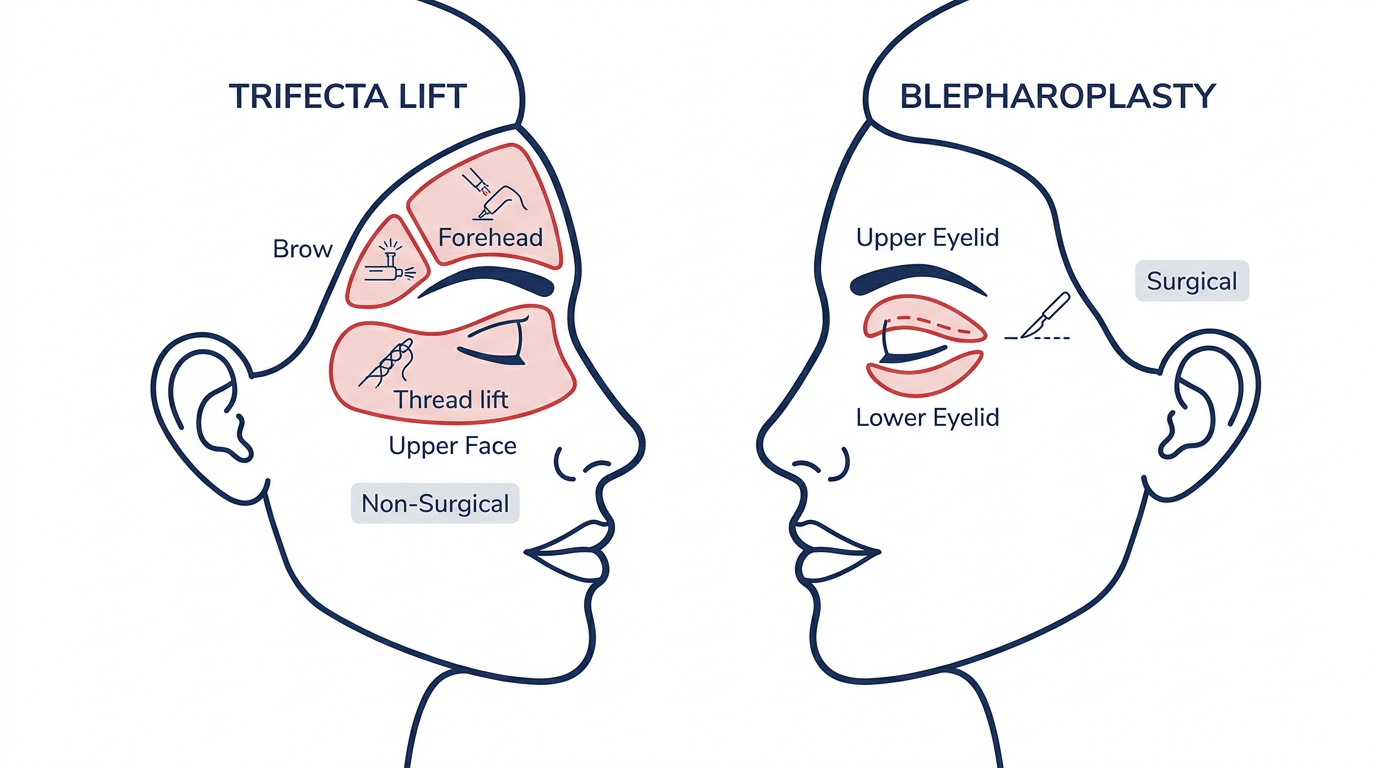
Scope of Treatment
Standard blepharoplasty addresses the eyelid itself — the excess skin, fat, and muscle that has accumulated or descended in that specific area. The Trifecta Lift addresses the eyelid plus the adjacent midface volume and skin quality, recognising these as interconnected aspects of periorbital ageing rather than isolated problems.
Volume Restoration
This is one of the most significant distinctions. Standard blepharoplasty removes or repositions existing tissue but does not add volume. The Trifecta Lift specifically incorporates fat grafting to restore volume that has been lost in the midface over time — addressing hollowing beneath the eyes and in the upper cheek that blepharoplasty alone cannot correct. For patients whose primary concern is volume loss and hollowing rather than excess skin, the Trifecta Lift’s inclusion of fat grafting is a meaningful clinical advantage.
Skin Quality
Standard blepharoplasty does not address skin texture, fine lines, or pigmentation — it is a structural procedure focused on excess tissue. The Trifecta Lift incorporates laser skin resurfacing as a third component, improving the overall quality and texture of the skin around the eyes alongside the structural correction. This means patients with crepey, textured, or fine-lined skin around the eyes — not just excess or sagging skin — see a more complete improvement.
Procedure Complexity and Duration
Standard blepharoplasty, particularly when performed on a single eyelid area, is a comparatively shorter and more contained procedure. The Trifecta Lift, combining three distinct techniques, takes longer in theatre — typically a few hours — and represents a more involved surgical undertaking. This is a meaningful consideration for patients weighing the trade-off between a more comprehensive result and a shorter, more focused procedure.
Anaesthesia
Standard blepharoplasty can often be performed under local anaesthetic with sedation, particularly for upper eyelid procedures. As covered in our post on blepharoplasty under local vs general anaesthetic, the choice depends on the extent of surgery and patient preference. The Trifecta Lift, given its combined and more extensive nature, is typically performed under general anaesthesia, though IV sedation may be an option depending on individual circumstances.
Results and Longevity
Both procedures produce long-lasting results when performed well, but the nature of the improvement differs. Blepharoplasty results are durable because excess tissue, once removed, does not return in the same way. As covered in our post on how long blepharoplasty lasts, results typically remain visible for many years. The Trifecta Lift’s combined approach — particularly the fat grafting component — can produce a more comprehensive, natural-looking rejuvenation that addresses the full picture of periorbital ageing, with results that similarly last for years, though fat graft survival and longevity can vary between individuals.
Comparison at a Glance
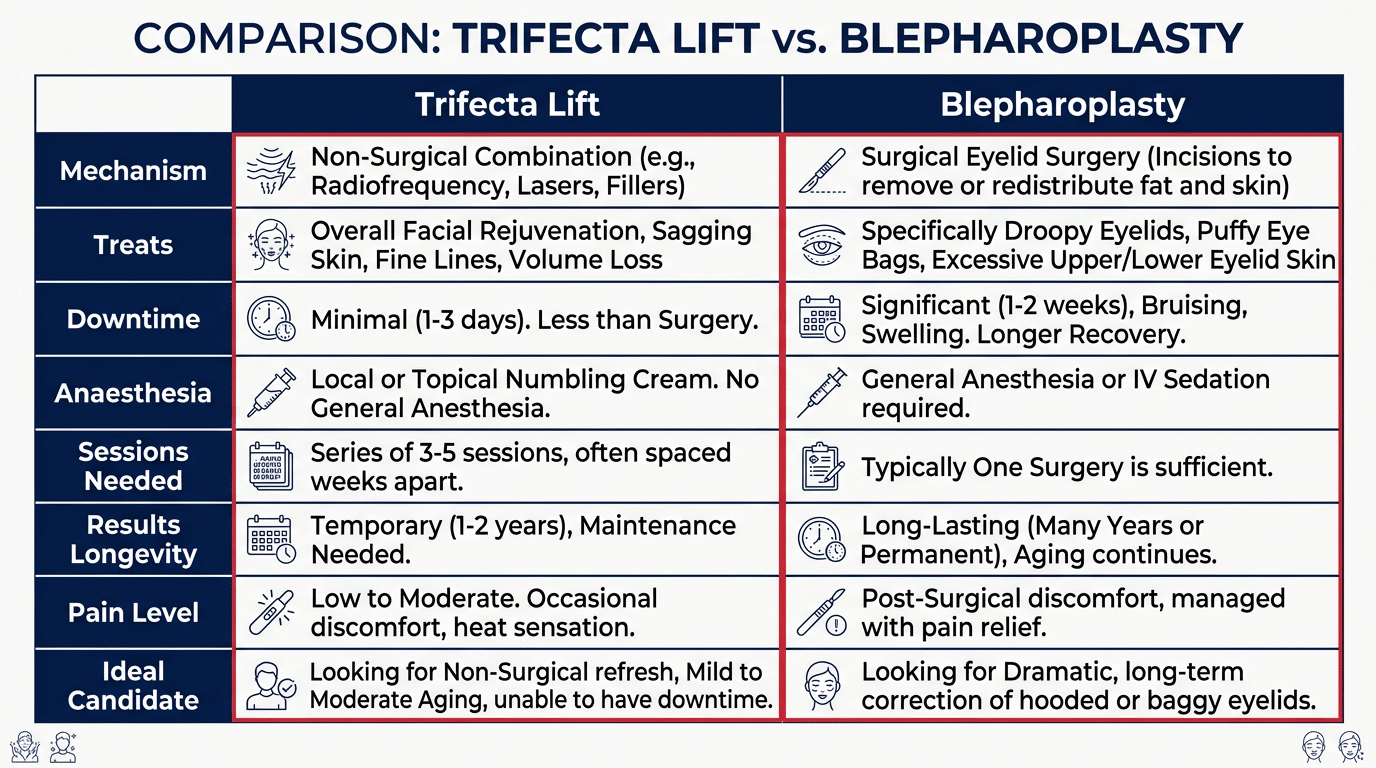
Who Is Each Procedure Right For?
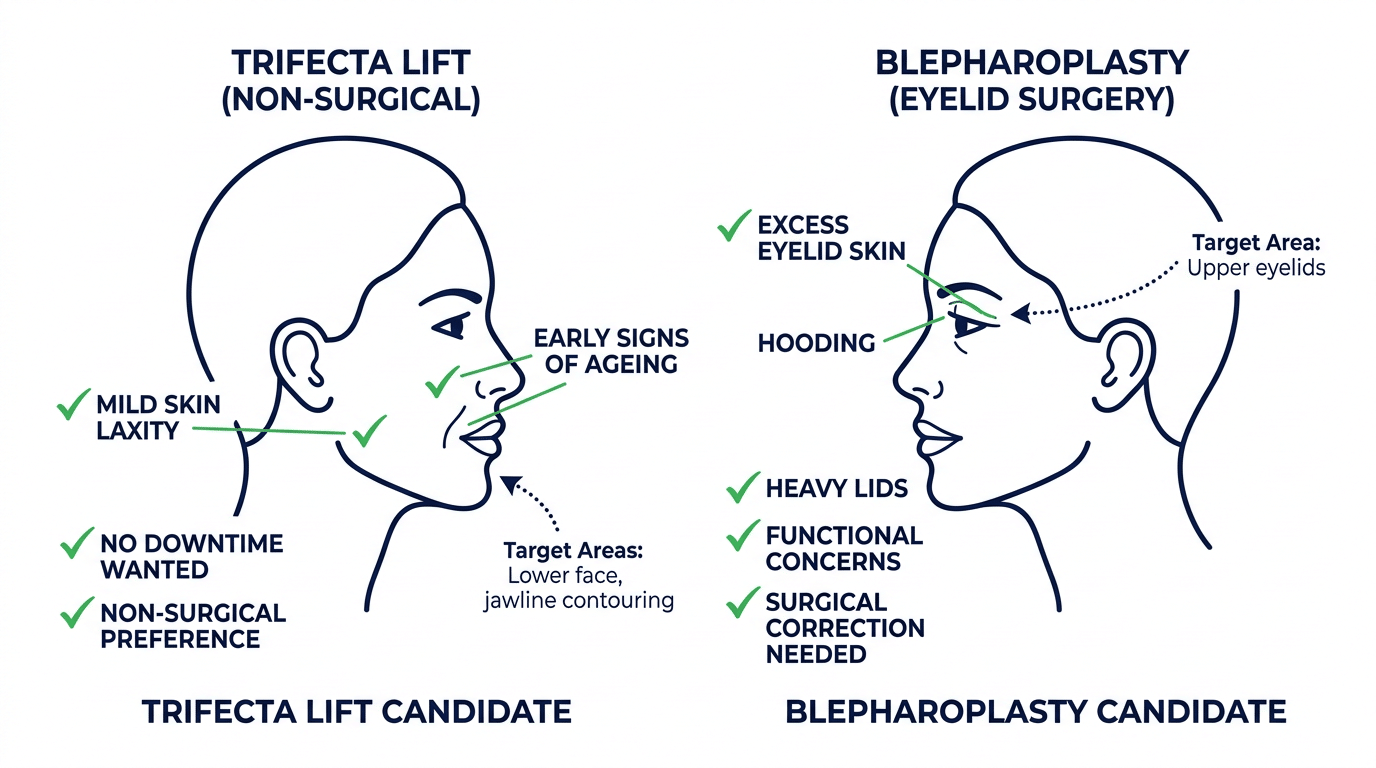
Standard blepharoplasty is typically the right choice for patients whose primary concern is excess eyelid skin or fat, with otherwise good midface volume and skin quality. This includes younger patients presenting with early signs of eyelid ageing, patients seeking correction of a specific functional concern such as hooding affecting vision, and patients who prefer a more contained procedure with a shorter recovery.
The Trifecta Lift is typically the right choice for patients who present with a combination of lower eyelid bagging, midface volume loss or hollowing, and skin quality concerns such as fine lines or textural changes around the eyes. This is particularly relevant for patients in their 40s and 50s, where ageing has typically progressed beyond isolated eyelid skin excess to involve volume loss and skin quality changes across the broader periorbital area. Patients who want the most comprehensive, harmonious improvement to the eye area in a single combined procedure are well suited to this approach.
A thorough consultation and clinical assessment is essential in distinguishing between these patient profiles. Many patients have features of both — some excess skin and some volume loss — and the right approach depends on which factor is contributing most significantly to their appearance of ageing or tiredness.
Can the Two Be Combined With Other Procedures?
Yes — both blepharoplasty and the Trifecta Lift can be combined with additional facial procedures depending on the full picture of a patient’s concerns. The Trifecta Lift itself can be extended into a Quadfecta Lift with the addition of upper blepharoplasty or a brow lift. Standard blepharoplasty is also frequently combined with a brow lift when significant brow descent is contributing to the appearance of upper eyelid hooding, or with a mini facelift when broader lower face rejuvenation is also desired.
Frequently Asked Questions
Is the Trifecta Lift more invasive than blepharoplasty?
The Trifecta Lift is a more extensive combined procedure than a standard standalone blepharoplasty, given that it incorporates three distinct techniques performed in one session. It typically takes longer in theatre and is usually performed under general anaesthesia, whereas standard blepharoplasty can often be performed under local anaesthetic with sedation.
Does the Trifecta Lift include upper eyelid surgery?
The standard Trifecta Lift focuses on the lower eyelid combined with fat grafting and laser resurfacing. When upper eyelid surgery or a brow lift is added, this becomes a Quadfecta Lift, addressing a broader range of periorbital and upper facial ageing.
Will I need fat grafting if I just have blepharoplasty?
Not necessarily — fat grafting is only beneficial for patients with genuine volume loss in the midface. If your primary concern is excess skin or fat rather than hollowing, standard blepharoplasty without additional volume restoration may be entirely sufficient. This is precisely the kind of distinction your surgeon will assess at consultation.
How do I know which approach is right for me?
A thorough clinical assessment at consultation is the only reliable way to determine this. Your surgeon will assess the eyelid skin and fat, the midface volume, and the skin quality around your eyes to recommend whether standard blepharoplasty or the more comprehensive Trifecta Lift approach is most appropriate for your specific combination of concerns.
Is recovery longer after a Trifecta Lift than after blepharoplasty?
Recovery from the Trifecta Lift is generally similar in overall timeframe to blepharoplasty — most patients resume normal activities within one to two weeks — but given the combined nature of the procedure, including the fat grafting component, swelling and bruising may be somewhat more pronounced initially compared to an isolated blepharoplasty.
Eye Rejuvenation at Centre for Surgery
Centre for Surgery performs both blepharoplasty and the Trifecta Lift at our CQC-regulated Baker Street clinic in central London. All procedures are performed by GMC-registered consultant plastic surgeons following thorough clinical assessment and personalised treatment planning.
Finance options including 0% APR are available through our partner Chrysalis Finance — visit our Finance Options page for details.
Phone: 0207 993 4849 | Email: contact@centreforsurgery.com | Address: 95-97 Baker Street, London W1U 6RN
Related Articles
- Watery Eyes After Blepharoplasty: Causes and Treatments
- What Is the Difference Between Cosmetic and Functional Eyelid Surgery?
- Will Eyelid Surgery Change Your Eye Shape?
[contact-form-7 id=”256″ title=”Treatments form”]