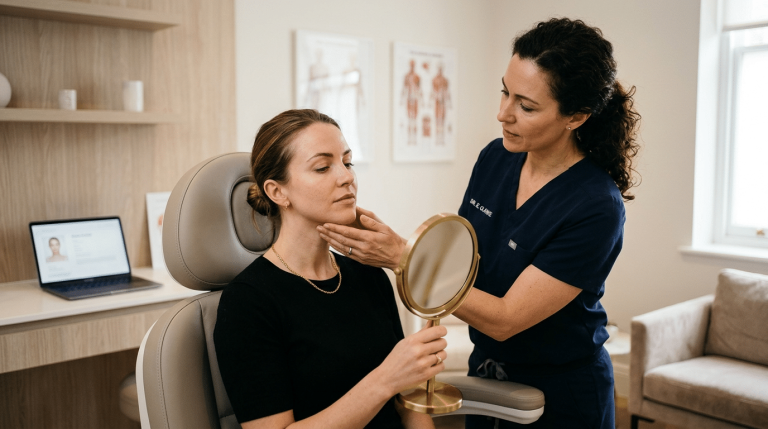

“Ballerina breasts” — sometimes called “yoga boobs” — is one of the most searched aesthetic terms in breast surgery right now, driven by a clear shift in what patients are asking for: not bigger breasts, but subtle, natural, proportionate ones that suit a slim, athletic frame and move naturally during exercise. It is a trend name rather than a specific operation, but it describes a genuine and well-defined aesthetic goal, and achieving it well requires a particular surgical approach.
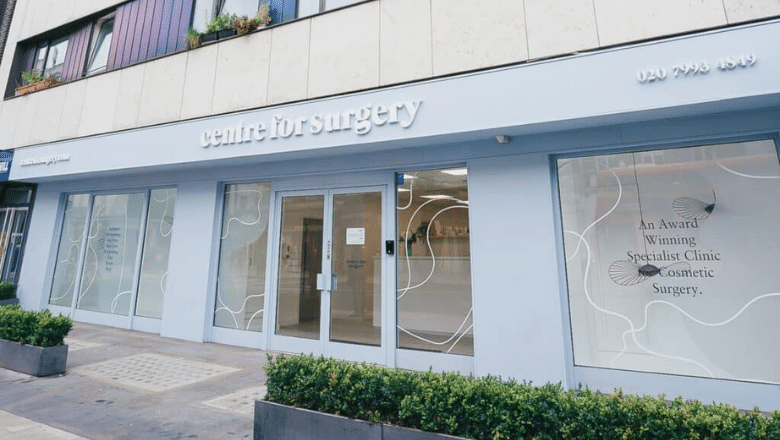
At Centre for Surgery in London, our GMC-registered consultant plastic surgeons perform the full range of procedures behind this look — from fat transfer breast augmentation to small-implant breast augmentation — at our CQC-regulated Baker Street clinic. This guide explains exactly what the ballerina breast look is, how it is achieved, which approach suits which patient, what it costs, and — just as importantly — who it is not the right choice for.
What Are Ballerina Breasts?
The term “ballerina breasts” describes a specific aesthetic: small to moderate in size, soft and natural in feel, with a gently sloping upper pole rather than a rounded, obviously augmented look, and enough natural movement to look right on a lean, toned physique — the kind of result that complements a dancer’s or a yoga practitioner’s body rather than standing out from it. The “yoga boobs” label captures the same idea from a slightly different angle: breasts that sit and move naturally during athletic activity, without the firm, high, static appearance associated with larger, over-the-muscle implants.
Crucially, this is a departure from the dominant breast augmentation aesthetic of the previous two decades, which prioritised fullness, projection, and obvious upper-pole roundness. The ballerina look prioritises the opposite: proportion, softness, subtlety, and a result that most people would not immediately identify as surgical. It suits slim and athletic patients particularly well because their lower body fat and toned chest musculature show off a natural, tapered breast shape rather than concealing it.
Is “Ballerina Breast Augmentation” a Specific Procedure?
No — and this is worth being clear about, because some marketing implies it is a distinct branded operation. It is not. The ballerina look is a goal achieved through one of the established breast augmentation techniques, selected and tailored to produce a subtle, natural result. The three routes to it are fat transfer, small implants, or a hybrid of the two. Which one is right depends entirely on your starting anatomy, the amount of donor fat available, and how much size increase you want — decisions made properly at a consultation, not chosen from a menu online.
Fat Transfer vs Small Implants for the Ballerina Look
Fat Transfer Breast Augmentation
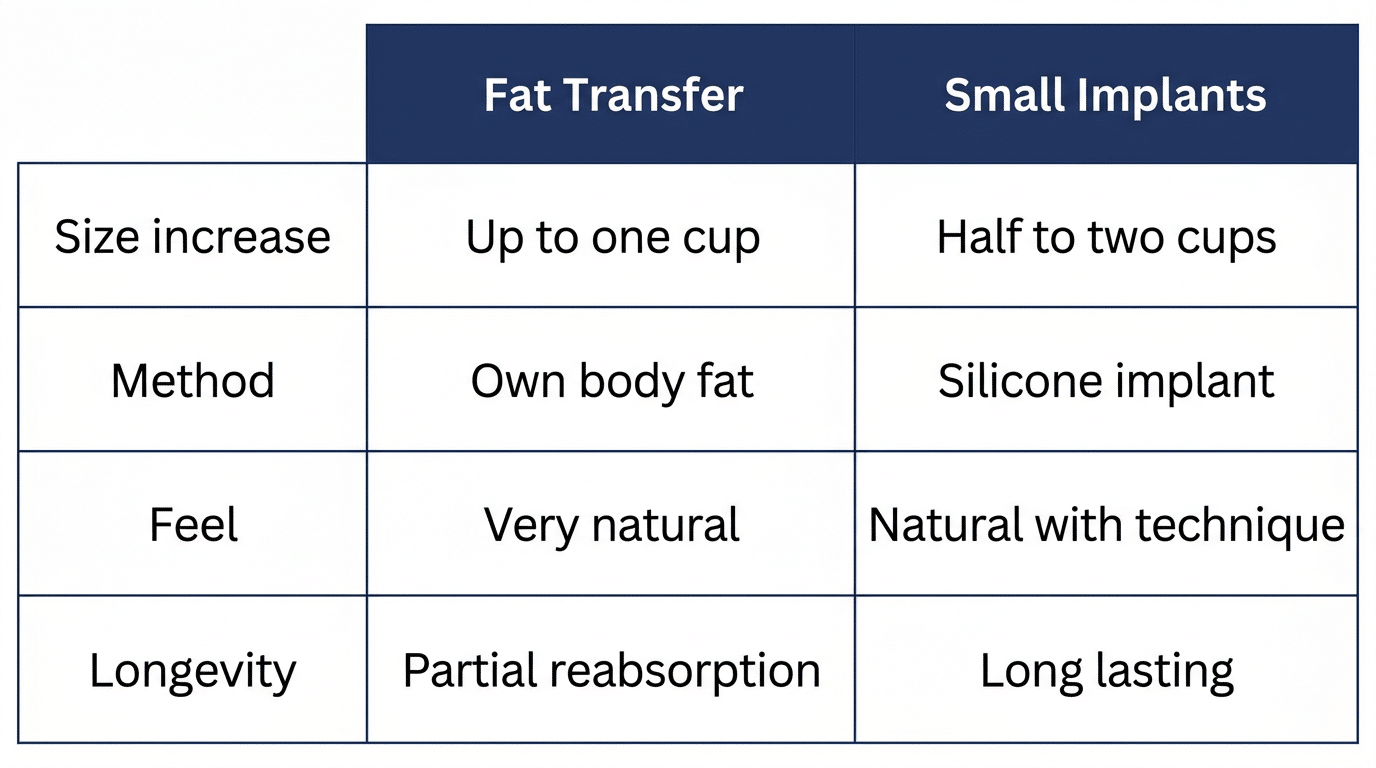
Fat transfer is, for many patients, the purest route to the ballerina look because it uses nothing but the patient’s own tissue. Fat is harvested by liposuction from an area with excess — commonly the abdomen, flanks, or thighs — purified, and injected into the breasts to add volume and refine shape. The result feels entirely natural because it is natural fat, moves naturally, and has no upper-pole roundness or firmness. As a bonus, the donor area is slimmed at the same time, which complements the overall athletic aesthetic.
The honest limitation is size. Fat transfer typically achieves up to around one cup size increase per session, because only a proportion of the transferred fat survives long term — usually around 60 to 70%, with the rest naturally reabsorbed over the first three months. This makes it ideal for subtle enhancement but unsuitable for patients wanting a more significant increase. It also requires enough donor fat to harvest, which very lean patients may not have. Our post on whether fat transfer breast enlargement lasts covers longevity and the survival rate in full detail.
Small Implants
For patients who want a slightly greater or more predictable size increase while still keeping the result natural, small breast implants placed with a natural-result technique are the alternative. The key to a ballerina result with implants is not the implant itself but how it is chosen and placed: a smaller, anatomically appropriate implant, placed under the muscle, with a moderate rather than high profile. Our post on the most natural-looking breast implants explains how implant selection drives the outcome.
Hybrid (Composite) Augmentation
The third and often optimal route for the ballerina look is composite (hybrid) breast augmentation — a small implant for reliable core volume and base shape, layered with fat transfer over the upper pole to soften the transition and camouflage any implant edge. This is particularly valuable in slim patients, whose thin natural tissue provides less coverage over an implant, and it frequently produces the most natural result of all three routes. It is an approach most competitor articles on this topic overlook entirely, yet for the right patient it is the single best way to achieve a truly undetectable ballerina result.
Why Implant Placement Matters for a Natural Result
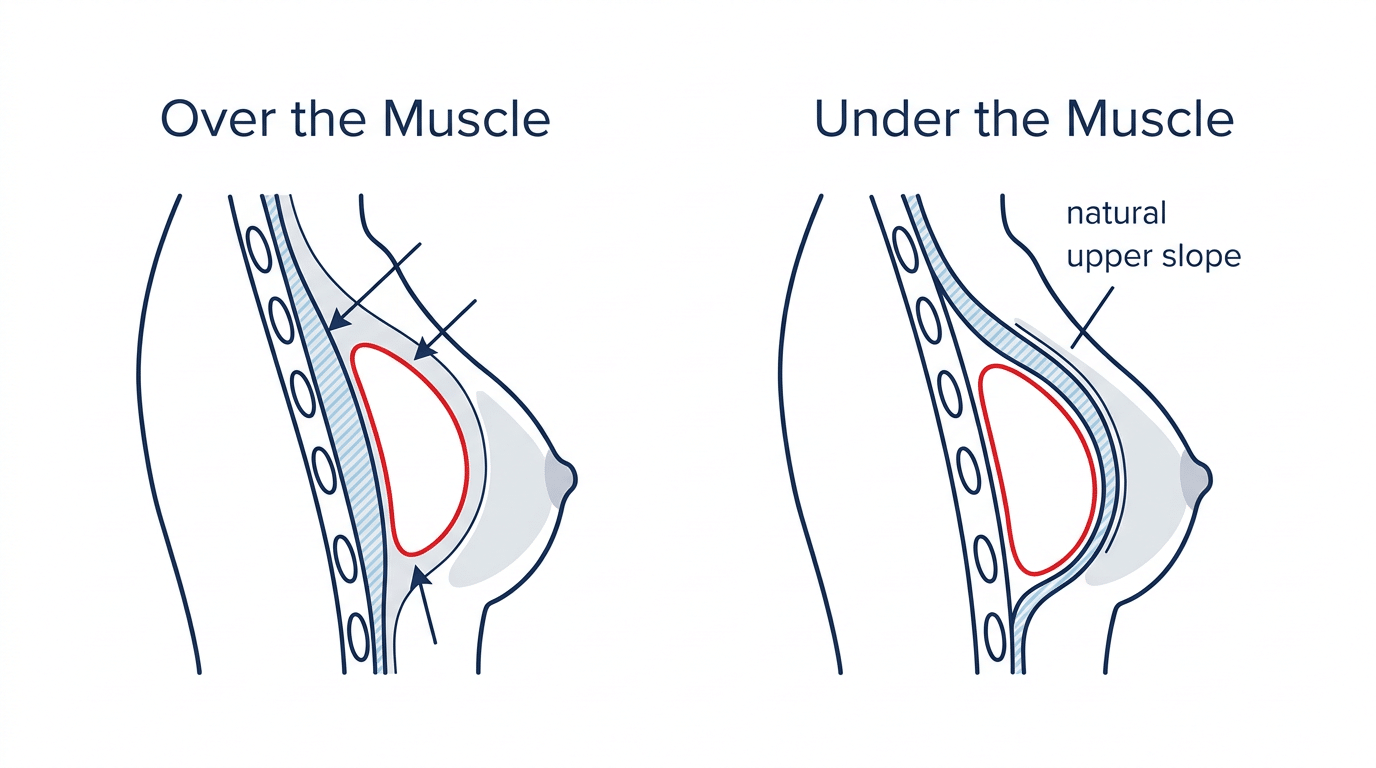
If implants are used, placement is the single biggest determinant of whether the result reads as “ballerina” or as an obvious augmentation. Placing the implant under the pectoral muscle (submuscular or dual-plane placement) allows the muscle and tissue to drape over the upper edge of the implant, producing the smooth, gently sloping upper pole that defines the natural look. Over-the-muscle placement, by contrast, tends to produce the rounder, fuller upper pole associated with a more obvious result — the opposite of what a ballerina augmentation aims for. Profile and projection choice matters too, as covered in our post on breast implant profile and projection: a moderate profile suits this aesthetic far better than a high or extra-high profile.
Who Is a Good Candidate?
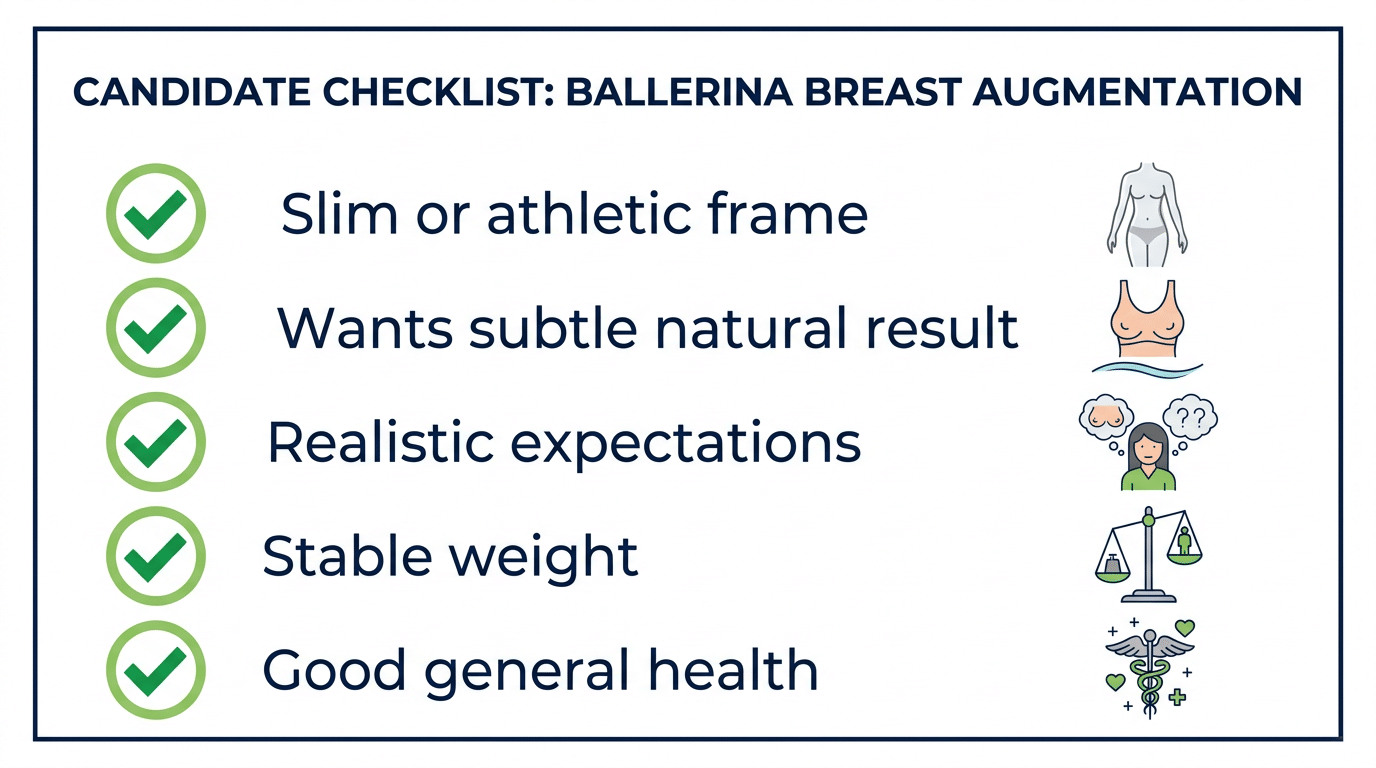
The ballerina augmentation suits patients with a slim or athletic frame who want a subtle, proportionate enhancement rather than a dramatic size increase; who have realistic expectations about what a natural result looks like; who are at a stable weight (particularly important for fat transfer, since weight fluctuation alters the result); and who are in good general health. For fat transfer specifically, having enough donor fat to harvest is an additional requirement, assessed at consultation — our post on what happens if you don’t have enough fat explains how this is evaluated.
Who Is It Not Right For?
Equally important — and something competitor articles rarely address honestly — is who the ballerina look does not suit. Patients wanting a significant size increase (more than one to two cup sizes) will not achieve their goal with fat transfer or small implants, and pushing either technique to deliver more volume than it comfortably can produces a worse, less natural result. Patients with significant breast sagging may need a breast uplift rather than, or alongside, augmentation, since adding volume alone will not lift a ptotic breast. And patients who are very lean with minimal donor fat may not be candidates for fat transfer at all, making a small implant or hybrid approach the only realistic route. An honest consultation will tell you which category you fall into — a surgeon who promises the ballerina look to every patient regardless of anatomy is not being straight with you.
Recovery
Recovery depends on the technique used. Fat transfer generally involves a gentler recovery than implants, with most patients returning to desk-based work within a few days to a week, wearing a supportive garment over both the donor and breast areas, and avoiding strenuous exercise for four to six weeks. Small implant augmentation follows the standard breast augmentation recovery — most patients back to desk work within a week, a supportive surgical bra for six weeks, and no strenuous upper-body exercise for four to six weeks. For a slim, athletic patient whose lifestyle involves regular training, the timeline for returning to full exercise is worth discussing specifically at consultation. Our posts on sleeping after breast surgery and the recovery detail on each service page cover this fully.
How Much Does a Ballerina Breast Augmentation Cost in London?
Cost depends entirely on which technique is used, because the ballerina look is a goal rather than a single fixed procedure. Our dedicated cost guides set out current London pricing for each route: how much breast augmentation costs for the small-implant approach, and how much fat transfer costs for the fat transfer and hybrid routes. Hybrid composite augmentation, which combines a small implant with fat transfer, sits between the two depending on the extent of fat transfer involved. You can also see how these compare against our full range of procedures on our cosmetic surgery costs and prices page.
An accurate, personalised price can only be given once your surgeon has assessed your anatomy and agreed the right approach at consultation. Finance options including 0% APR are available through our partner Chrysalis Finance for procedures over £1,500 — visit our Finance Options page for details.
Frequently Asked Questions
Are ballerina breasts a real procedure?
No — “ballerina breasts” is an aesthetic goal, not a specific operation. It describes a small, soft, natural, proportionate result achieved through fat transfer, small implants, or a hybrid of the two, tailored to a slim frame.
What is the difference between ballerina breasts and yoga boobs?
They describe the same aesthetic — small, natural, soft breasts that suit an athletic body and move naturally during exercise. “Yoga boobs” simply emphasises the natural movement and comfort during activity, while “ballerina breasts” emphasises the elegant, proportionate shape.
Is fat transfer or an implant better for a natural look?
Both can look natural. Fat transfer offers the most natural feel and movement but a smaller, less predictable size increase. Small implants offer a more predictable and slightly greater increase, and look very natural when small, placed under the muscle, and chosen at a moderate profile. A hybrid of the two is often the most natural result of all.
How much bigger will my breasts be?
Fat transfer typically achieves up to around one cup size per session. Small implants can achieve roughly half a cup to two cup sizes depending on implant choice. The ballerina aesthetic deliberately stays at the subtle end of this range.
Will the result look obviously “done”?
The entire point of this approach is that it should not. Under-muscle placement, moderate profiles, small sizes, and fat layering over the upper pole all work to produce a result that reads as naturally proportionate rather than surgically enhanced.
Do I need to be slim to have a ballerina augmentation?
The aesthetic is designed for and looks best on slim and athletic frames, but the underlying techniques can be used across a range of body types. What matters most is matching the size and technique to your proportions, which is assessed at consultation.
How long do the results last?
Fat that survives the transfer is permanent, though significant weight change can alter it. Implants are long-lasting but not lifetime devices and may eventually require replacement. Your surgeon will discuss longevity for your chosen approach at consultation.
Ballerina Breast Augmentation at Centre for Surgery
Centre for Surgery performs fat transfer breast augmentation, small-implant breast augmentation, and hybrid composite augmentation at our CQC-regulated Baker Street clinic in central London. All procedures are performed by GMC-registered consultant plastic surgeons following a thorough consultation to match the right technique to your frame, goals, and anatomy — and to advise you honestly if the ballerina look is not the right choice for what you want to achieve.
Finance options including 0% APR are available through our partner Chrysalis Finance — visit our Finance Options page for details.
Phone: 0207 993 4849 | Email: contact@centreforsurgery.com | Address: 95-97 Baker Street, London W1U 6RN
[contact-form-7 id=”256″ title=”Treatments form”]