

If you have noticed two vertical cords appearing down the front of your neck — particularly when you tense your jaw, speak, or look in a certain direction — you are most likely seeing platysmal bands. This is one of the most common and recognisable signs of neck ageing, and one of the most frequent reasons patients book a consultation for neck lift surgery at our Baker Street clinic.
At Centre for Surgery, our GMC-registered consultant surgeons assess and treat platysmal bands using the full spectrum of options available — from muscle relaxant injections through to platysmaplasty as part of a comprehensive neck lift. This guide goes beyond the basics to explain the underlying anatomy, the genuine clinical distinction between dynamic and static bands, and exactly why some treatments work for one patient and not another.
What Are Platysmal Bands?
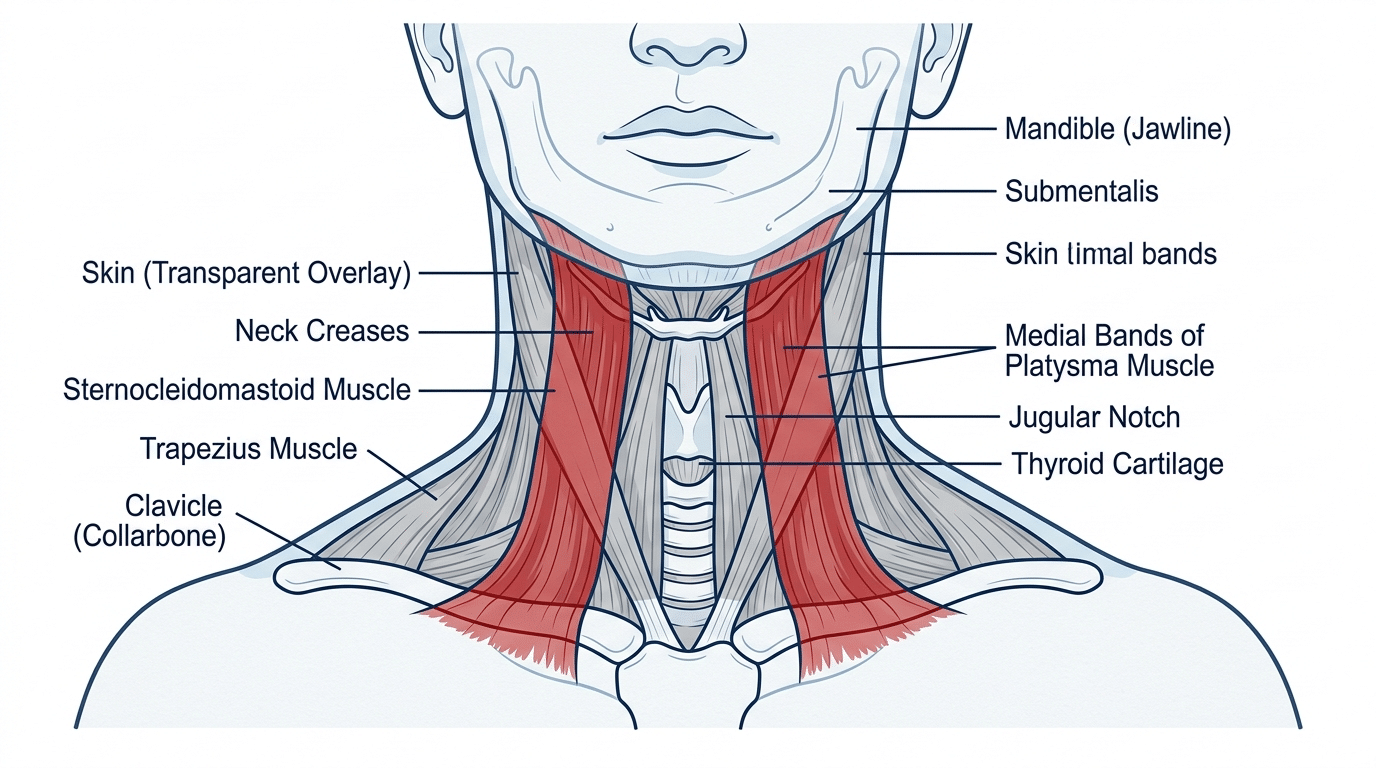
The platysma is a broad, thin sheet of muscle lying directly beneath the skin, running from the upper chest and shoulder up to the jawline and lower face. It is one of the most active muscles in the body — engaged every time you speak, swallow, grimace, or pull your mouth downward in expressions of strain or surprise — which is precisely why it cannot simply be “rested” into improvement the way other areas of ageing skin sometimes can.
At the midline of the neck, the inner edges of the left and right platysma either fuse together (a pattern surgeons call decussation) or remain separate. Around one in ten people are born without this central fusion, meaning they lack structural support across the midline from birth and are predisposed to earlier, more prominent banding regardless of age. In patients where the muscle does fuse, ageing, thinning of the overlying fat, and repeated muscle contraction over decades can cause the central attachment to weaken and the two halves to separate — a process functionally similar to abdominal muscle separation (diastasis) seen elsewhere in the body. Once separated, the inner edges of the muscle become visible beneath the thin neck skin as two parallel cords.
Dynamic vs Static Bands — Why This Distinction Matters
One of the most clinically important things to understand about platysmal bands — and a distinction many general explanations skip entirely — is the difference between dynamic and static bands, because it directly determines which treatments will actually work for you.
Dynamic bands are only visible when the platysma muscle is actively contracted — when you clench your jaw, grimace, or tense your neck. At rest, the neck appears smooth. Dynamic bands respond well to muscle relaxant injections, because the treatment works precisely by reducing the muscle contraction that makes the bands visible in the first place.
Static bands are visible even when the neck and face are completely relaxed. This typically indicates a more advanced degree of muscle separation and loss of structural support, often combined with overlying skin laxity. Static bands respond poorly to muscle relaxant injections — because the bands are visible due to structural separation of the muscle itself and excess skin, not because of active contraction. No amount of relaxing a muscle will hide an underlying structural separation that is present at rest. This is the single most common reason patients try muscle relaxant injections for neck bands and feel disappointed by the result: they have static bands, which were never likely to respond to a treatment designed for dynamic ones.
A proper clinical assessment — examining your neck both at rest and during active contraction — is the only reliable way to determine which category your bands fall into, and therefore which treatment pathway is actually appropriate for you.
What Causes Platysmal Bands?
Natural Ageing
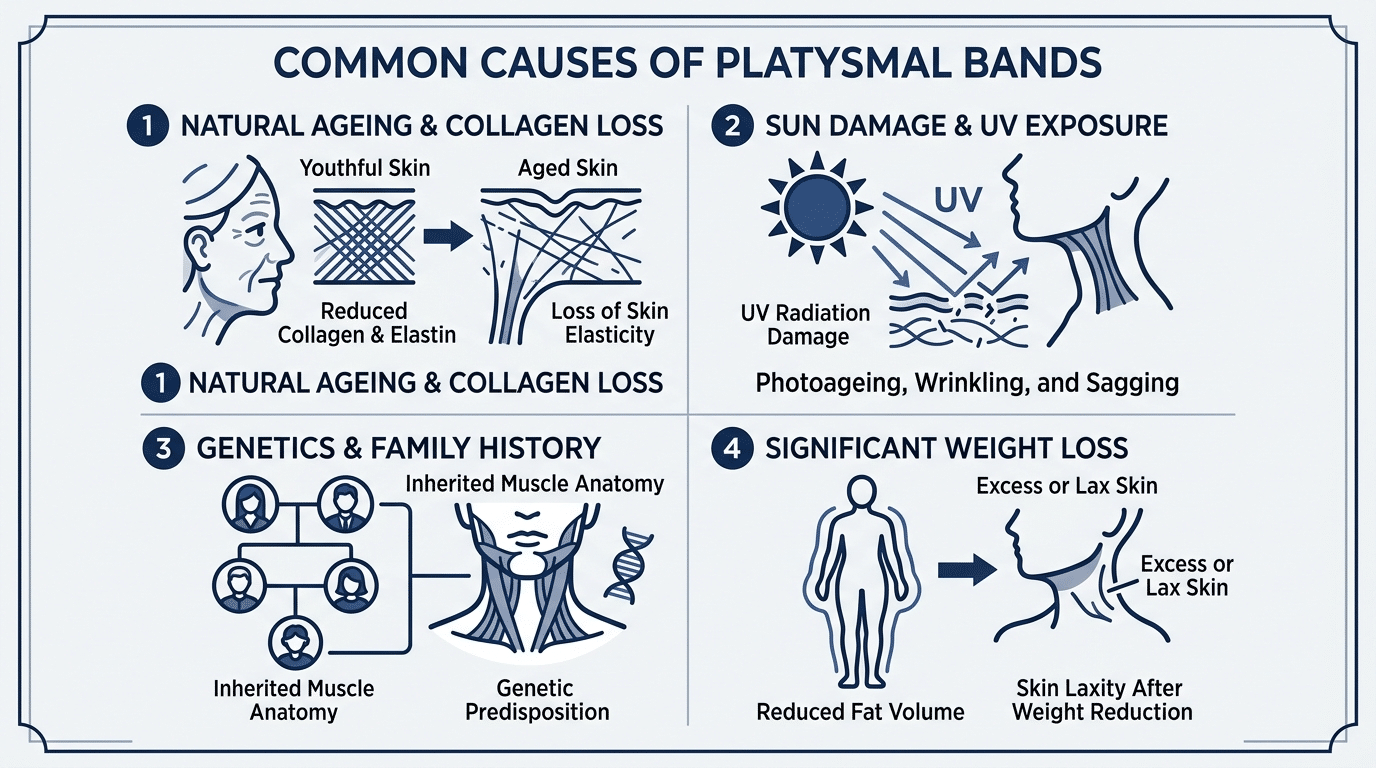
The most common cause of platysmal banding is the cumulative effect of decades of muscle use combined with the gradual loss of skin and soft tissue elasticity that accompanies ageing. This typically becomes noticeable from the late 40s onwards, though the exact timing varies considerably between individuals depending on the factors below.
Genetics and Muscle Anatomy
Whether your platysma fuses at the midline (decussation) is determined at birth and has a major bearing on how early and how prominently bands develop. Patients without midline fusion, or with a naturally thin, well-defined platysma, tend to develop visible banding earlier and more prominently than those with thicker, fully fused muscle. Family history is often a genuinely useful predictor for this reason — patients frequently report a parent who developed similar banding at a comparable age.
Sun Damage
Cumulative UV exposure accelerates the breakdown of collagen and elastin in neck skin specifically — skin in this area is thinner than facial skin and provides less camouflage over the muscle as it thins further with sun damage.
Significant or Rapid Weight Loss
Patients who have lost a substantial amount of weight — through diet, exercise, bariatric surgery, or medical weight-loss treatment — very often notice platysmal bands becoming considerably more prominent within months. This occurs because the layer of fat that previously sat over and camouflaged the muscle is reduced, unmasking separation that may have been present but hidden for years. This is also one of the mechanisms behind the so-called “Ozempic neck” phenomenon increasingly discussed in relation to rapid pharmaceutical weight loss — the bands themselves are not caused by the medication, but by the speed and degree of fat loss revealing pre-existing muscle separation.
Treatment Options for Platysmal Bands
Muscle Relaxant Injections
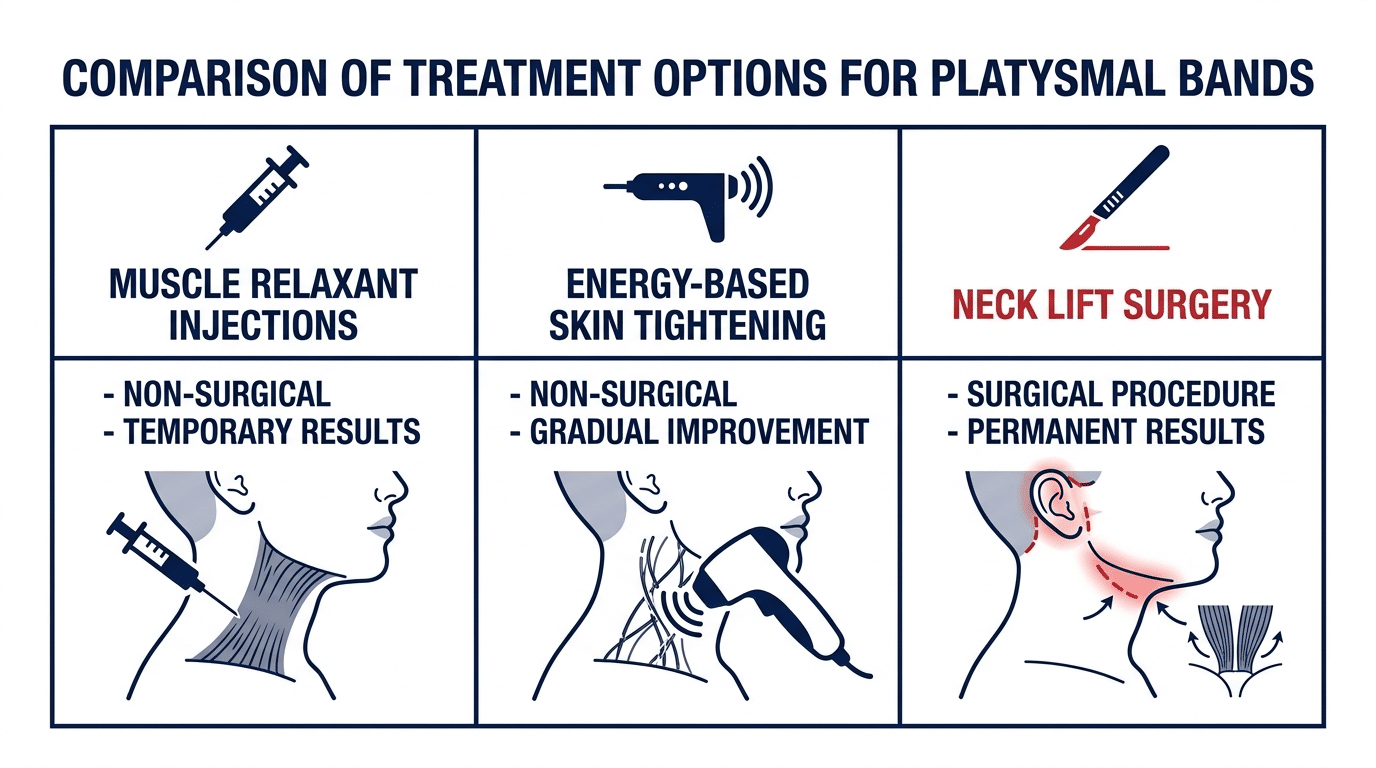
For dynamic bands specifically — those only visible on muscle contraction — carefully placed muscle relaxant injections along the length of each band reduce platysma activity, softening the bands when the muscle would otherwise be engaged. This approach, sometimes referred to by patients as a “Nefertiti lift,” is non-surgical, requires no downtime, and is well suited to patients in the earlier stages of banding. Results typically become apparent within one to two weeks and last three to four months before the treatment needs repeating. As covered above, this approach is not appropriate for static bands, and using it on the wrong band type is the most common reason for patient disappointment with injectable treatment for the neck.
Energy-Based Skin Tightening
For patients with mild skin laxity accompanying early banding, radiofrequency and laser-based skin tightening treatments can modestly improve overall neck skin quality over a course of sessions by stimulating collagen production. As covered in our post on whether Fotona 4D can really tighten skin without surgery, these technologies have a genuine but limited role — they improve skin quality, not muscle position, so they are not a solution for established muscle separation on their own.
Fat Transfer
In select patients, particularly those where volume loss is contributing to a hollowed, aged appearance of the neck alongside banding, fat transfer can be used to restore subtle volume and soften the visual contrast of the bands. This is typically used as an adjunct alongside platysmaplasty rather than as a standalone treatment, since it addresses volume rather than the underlying muscle separation.
Platysmaplasty (Neck Lift Surgery)
For static, established bands — and for dynamic bands that patients want resolved permanently rather than managed every few months — platysmaplasty is the only treatment that directly corrects the underlying cause. During the procedure, your surgeon repositions and sutures the separated edges of the platysma back together along the midline, restoring a continuous muscle sheet and the smooth youthful contour this creates. This is typically performed as part of a broader neck lift, combined with liposuction or direct excision of excess submental fat and redraping of any loose skin. As detailed in our post on the difference between a neck lift and platysmaplasty, platysmaplasty specifically refers to the muscle repair, while a neck lift is the complete surgical package built around it. Results from a well-performed platysmaplasty are durable, commonly lasting eight to ten years or more.
Which Treatment Is Right for You?
Matching the treatment to the band type and severity is the single biggest factor in patient satisfaction with neck band treatment. As a general guide: dynamic bands with no skin laxity respond well to muscle relaxant injections as a temporary, low-commitment first step. Mild laxity with early dynamic banding may benefit from a combination of injections and energy-based skin tightening. Static bands, or dynamic bands that have become a recurring inconvenience due to needing repeat treatment every few months, are the clearest indication for surgical platysmaplasty as part of a neck lift.
A thorough consultation — including assessment of your neck both at rest and on active muscle contraction, evaluation of skin laxity, and assessment of submental fat — is essential before any treatment plan is recommended.
Frequently Asked Questions
Can platysmal bands be treated without surgery?
Dynamic bands — those only visible on muscle contraction — can be effectively softened with muscle relaxant injections, sometimes called a Nefertiti lift. Static bands, visible at rest, do not respond well to injections because they reflect structural muscle separation rather than active contraction, and typically require surgical platysmaplasty for a meaningful, lasting result.
How do I know if my bands are dynamic or static?
Look in a mirror with your neck and jaw completely relaxed. If the bands are not visible at rest but appear when you clench your jaw or tense your neck, they are dynamic. If they remain visible even with your neck fully relaxed, they are static. A clinical assessment confirms this and rules out a mixed presentation, which is also common.
At what age do platysmal bands typically develop?
Most commonly from the late 40s onwards, though genetics — particularly whether your platysma muscle fuses at the midline — and significant weight loss can cause noticeable banding considerably earlier, including in patients in their 30s.
Will platysmal bands come back after platysmaplasty?
Platysmaplasty produces durable results, typically lasting eight to ten years or longer, because the muscle is structurally repositioned and secured rather than temporarily relaxed. The natural ageing process continues afterwards, but the surgical correction itself does not reverse.
Can platysmal bands be a sign of something other than ageing?
In most cases, no — they are a cosmetic finding related to muscle anatomy and ageing. Rarely, unilateral (one-sided) banding that appears suddenly, particularly alongside facial weakness, can relate to nerve issues affecting the platysma and warrants medical assessment rather than cosmetic treatment.
Platysmal Band Treatment at Centre for Surgery
Centre for Surgery performs neck lift surgery, including platysmaplasty, at our CQC-regulated Baker Street clinic in central London. All procedures are performed by GMC-registered consultant plastic surgeons following thorough clinical assessment — including evaluation at rest and on muscle contraction — and personalised treatment planning.
Finance options including 0% APR are available through our partner Chrysalis Finance — visit our Finance Options page for details.
Phone: 0207 993 4849 | Email: contact@centreforsurgery.com | Address: 95-97 Baker Street, London W1U 6RN

Related Articles
- Risks and Potential Complications of a Facelift – Causes and Solutions
- Top Tips for Sleeping Better After A Neck Lift
- What Happens to Your Face 10 Years After a Facelift?
[contact-form-7 id=”256″ title=”Treatments form”]