Losing a significant amount of weight is a genuine achievement — but for many people it brings an unexpected and frustrating side effect: persistent skin irritation. Rashes, redness, soreness, itching, and chafing in the body’s fold areas are extremely common after major weight loss, and they can range from a mild nuisance to a painful, recurring problem that affects daily life. With the surge in weight loss driven by GLP-1 medications such as semaglutide and tirzepatide, alongside bariatric surgery and traditional diet and exercise, more people than ever are experiencing this issue.
At Centre for Surgery in London, our GMC-registered consultant plastic surgeons treat the excess skin that causes recurrent irritation with excess skin removal surgery at our CQC-regulated Baker Street clinic. This guide explains exactly why skin irritation happens after weight loss, where it occurs, how to manage it day to day, when to see a doctor, and when surgery is the definitive answer.
Can Weight Loss Cause Skin Rashes and Irritation?
Yes — and it is far more common than most people expect. When you lose a large amount of weight, particularly quickly, the skin that was stretched to accommodate the excess fat often cannot retract fully. This leaves loose, excess skin that folds over on itself, and it is within these folds that irritation develops. The skin rubs against skin, moisture and sweat become trapped, and the warm, damp environment that results is the perfect breeding ground for irritation and, sometimes, infection. It is a mechanical and environmental problem created by the loose skin — not a sign that anything has gone wrong with your weight loss.
The scale of the problem has grown considerably. As GLP-1 weight-loss medications have made rapid, substantial weight loss achievable for far more people, the incidence of loose skin and its associated irritation has risen with it. Rapid weight loss in particular gives the skin less time to adapt, so the skin’s elastic recoil lags behind the fat loss, leaving more redundant skin than a slower loss might. This is why skin irritation after weight loss is now one of the most common post-weight-loss concerns raised at consultation.
What Is Intertrigo?
The medical name for this fold irritation is intertrigo. It describes inflammation of skin-on-skin contact areas, caused by the combination of friction, heat, and trapped moisture. Intertrigo typically appears as a red, raw, sometimes weeping or itchy rash in the depths of a skin fold, and it can sting or burn, particularly during movement or exercise. Because the environment inside a fold is warm and moist, intertrigo is frequently complicated by a secondary fungal (candida) or bacterial infection, which intensifies the redness, itching, and discomfort and can produce an unpleasant odour. Recognising intertrigo for what it is matters, because it points clearly to both how to manage it and, ultimately, how to resolve it.
Intertrigo tends to progress through stages if left unaddressed. In its mildest form it is simply mild redness and a feeling of tenderness where the skin touches. As it advances, the skin becomes more inflamed, raw, and may begin to weep or crack. In its more severe form, the broken skin becomes colonised by yeast or bacteria, producing a painful, malodorous, sometimes discharging rash that can be slow to heal and prone to returning. Understanding where you sit on this spectrum helps determine whether careful home management will be enough or whether the underlying skin needs to be addressed.
What Causes Skin Irritation After Weight Loss?
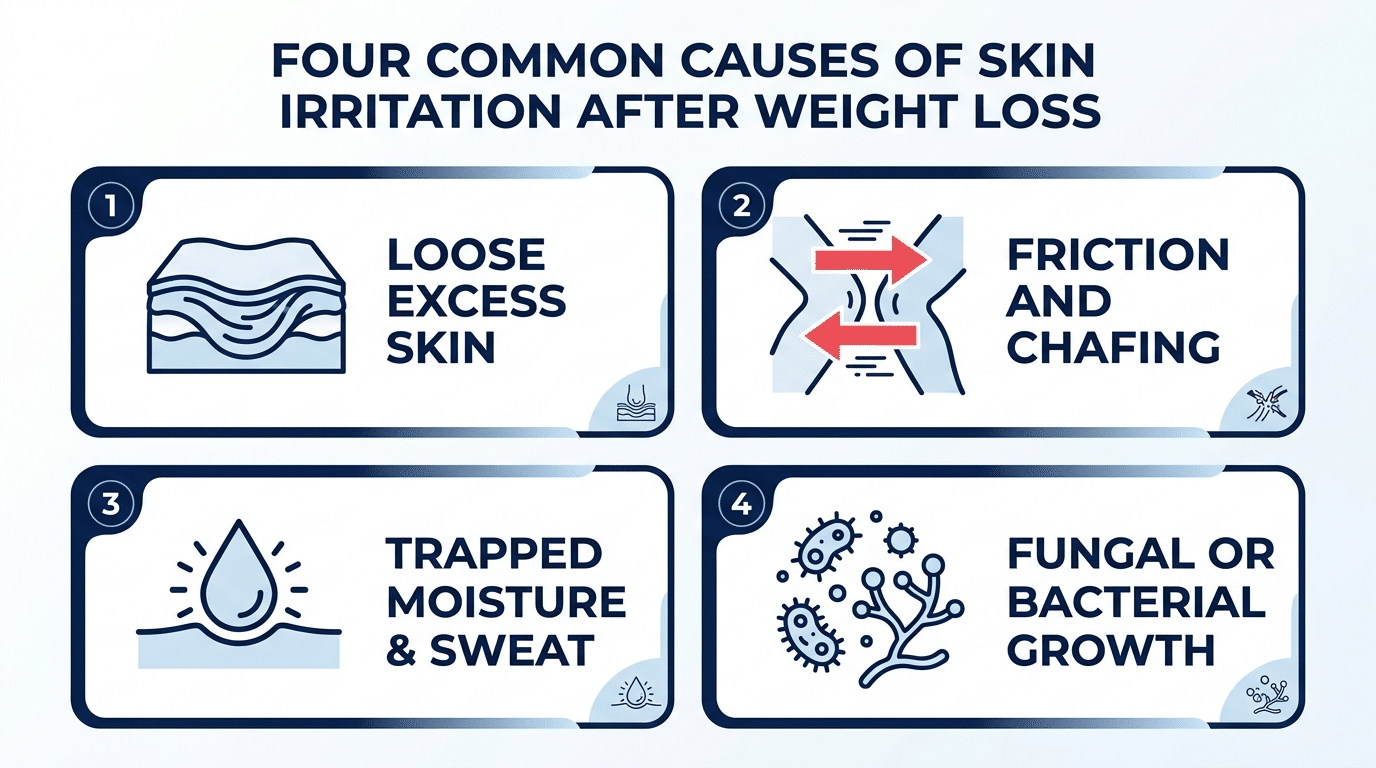
Four factors combine to cause irritation, and in most cases several act together.
Loose, excess skin. The root cause. After significant weight loss, skin that has lost its elasticity cannot shrink back, leaving overhanging folds — most notably the abdominal “apron” (pannus). These folds create the skin-on-skin contact where all the other problems begin.
Friction and chafing. As the loose skin folds rub against adjacent skin during walking, exercising, and everyday movement, the constant friction wears away the skin’s protective surface, causing rawness, soreness, and redness.
Trapped moisture and sweat. Sweat, and after washing simple dampness, becomes trapped in the depth of a fold where air cannot circulate to dry it. This constant moisture softens and macerates the skin, making it far more vulnerable to breakdown and irritation.
Fungal and bacterial growth. The warm, moist, dark environment inside a fold is ideal for the overgrowth of yeast (candida) and bacteria that normally live harmlessly on the skin. When they proliferate, they turn simple irritation into an itchy, inflamed, sometimes infected rash.
Where Does Skin Irritation Occur After Weight Loss?
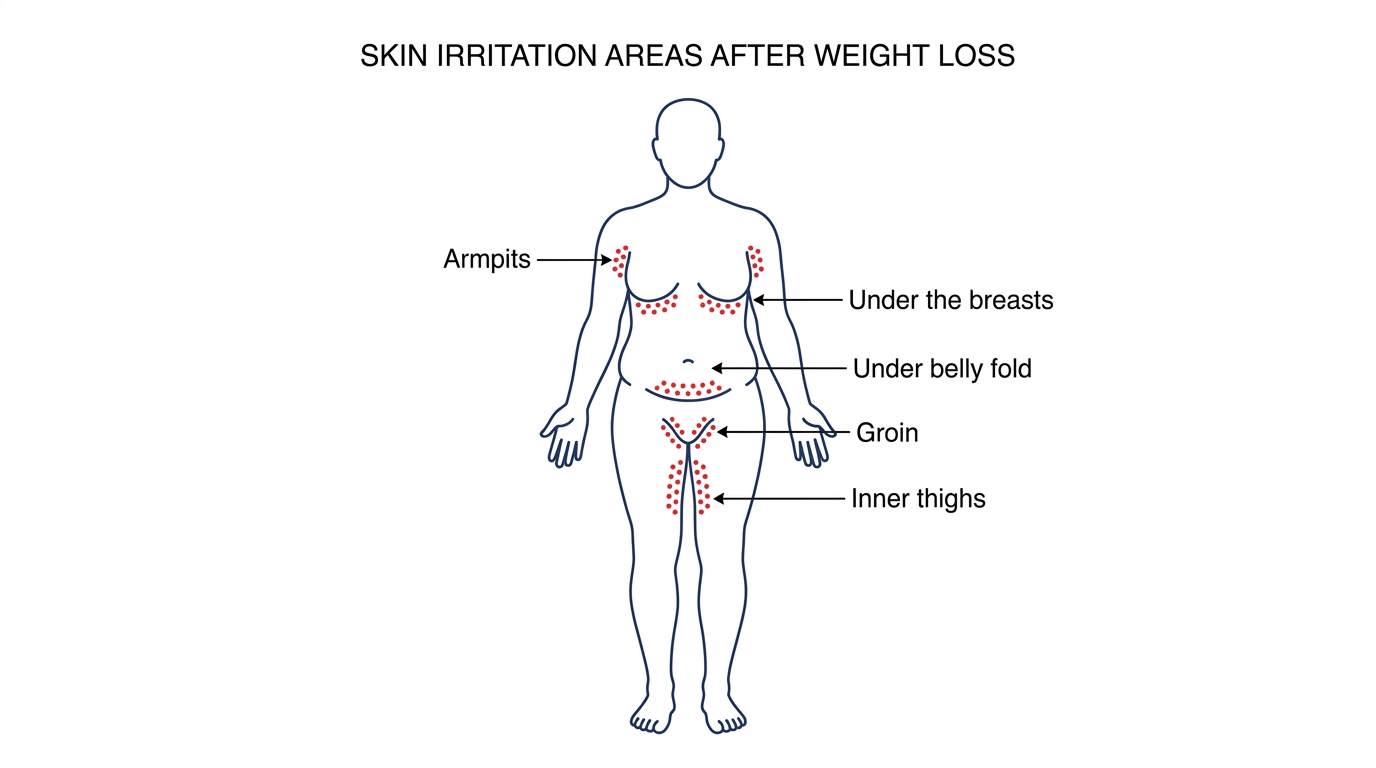
Irritation occurs wherever skin folds against skin. The most commonly affected areas are the underside of the abdominal fold (pannus), where the overhanging apron of skin meets the skin below; under the breasts (the inframammary fold), especially in women; the groin and inner thighs, where chafing during walking is common; the armpits; and, where there is significant arm or thigh skin laxity, the inner arms. The abdominal fold is usually the most troublesome, because it is the largest fold, the most difficult to keep dry and ventilated, and the most subject to friction during movement.
How to Prevent Skin Irritation After Weight Loss
While loose skin itself cannot be prevented once significant weight has been lost, a great deal can be done to prevent the irritation it causes from taking hold — and prevention is far easier than treating an established, infected rash. The principles are the same as for management, applied proactively and consistently rather than only once a problem appears.
Keeping the fold areas scrupulously clean and, above all, dry is the single most effective preventive measure. Building a short daily routine — washing gently, drying thoroughly (a cool hairdryer helps in deep folds), and applying a barrier product before dressing — stops the cycle of moisture and friction before it starts. Choosing breathable, moisture-wicking clothing rather than synthetic fabrics that trap sweat makes a meaningful difference, as does changing out of damp exercise clothing promptly. During exercise specifically, anti-chafing balms applied to at-risk areas prevent the friction that breaks the skin down. For anyone actively losing weight and anticipating loose skin, starting these habits early — before irritation appears — is the best way to stay ahead of it. Staying well hydrated and maintaining good overall skin health through a balanced diet also supports the skin’s resilience, though neither can restore lost elasticity.
How to Manage Skin Irritation After Weight Loss (Non-Surgical)
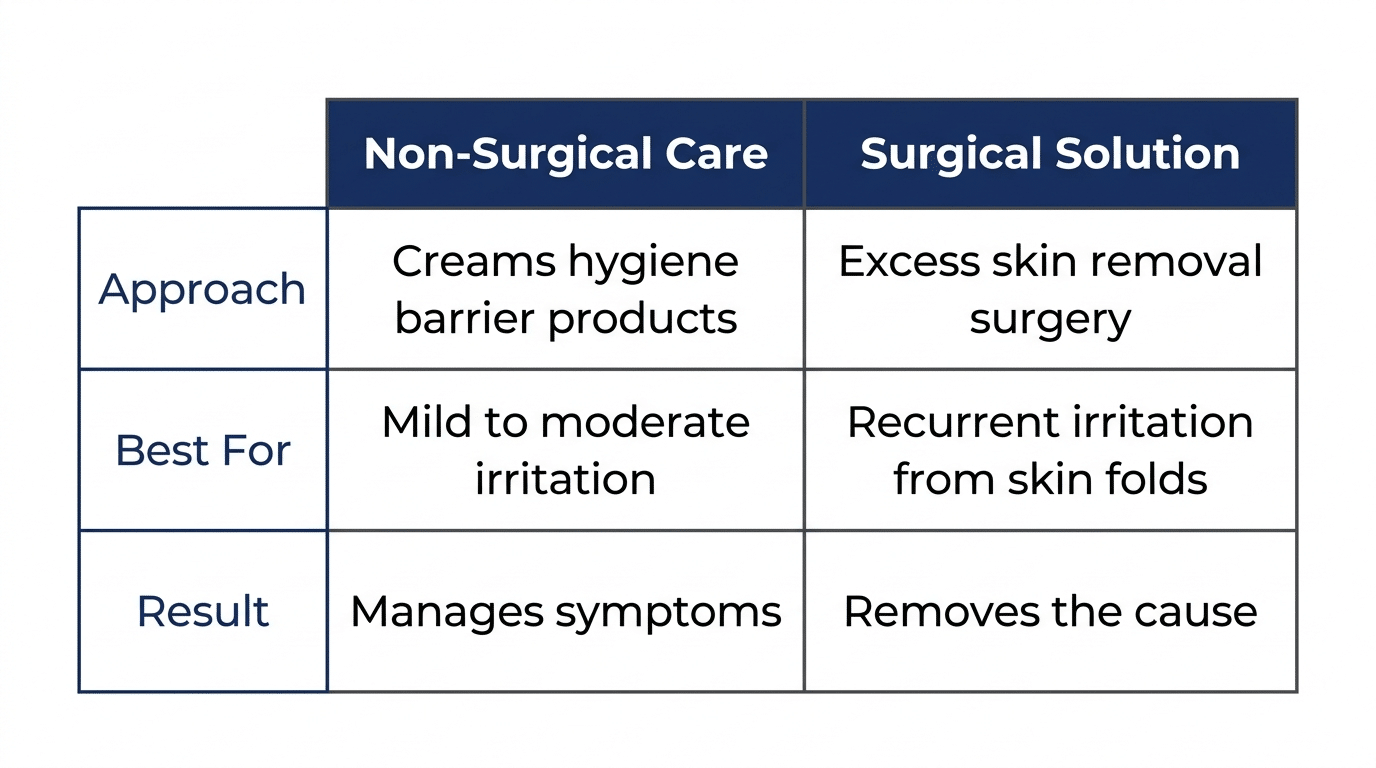
For mild to moderate irritation, and as a first step for everyone, day-to-day management can bring real relief. The goal is to reduce friction, keep the folds clean and dry, and treat any infection.
Keep the area clean and dry. Wash the folds gently with a mild, fragrance-free cleanser and — crucially — dry them thoroughly afterwards, patting rather than rubbing. Leaving even a little moisture in a fold undoes much of the benefit. A hairdryer on a cool setting can help dry deep folds where a towel cannot reach.
Reduce moisture during the day. Moisture-wicking fabrics, absorbent materials placed within a fold, and breathable cotton clothing all help keep the area drier. Some people find that antiperspirant applied to a fold (not just the armpit) reduces sweating in the area.
Use a barrier. Barrier creams and ointments (such as zinc oxide or dimethicone-based products) create a protective layer that reduces friction and shields the skin from moisture. Anti-chafing balms serve a similar purpose during exercise.
Treat infection where present. Where a fungal or bacterial infection has taken hold, an antifungal cream or, on medical advice, a mild topical steroid to calm inflammation may be needed. Persistent or spreading infection should be assessed by a doctor or pharmacist, who can prescribe appropriately.
Emollients for general skin health. Keeping the surrounding skin well moisturised (without over-applying inside a damp fold) supports the skin barrier and reduces cracking.
These measures manage the symptoms well for many people. What they cannot do is remove the loose skin that creates the fold in the first place — so where irritation is recurrent or severe, they treat the effect rather than the cause.
When to See a Doctor
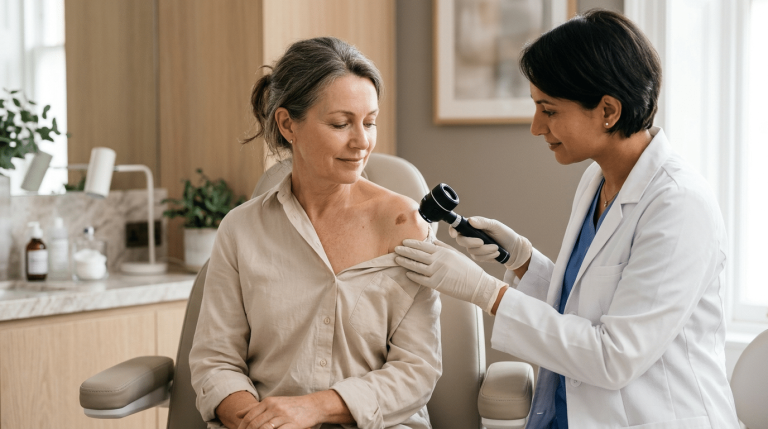
Most fold irritation can be managed at home, but some situations warrant medical attention. See a doctor if the rash is spreading, weeping, or not improving with self-care; if there is increasing pain, warmth, or swelling; if there is a foul odour or discharge, which can indicate infection; if the skin has broken down into an open, non-healing sore or ulcer within the fold; or if you develop a fever alongside the skin changes. These can be signs of a significant skin infection (cellulitis) or a persistent fungal infection that needs prescription treatment. Recurrent infection in a fold that keeps returning despite good care is itself a strong signal that the underlying excess skin may need addressing surgically.
Surgical Solutions — Removing the Excess Skin
For patients whose irritation is recurrent, severe, or significantly affecting quality of life, surgery to remove the excess skin is the definitive solution — because it removes the fold itself, and with it the friction, the trapped moisture, and the environment that infection needs. Once the overhanging skin is gone, the skin-on-skin contact that caused the problem no longer exists. The right procedure depends on which area is affected.
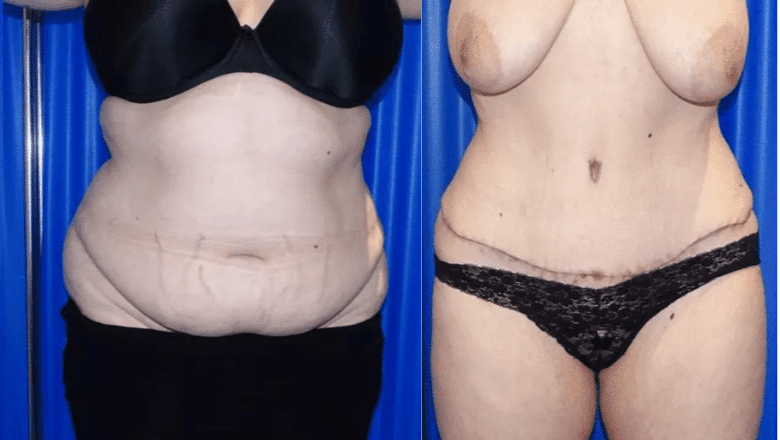
Abdomen. An apronectomy (panniculectomy) removes the overhanging apron of lower abdominal skin — the single most common source of post-weight-loss fold irritation. Where muscle tightening and a fuller contour improvement are also wanted, a tummy tuck (abdominoplasty) addresses both. Our guide on the difference between an apronectomy and a tummy tuck explains which suits which patient.
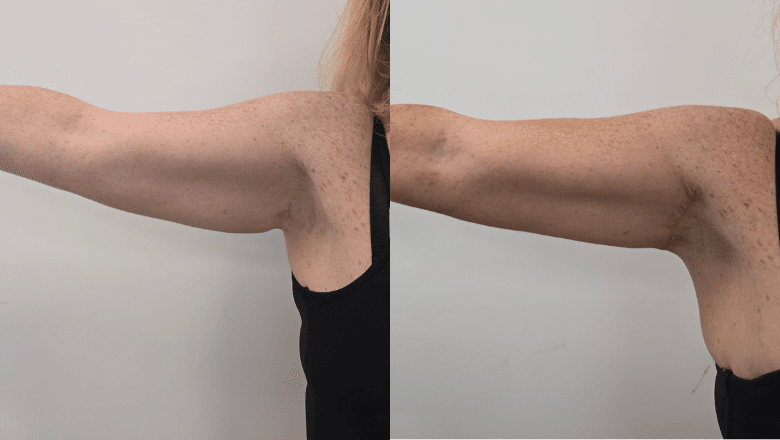
Arms. An arm lift (brachioplasty) removes loose inner-arm skin that folds and chafes.
Thighs. A thigh lift removes excess inner-thigh skin — one of the most common sites of chafing and irritation during walking.
Breasts and chest. A breast uplift (mastopexy) lifts and reshapes the breast, addressing irritation in the fold beneath.
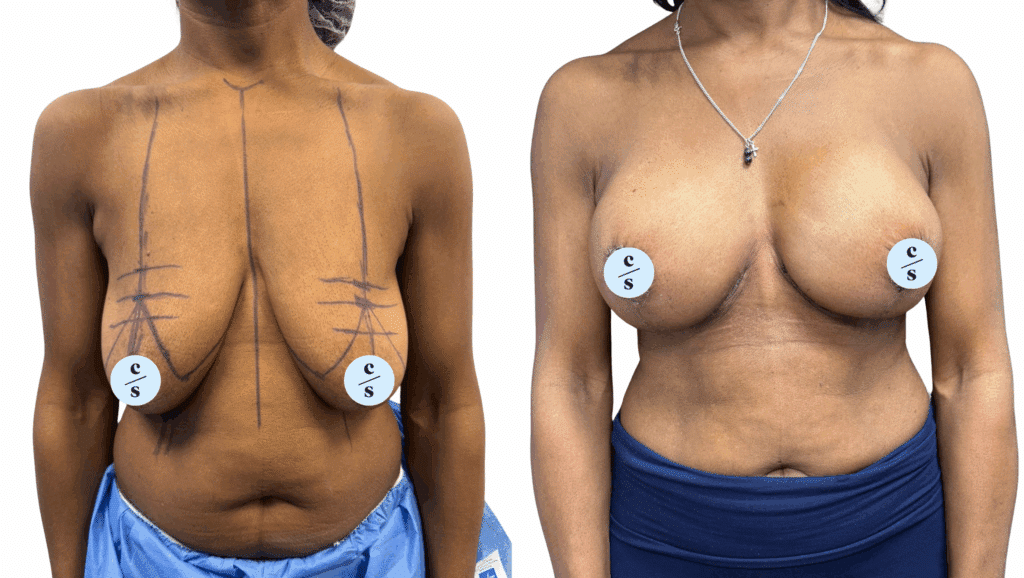
Multiple areas. Where excess skin affects the whole lower trunk, a lower body lift (belt lipectomy) addresses the abdomen, flanks, back, and buttocks circumferentially. Our overview of skin removal procedures after weight loss sets out the full range.
Am I a Candidate for Skin Removal Surgery?
Skin removal surgery is generally most appropriate for patients who have reached and maintained a stable weight (ideally for around six months or more), are in good general health, do not smoke or are willing to stop, and have realistic expectations. Weight stability matters because further weight loss or gain after surgery can affect the result. Where fold irritation and recurrent infection are significant, the case for surgery becomes both aesthetic and functional. An honest consultation will assess your skin, your general health, and the impact the irritation is having, and advise whether surgery is the right step — and if so, whether it is best staged across more than one procedure. Our post on skin removal after losing weight quickly covers timing in more detail.
Recovery After Skin Removal Surgery
Recovery depends on which procedure is performed and how extensive it is, but some principles apply across all excess skin removal surgery. Most procedures are performed as day cases or with a short stay, and the initial recovery involves swelling, bruising, and tenderness that settle over the first couple of weeks. A compression garment is typically worn for around six weeks to support the tissues, reduce swelling, and help the skin settle to its new contour. Drains are sometimes used for the first few days after larger procedures such as an abdominoplasty or body lift, to prevent fluid collecting.
Most patients take around two weeks off work for a desk-based role, longer for physically demanding jobs, and are advised to avoid strenuous activity and heavy lifting for around six weeks. Light walking is encouraged early to support circulation. Scars are a necessary trade-off of any skin removal procedure — they are placed as discreetly as possible and fade significantly over 12 to 18 months, though they are permanent. The reward, for patients who were struggling with recurrent fold irritation, is not only an improved contour but the resolution of the chafing, rashes, and infections that the excess skin was causing. Because the plan is often staged across more than one procedure for patients with multiple affected areas, your surgeon will set out a realistic timeline at consultation.
Frequently Asked Questions
Is skin irritation after weight loss normal?
Yes, it is very common, particularly after significant or rapid weight loss. Loose skin folds create friction and trap moisture, leading to irritation (intertrigo) that can range from mild to severe. It is not a sign that anything has gone wrong.
Will the irritation go away on its own?
Mild irritation often improves with good skin care — keeping the area clean, dry, and protected. However, where it is caused by significant loose skin, it tends to recur because the underlying fold remains. In these cases, removing the excess skin is the only way to resolve it permanently.
What is the best cream for skin irritation after weight loss?
Barrier creams (zinc oxide or dimethicone-based) reduce friction and moisture. Where infection is present, an antifungal cream or a mild topical steroid may be needed on medical advice. A pharmacist or doctor can recommend the right product for your situation.
Can loose skin cause infections?
Yes. The warm, moist environment inside a skin fold encourages fungal and bacterial overgrowth, which can cause recurrent infections. Persistent or recurring infection in a fold is a common reason patients seek surgical skin removal.
Does the NHS remove excess skin after weight loss?
NHS funding for skin removal is limited and usually requires evidence of significant functional problems such as recurrent infections or ulceration that have not responded to treatment, along with strict criteria. Many patients choose private surgery for quicker access and broader eligibility. Our guide on skin removal surgery on the NHS explains the criteria.
How soon after weight loss can I have skin removal surgery?
Most surgeons advise waiting until your weight has been stable for around six months, to ensure the result is not affected by further changes. This also allows time to see how much the skin retracts on its own.
Does losing weight with Ozempic or Mounjaro cause loose skin?
Any significant weight loss can leave loose skin, and because GLP-1 medications such as semaglutide and tirzepatide often produce substantial and relatively rapid weight loss, loose skin and the irritation it causes are commonly seen. The cause is the amount and speed of weight loss rather than the medication itself.
Will surgery completely stop the irritation?
Removing the excess skin removes the fold that causes the friction and traps moisture, so it addresses the root cause. Once the overhanging skin is gone, the skin-on-skin contact responsible for the irritation no longer exists.
Skin Irritation and Excess Skin Treatment at Centre for Surgery
Centre for Surgery treats the excess skin behind recurrent post-weight-loss irritation with apronectomy, tummy tuck, arm lift, thigh lift, and body lift surgery at our CQC-regulated Baker Street clinic in central London. All procedures are performed by GMC-registered consultant plastic surgeons following a thorough consultation to assess your skin, your general health, and the impact the irritation is having — and to advise honestly on whether surgery is right for you.
Finance options including 0% APR are available through our partner Chrysalis Finance for procedures over £1,500 — visit our Finance Options page for details.
Phone: 0207 993 4849 | Email: contact@centreforsurgery.com | Address: 95-97 Baker Street, London W1U 6RN
[contact-form-7 id=”256″ title=”Treatments form”]