
Is cosmetic surgery safe? It is one of the most common questions patients ask — and it deserves a direct, honest answer rather than blanket reassurance or exaggerated alarm. The truthful answer is that cosmetic surgery performed by the right surgeon in the right facility is safe for the vast majority of appropriately selected patients. But cosmetic surgery is surgery — it carries real risks, and those risks vary significantly depending on where you have it done, who does it, and how well-suited you are as a candidate.
This guide explains the actual safety record of cosmetic surgery, what the risks are and how common they genuinely are, and — most importantly — what determines whether your individual procedure is as safe as it can be.
The Overall Safety Picture
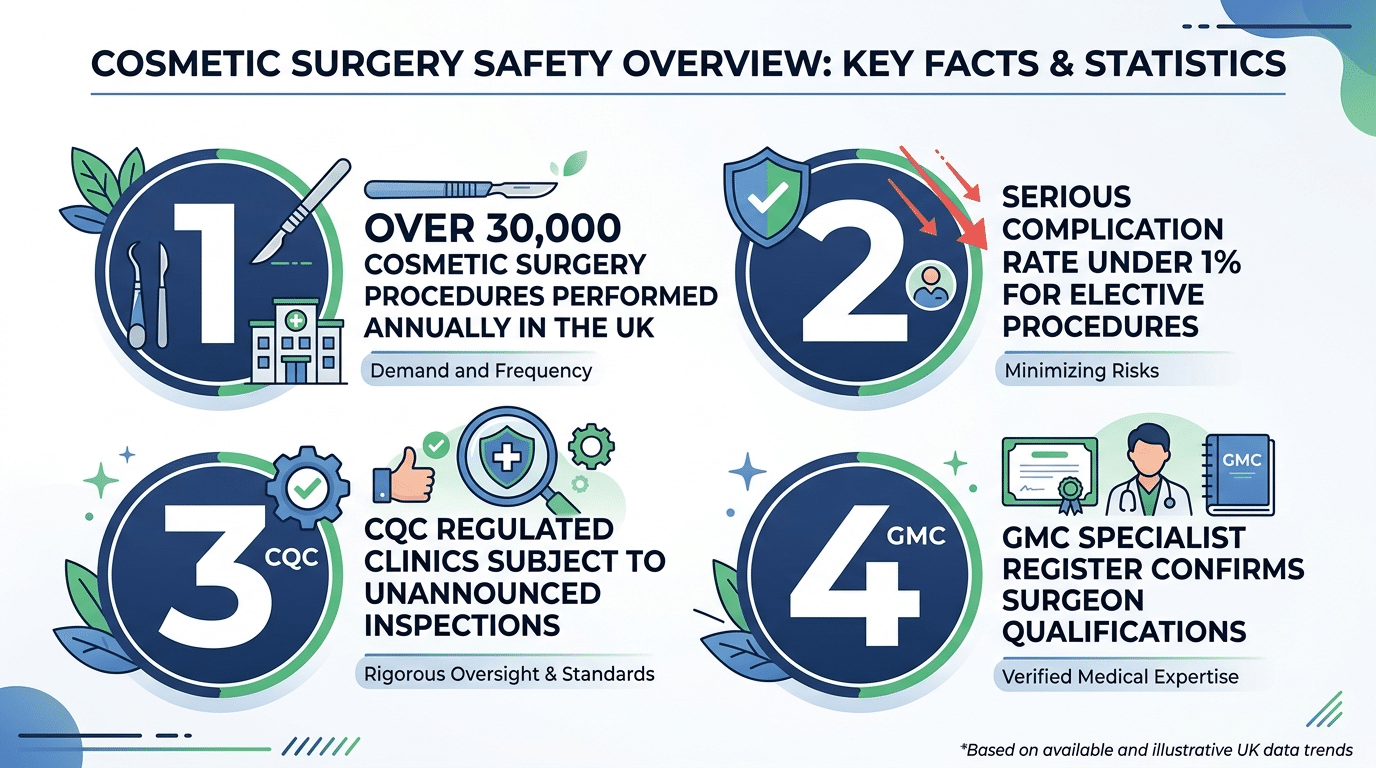
Cosmetic surgery in the UK has a strong overall safety record when performed in regulated settings by appropriately trained surgeons. Tens of thousands of elective cosmetic surgery procedures are performed every year in the UK, and serious complications — those requiring hospitalisation or surgical intervention — occur in a small minority of cases. Mortality associated with elective cosmetic surgery is extremely rare.
This does not mean cosmetic surgery is risk-free — no surgery is. But it does mean that, for appropriately selected patients undergoing procedures in CQC-regulated facilities under the care of consultant-grade surgeons and anaesthetists, the risk profile is well-understood, manageable, and broadly acceptable for the outcomes achievable. The challenge is that the UK cosmetic surgery market operates across a wide range of provider standards, and the safety statistics look very different at the top of that spectrum compared to the bottom.
What Are the Actual Risks?
Understanding the risks of cosmetic surgery requires distinguishing between common, minor, expected effects and rare but serious complications. These are very different things, and conflating them produces an inaccurate picture of surgical safety.
Common and Expected Effects
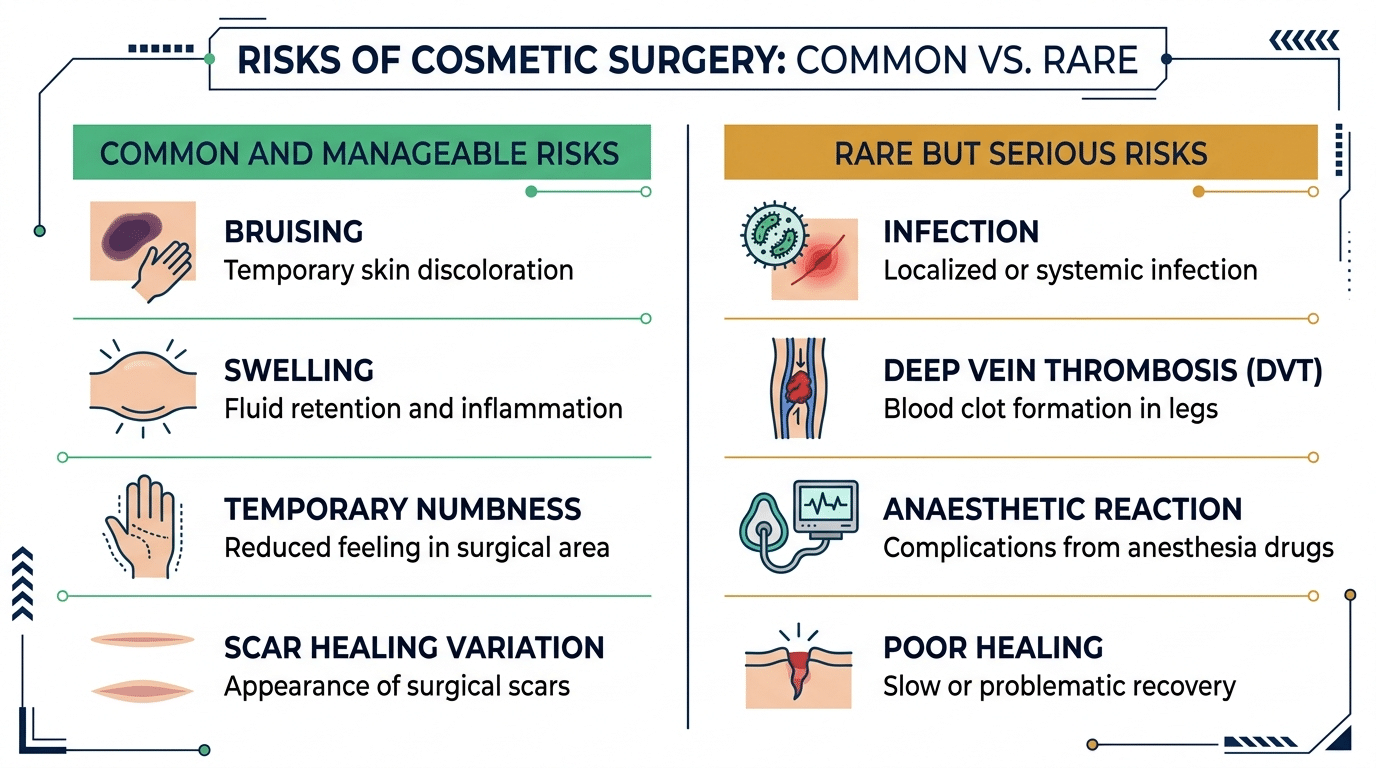
Almost every surgical procedure produces some degree of bruising, swelling, discomfort, and temporary changes in sensation in the treated area. These are not complications — they are expected consequences of surgical tissue handling and they resolve as healing progresses. Scars are similarly an expected consequence of incisional surgery, not a complication, though their final appearance varies between patients. As covered in our post on how to minimise scars after cosmetic surgery, the healing trajectory for most scars is strongly positive with appropriate management over twelve to eighteen months.
Common Minor Complications
A small proportion of patients experience complications that require additional management but are not life-threatening. The most common of these include wound healing issues such as small areas of wound separation or delayed healing, seroma — fluid accumulation in the surgical space — particularly after procedures involving significant tissue dissection such as tummy tuck and body contouring, and minor infection that responds to antibiotic treatment. These complications, when they occur, are typically identified and managed during post-operative follow-up and resolve without long-term consequences in the majority of cases.
Rare but Serious Complications
Serious complications — those requiring hospitalisation, surgical intervention, or with the potential for long-term consequences — are rare in elective cosmetic surgery but are not zero. They include deep wound infection, haematoma (significant bleeding requiring drainage), deep vein thrombosis (DVT) and pulmonary embolism, anaesthetic reactions, and — in the rarest cases — mortality. These serious complications are most commonly associated with higher-risk procedures, longer surgical duration, inadequate patient selection, and sub-optimal surgical or anaesthetic standards.
What Determines Whether Cosmetic Surgery Is Safe for You?
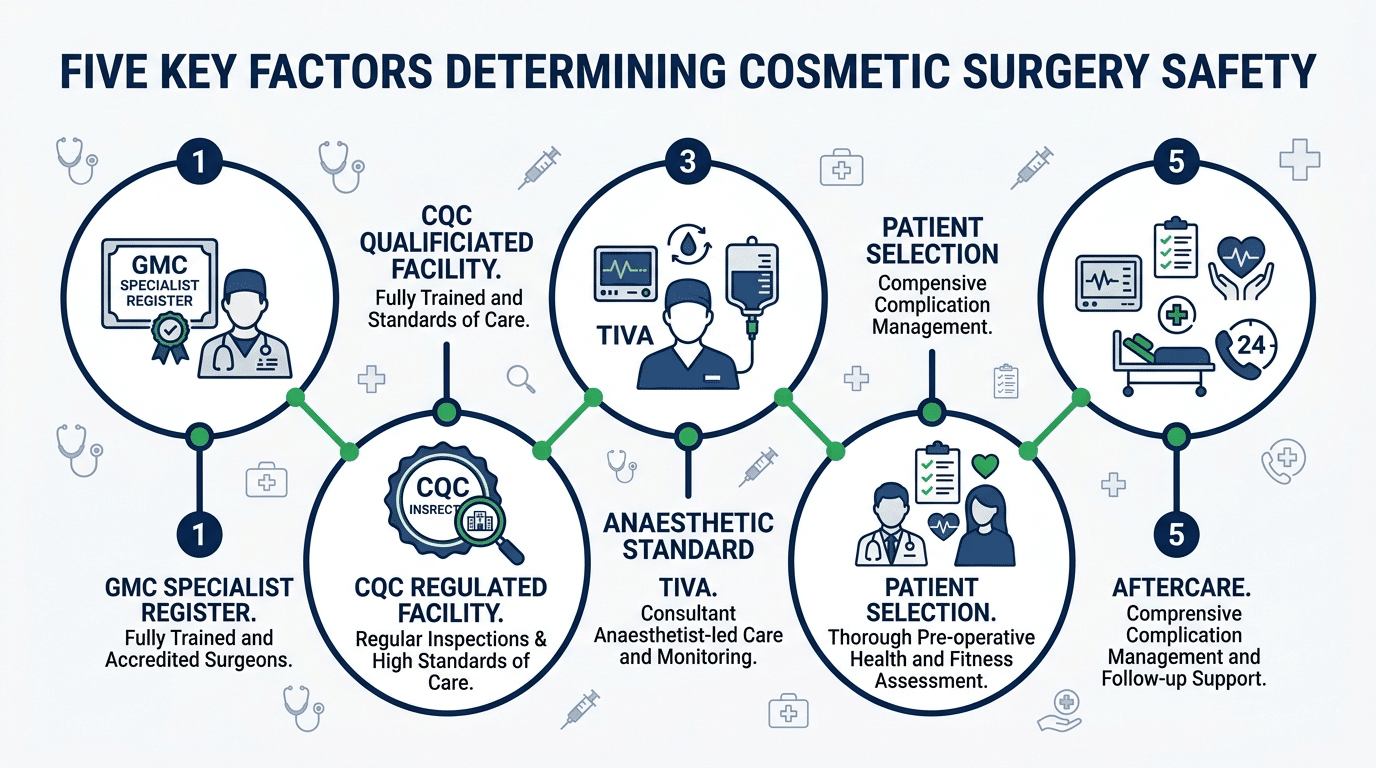
The safety of cosmetic surgery for any individual patient is not a fixed property — it depends on a combination of patient-specific factors and provider-specific factors. Understanding both helps you assess your own risk profile and make informed decisions about your care.
Your Health and Fitness for Surgery
Certain patient characteristics increase surgical risk and must be carefully assessed before any elective procedure is undertaken. These include obesity — higher BMI is associated with increased rates of wound healing complications, infection, and DVT across all surgical procedures; smoking, which impairs wound healing and increases the risk of necrosis and infection; uncontrolled medical conditions such as diabetes, hypertension, or clotting disorders; and age-related factors that affect physiological reserve. As covered in our post on BMI and cosmetic surgery eligibility, the thresholds applied by reputable providers are clinical safety measures, not arbitrary gatekeeping.
The Surgeon’s Qualifications and Experience
The qualifications and experience of the surgeon performing your procedure are among the most significant determinants of your safety and outcome. Surgeons on the GMC Specialist Register for plastic surgery have completed a minimum six-year specialist training programme and have been assessed as competent to practise at consultant level. As covered in our post on plastic surgeon vs cosmetic surgeon, the distinction between a properly trained consultant plastic surgeon and a doctor using the unregulated title of “cosmetic surgeon” is clinically significant and one of the most important things a patient can verify before proceeding.
The Facility and Its Regulation
Surgical procedures should be performed in a CQC-registered facility that meets the Care Quality Commission’s fundamental standards for surgical care. CQC registration requires adherence to standards covering infection control, equipment maintenance, emergency response capability, staffing levels, and clinical governance. As covered in our post on what a CQC Good rating means for cosmetic surgery patients, CQC inspection reports are publicly available and allow patients to verify that a facility has been assessed against these standards.
The Anaesthetic Standard
For procedures under general anaesthesia, the standard of anaesthetic care is a significant safety variable. At Centre for Surgery, all general anaesthetics are administered by a consultant anaesthetist using TIVA (Total Intravenous Anaesthesia). As explained in our post on what TIVA anaesthesia is and why we use it, the continuous presence of a consultant anaesthetist and the use of modern depth-of-anaesthesia monitoring significantly reduces anaesthetic risk compared to less rigorously staffed settings.
Patient Selection — Saying No When It Is the Right Answer
One of the most important safety signals in any cosmetic surgery provider is their willingness to decline to operate when a patient is not an appropriate candidate. Providers who accept all patients regardless of medical suitability, BMI, or psychological readiness are prioritising revenue over patient safety. As covered in our post on body dysmorphia and cosmetic surgery, psychological suitability is also part of appropriate patient selection.
How to Maximise Your Safety
The most effective steps you can take to maximise the safety of your cosmetic surgery are largely within your control. Choose a surgeon on the GMC Specialist Register for plastic surgery, operating in a CQC-registered facility, with a consultant anaesthetist present for general anaesthetic procedures. Disclose your full medical history honestly at pre-operative assessment. Follow pre-operative instructions regarding smoking cessation, medication pauses, and fasting. Follow post-operative care instructions carefully and attend all follow-up appointments. Contact the clinical team promptly if you develop unexpected symptoms during recovery.
As covered in our post on how to reduce complications after plastic surgery, patient behaviour during the recovery period also significantly influences the risk of complications — compression garment compliance, activity restrictions, and wound care all matter. Our post on how to choose the right cosmetic surgery clinic covers the full checklist of what to verify before committing to any provider.
Is It Safe to Have Cosmetic Surgery Abroad?
Cosmetic surgery abroad carries additional risks beyond those of any specific procedure — including variation in surgical standards, different regulatory frameworks, limited continuity of care, and the risks of travelling during recovery. As covered in our post on the dangers of cosmetic surgery tourism, the combination of these factors accounts for a disproportionate share of the revision and complication cases seen in UK practice. Choosing a CQC-regulated provider in the UK offers the protection of a defined regulatory framework that overseas providers are not subject to.
Frequently Asked Questions
Is cosmetic surgery safe?
Cosmetic surgery performed by a GMC specialist-registered surgeon in a CQC-regulated facility, on an appropriately selected patient, has a strong safety record. Serious complications are rare. However, safety varies significantly depending on provider standards, patient selection, and the specific procedure — it is not a property of the concept of cosmetic surgery in general, but of the specific circumstances of each individual procedure.
What is the most dangerous cosmetic surgery procedure?
Procedures involving longer operating time, larger volumes of tissue handling, and greater physiological demands carry higher inherent risk. Body contouring procedures such as lower body lift and combined procedures tend to carry higher risk than shorter, less extensive operations. The BBL (Brazilian Butt Lift) historically had a higher risk profile due to the specific risk of fat embolism — a risk that has been significantly reduced by the adoption of ultrasound-guided technique, which Centre for Surgery uses as standard.
How do I know if I am a safe candidate for cosmetic surgery?
A thorough pre-operative assessment with a consultant surgeon is the only reliable way to determine your individual suitability. General factors that affect suitability include your BMI, smoking status, overall health, relevant medical history, and medications. Our post on BMI and cosmetic surgery eligibility covers the specific thresholds applied to different procedure types.
What should I do if I experience a complication?
Contact your surgical team immediately. Do not wait for a scheduled appointment if you have unexpected pain, swelling, redness, fever, wound changes, or any other symptom that concerns you. As covered in our post on what happens if you are not happy with your cosmetic surgery results, prompt communication with your clinical team is always the right first step when something concerns you during recovery.
Is cosmetic surgery safer now than it used to be?
Yes — advances in anaesthetic technique, surgical technology, patient selection criteria, and post-operative care have all contributed to improved safety outcomes over time. The widespread adoption of TIVA anaesthesia, ultrasound guidance for certain procedures, and stricter regulatory requirements have all contributed meaningfully to the improved safety profile of contemporary cosmetic surgery practice in regulated UK settings.
Cosmetic Surgery at Centre for Surgery
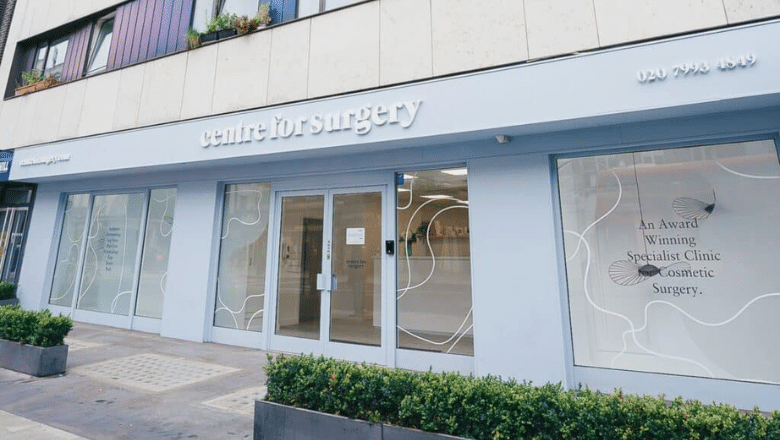
Centre for Surgery performs cosmetic surgery at our CQC-regulated Baker Street clinic in central London. All procedures are performed by GMC-registered consultant plastic surgeons on the specialist register. All general anaesthetics are administered by a consultant anaesthetist using TIVA. A rigorous pre-operative assessment is conducted for every surgical patient. Post-operative review appointments and 24-hour nurse-led aftercare are included as standard.
Finance options including 0% APR are available through our partner Chrysalis Finance — visit our Finance Options page for details.
Phone: 0207 993 4849 | Email: contact@centreforsurgery.com | Address: 95-97 Baker Street, London W1U 6RN
Related Articles
- Most Popular Cosmetic Surgery Procedures
- Year in Review: Most Popular Plastic Surgeries and Emerging Trends
- 10 Reasons to Choose Centre for Surgery
[contact-form-7 id=”256″ title=”Treatments form”]