
For transgender men and non-binary people in the UK considering top surgery, one of the first and most consequential decisions is which route to take: the NHS pathway, which is free at the point of use but involves substantial waiting times, or the private route, which is self-funded but typically measured in weeks and months rather than years. Both routes lead to the same destination — masculinising chest surgery performed by an experienced surgeon — but the journey, timeline, and practicalities differ significantly.
At Centre for Surgery in London, our GMC-registered consultant plastic surgeons perform FTM top surgery at our CQC-regulated Baker Street clinic, and many of our patients come to us after weighing exactly this decision. This guide sets out both routes honestly and factually — how each one works, what the realistic timelines are, what each costs, and how the two can work together — so you can make an informed choice for your own circumstances.
The Two Routes at a Glance
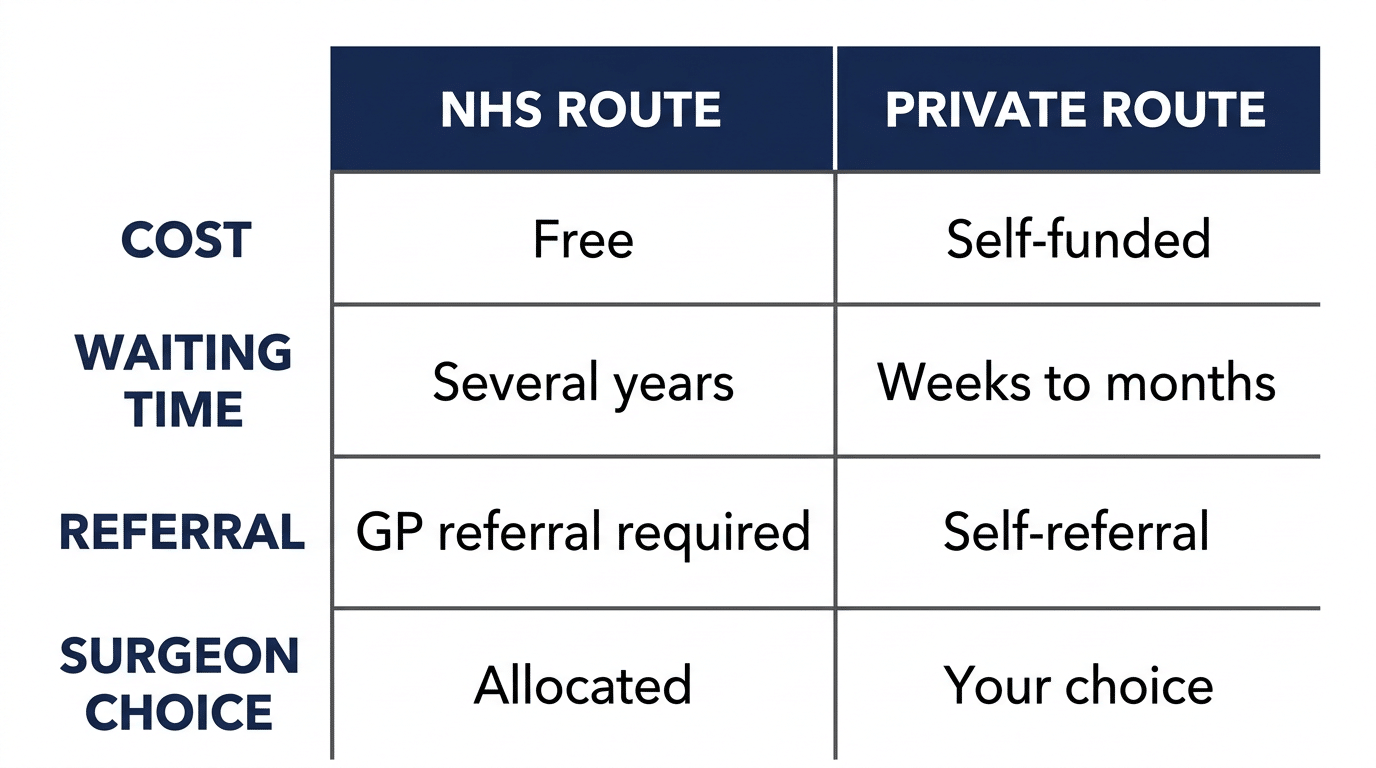
The fundamental trade-off between the two routes is cost versus time. The NHS route is free at the point of use but currently involves waiting times measured in years at every stage of the pathway. The private route requires self-funding — typically starting from around £9,500 for top surgery — but moves at the pace of your own decision-making, with consultation-to-surgery timelines usually measured in weeks to months. Beyond this core trade-off, the routes also differ in who chooses your surgeon, how much say you have over technique and timing, and how the assessment process is structured.
The NHS Route — How It Works
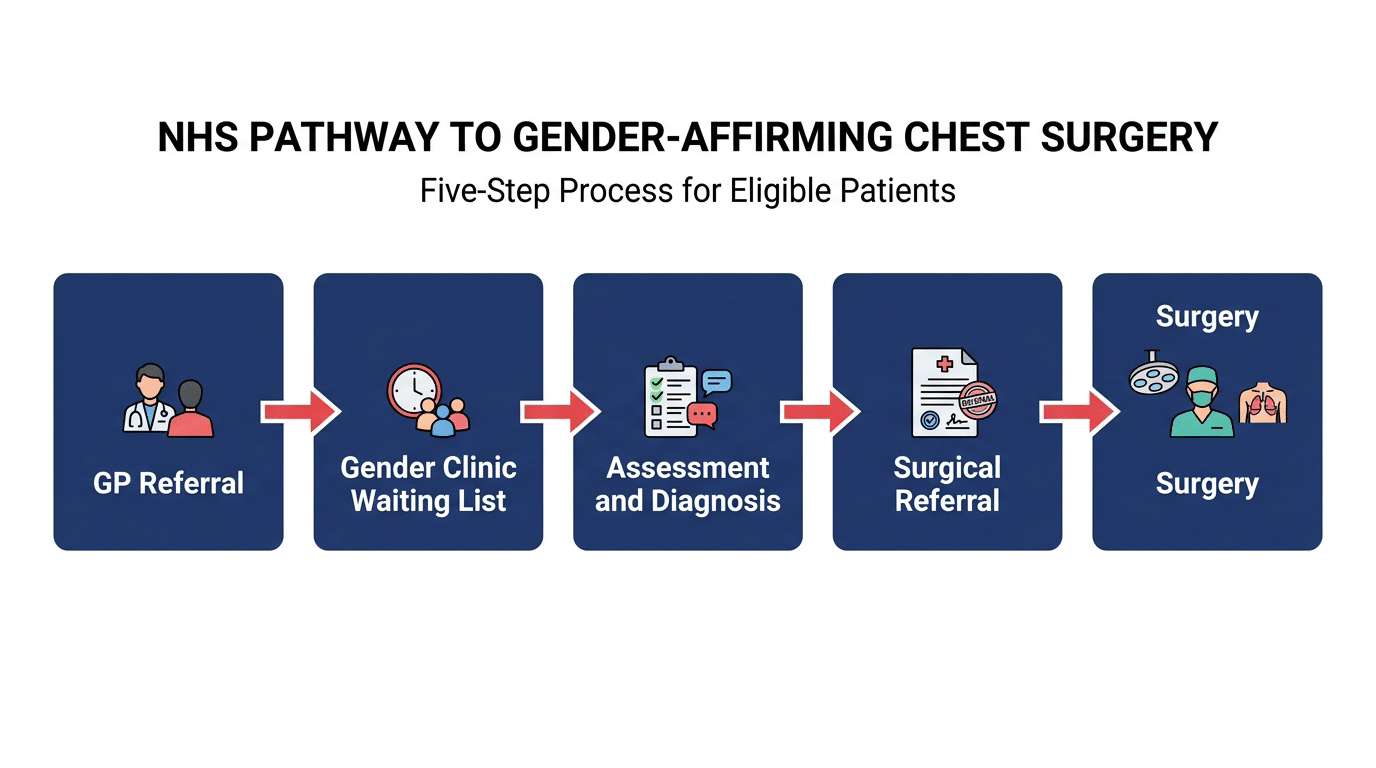
FTM chest surgery — bilateral mastectomy with chest reconstruction — is routinely commissioned by the NHS for eligible patients, and the pathway is well defined. It begins with a referral to an NHS adult gender dysphoria clinic, which your GP can make directly; in England you have free choice over which clinic you are referred to, and several clinics also accept self-referral. Adult gender services accept referrals from age 17.
Once referred, you join the clinic’s waiting list for a first assessment appointment. This is where the most significant wait in the entire pathway occurs. As of 2026, several NHS gender services are reporting average waits of more than six years for a first appointment, with thousands of people on individual clinic waiting lists. Waiting times vary between clinics — and because you can choose your clinic, it is worth checking the current published waiting times of each before deciding where to be referred.
After your first appointment, the pathway involves further assessment appointments leading to a diagnosis and agreed care plan. For surgery specifically, NHS guidance advises that patients have socially transitioned for at least twelve months before a surgical referral is made, and that any long-term health conditions are well controlled. Once the gender clinic’s doctors recommend surgery, you are referred onward to an NHS-contracted surgical provider — which carries its own further waiting list before your operation takes place.
The strengths of the NHS route are real: it is free, the assessment process is thorough, and the surgical providers are experienced. The practical reality, however, is that the combined waits at each stage mean the total journey from GP referral to completed surgery is currently measured in many years for most patients — and it is this timeline, more than any other factor, that leads many people to consider the private route.
The Private Route — How It Works
The private route removes the waiting-list element almost entirely. You can contact a private provider directly without a GP referral, book a consultation within weeks, and — if you and your surgeon agree that surgery is appropriate — proceed to surgery on a timeline that suits you, subject to the mandatory two-week cooling-off period that applies to all cosmetic surgery in the UK.
It is important to understand that going private does not mean bypassing proper assessment. Reputable private providers still require evidence that surgery is appropriate — typically including a diagnosis of gender dysphoria and supporting documentation from a qualified mental health professional, in line with established international standards of care. Our post on WPATH letters for top surgery in London explains exactly what this documentation involves and how to obtain it. Providers who offer to operate without any assessment process should be treated as a red flag rather than a convenience.
The private route also gives you meaningful choices the NHS pathway does not: you choose your surgeon rather than being allocated one, you can review their specific before and after results in advance, and you can discuss the full range of surgical techniques — from double incision with free nipple grafts to keyhole and periareolar approaches — to find the one best suited to your chest size, skin elasticity, and goals. Our post on FTM top surgery options covers each technique in detail.
What Does Private FTM Top Surgery Cost?
At Centre for Surgery, FTM top surgery is performed from £9,500, with the exact cost depending on the technique selected and confirmed at consultation. This is an all-inclusive figure covering the procedure, anaesthesia, and post-operative follow-up at our Baker Street clinic. Our post on how much FTM top surgery costs in London breaks down pricing across techniques in full detail.
Finance options including 0% APR are available through our partner Chrysalis Finance for procedures over £1,500, allowing the cost to be spread over monthly payments — visit our Finance Options page for details. For many patients weighing years of waiting against a monthly payment plan, this significantly changes the practical calculation between the two routes.
Can I Use Both Routes Together?
Yes — and many patients do. The two routes are not mutually exclusive, and there are several ways they commonly interact.
Patients already on an NHS gender clinic waiting list can pursue private top surgery without losing their place on the NHS pathway — having private surgery does not affect your entitlement to NHS care, including ongoing hormone therapy or future NHS-funded procedures. Assessment and diagnosis completed through an NHS gender clinic can also support a private surgical referral, meaning patients who have progressed through NHS assessment but face a long onward wait for NHS surgery can take their existing documentation to a private provider. Whichever combination applies to you, it is always sensible to keep your GP informed so your medical records remain complete and your ongoing care is properly coordinated.
Choosing a Private Provider Safely
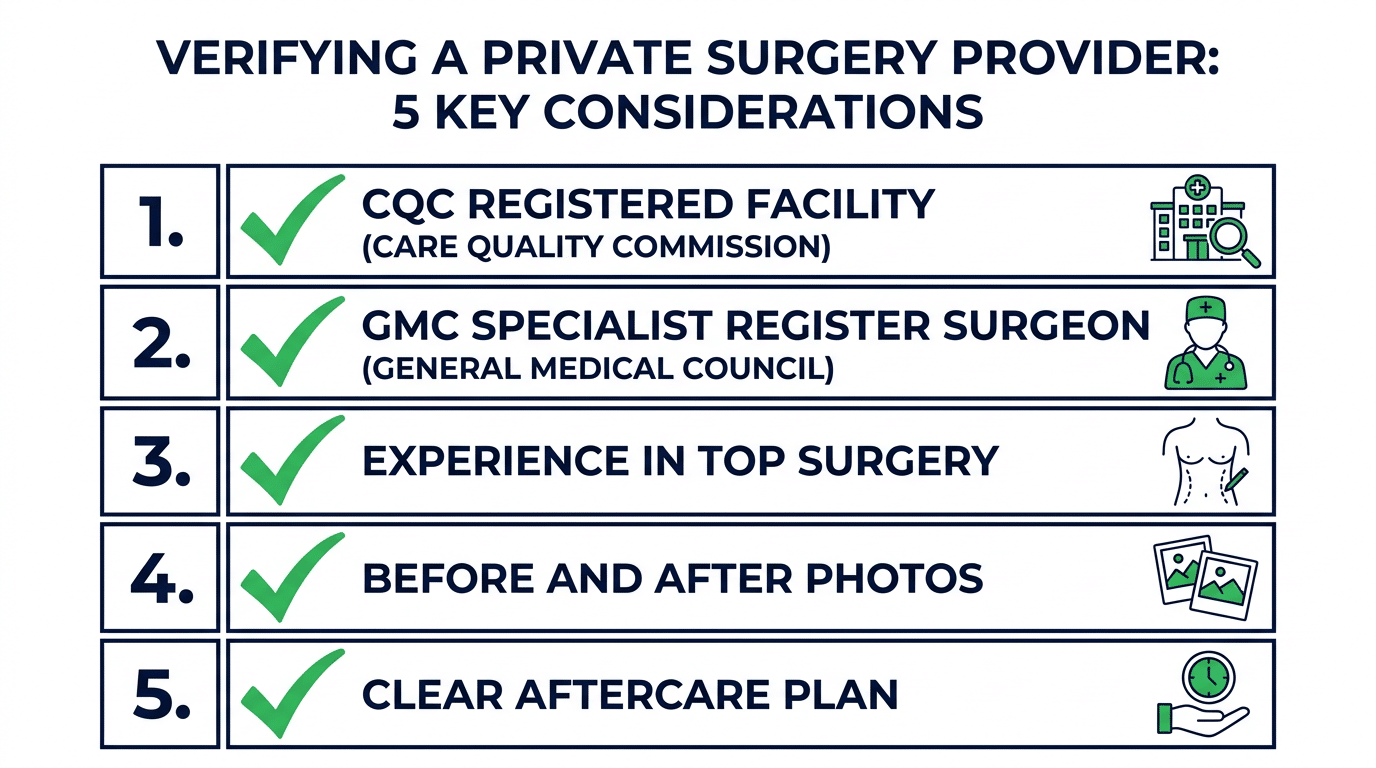
If you decide to go private, the quality bar you should apply is exactly the same one the NHS applies to its own contracted providers. Verify that the facility is registered with and inspected by the Care Quality Commission, England’s independent healthcare regulator. Confirm your surgeon is on the GMC Specialist Register for plastic surgery. Ask specifically about their experience in top surgery — how many they perform, which techniques they offer, and whether they can show you results in patients with a similar starting point to yours. Ensure there is a clear, structured aftercare plan covering your follow-up appointments and what to do if you have concerns during recovery. Our post on how to choose the right surgeon for FTM top surgery covers this due diligence process in full.
Be particularly cautious about providers — often overseas — offering significantly lower prices without CQC regulation, without proper assessment requirements, and without accessible aftercare if complications arise once you are back in the UK. The cost saving is rarely worth the increase in risk when the provider is not accountable to UK regulation.
Preparing for Surgery, Whichever Route You Take
Regardless of route, preparation for top surgery is the same: achieving stable health, stopping smoking well in advance, arranging time off work and practical support for the first two weeks of recovery, and understanding the realistic recovery timeline. Our posts on how to prepare for FTM chest surgery and FTM top surgery FAQs cover preparation and common questions in detail.
Frequently Asked Questions
Is FTM top surgery available on the NHS?
Yes — bilateral mastectomy with chest reconstruction for trans men is routinely commissioned by the NHS for eligible patients, following assessment and surgical referral through an NHS gender dysphoria clinic.
How long is the NHS wait for top surgery?
The total journey varies by clinic and region, but as of 2026 several NHS gender services report average waits of over six years for a first assessment appointment alone, with further waits for subsequent assessments and then for surgery itself after referral. Published waiting times for each clinic are available and worth checking, since you can choose which clinic you are referred to in England.
Do I need a GP referral for private top surgery?
No — you can self-refer to a private provider. However, reputable providers will still require appropriate assessment and supporting documentation confirming that surgery is right for you, typically including a gender dysphoria diagnosis and a supporting letter from a qualified mental health professional.
Will going private affect my NHS care?
No — having private top surgery does not remove your entitlement to NHS services, including NHS gender clinic care, hormone therapy, or future NHS-funded treatment. Keeping your GP informed ensures your records stay complete and your care remains joined up.
How much does private FTM top surgery cost in the UK?
At Centre for Surgery, FTM top surgery is performed from £9,500 depending on technique, with finance options including 0% APR available through Chrysalis Finance to spread the cost.
What age do I need to be for top surgery?
At Centre for Surgery, all surgery is performed on adults aged 18 and over, in line with our CQC-regulated practice standards. NHS adult gender services accept referrals from age 17, though NHS surgical referral follows the full assessment pathway.
Can I have top surgery privately while on an NHS waiting list?
Yes — you keep your place on the NHS pathway, and many patients choose private surgery for the chest specifically while remaining under NHS care for other aspects of their transition.
FTM Top Surgery at Centre for Surgery
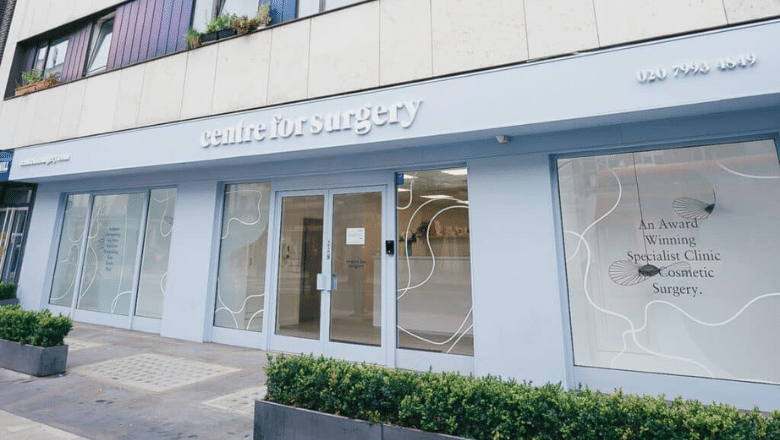
Centre for Surgery performs FTM top surgery at our CQC-regulated Baker Street clinic in central London. All procedures are performed by consultant plastic surgeons on the GMC Specialist Register, offering the full range of techniques — double incision, nipple-sparing double incision, periareolar, keyhole, and inverted T — selected at consultation to suit your anatomy and goals.
Finance options including 0% APR are available through our partner Chrysalis Finance — visit our Finance Options page for details.
Phone: 0207 993 4849 | Email: contact@centreforsurgery.com | Address: 95-97 Baker Street, London W1U 6RN
Related Articles
- Ways To Support Your Partner Through FTM Top Surgery
- 4 Things You Should Know Before Your FTM Top Surgery
- Can I Get MTF Breast Augmentation Without Hormones?
[contact-form-7 id=”256″ title=”Treatments form”]