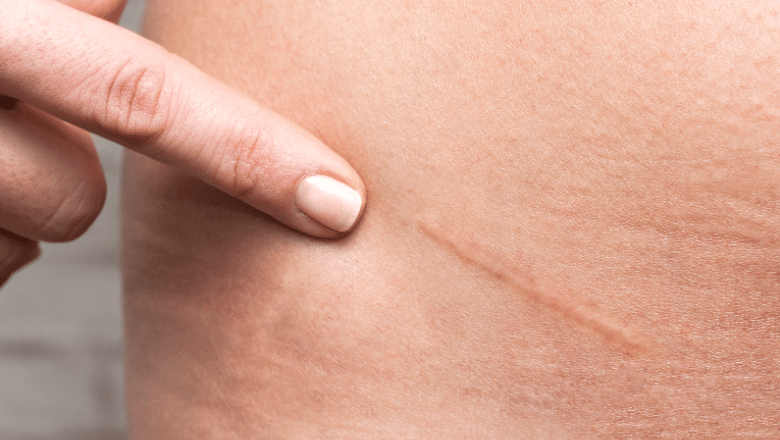
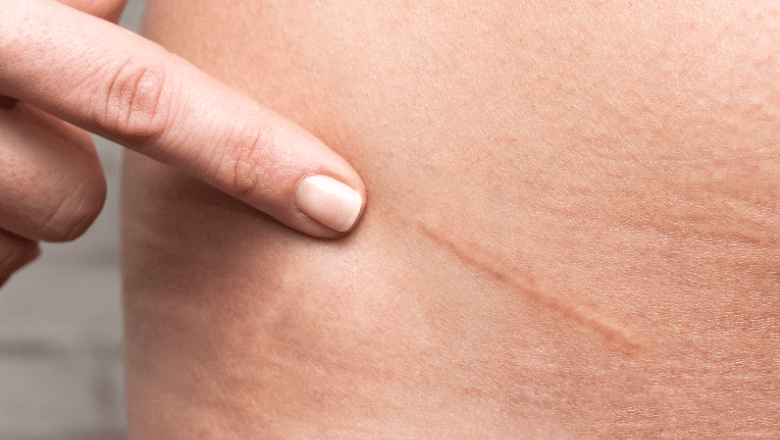
An appendicectomy is one of the most common emergency surgical procedures performed in the UK, and the great majority of patients are left with a scar of some description. The visible result depends on whether the operation was performed as open surgery (a single longer incision in the lower right abdomen) or laparoscopically (three or four small port incisions). Either way, the scar is permanent — but its final appearance can be substantially improved with the right approach.
This guide covers what appendix scars typically look like, the realistic treatment options for improving them, when to consider intervention, and how appendix scar treatment fits within the broader scar revision service at Centre for Surgery’s CQC-regulated Baker Street private hospital.
What an appendix scar looks like
The appearance of an appendix scar depends primarily on which surgical approach was used.
Open appendicectomy scar
Traditional open appendicectomy uses a single incision in the lower right abdomen — typically 5 to 10 cm long, oriented diagonally along Langer’s lines (the natural tension lines of the skin). The scar runs across the lower right quadrant, usually 2 to 3 finger-widths above the right groin crease.
Most open appendicectomy scars mature into a fine pale line that is more visible than the equivalent laparoscopic scars but still relatively inconspicuous. Some patients develop hypertrophic features — a raised, firm, red scar — particularly when the wound was under tension or became infected during initial healing.
Laparoscopic appendicectomy scars
Modern keyhole appendicectomy uses three or four small port incisions, typically 5 to 10 mm each. One is usually placed in or near the umbilicus, with two additional ports in the lower abdomen. The resulting scars are small, often nearly invisible at maturity, and well-tolerated cosmetically.
Emergency vs planned surgery
An important factor: appendicectomy is almost always emergency surgery. The incision is made quickly under time pressure with the priority being safe removal of an inflamed appendix rather than optimal cosmetic outcome. Patients sometimes assume the scar would have looked better with a more cosmetic incision — but the surgical priorities at the time were correct. What matters now is what can be done to improve the scar that exists.
How appendix scars mature
An appendix scar follows the same maturation pattern as any other surgical scar:
- Weeks 0–2 — wound healing; sutures or staples in place
- Weeks 2–6 — scar is pink-red, firm, sometimes itchy or tingly
- Weeks 6–12 — peak redness and firmness
- Months 3–6 — gradual fading and softening
- Months 6–12 — significant improvement; scar approaches mature appearance
- Months 12–18 — final mature appearance established
Most appendix scars look worst between weeks 6 and 12. This is normal and not a sign that anything has gone wrong. Patients sometimes seek scar revision at this stage; the better course is usually to wait for natural maturation and intervene later if the result is unsatisfactory.
For full background see different types of scars and scar management after cosmetic surgery.
What you can do during the first year
Silicone gel or sheeting
The single strongest evidence-based topical scar treatment. Apply once the wound has fully closed — usually around 2 weeks after the operation. Gel twice daily, or sheeting for 12+ hours a day. Continue for at least 3 months — ideally 6.
Silicone reduces redness, thickness, itch, and the risk of the scar going hypertrophic. It’s particularly useful for appendix scars because the lower abdomen is under modest skin tension and is a moderately common site for hypertrophic scarring. For dedicated discussion see do silicone strips help scars heal better?
Sun protection
Most appendix scars are covered by clothing most of the time, but they still need protection when exposed. A few unprotected sun exposures during the first 12 months can permanently darken the scar — particularly in skin types III to VI. SPF 50 sunscreen applied to the scar whenever it will be exposed. For full discussion see the effects of tanning on cosmetic surgery scars.
Scar massage
Once the wound has fully closed — typically around 4 weeks post-operation — gentle scar massage with unperfumed moisturiser helps soften firm scar tissue, improves local circulation, and reduces tethering between the scar and deeper tissues. Five to ten minutes twice daily of firm circular movements. For technique guidance see how to massage yourself after cosmetic surgery.
Wound tension management
Avoid heavy lifting and strenuous abdominal exercise for the time period your surgical team has advised — typically 4 to 6 weeks. Returning to activity too early can stretch the maturing scar and worsen the final appearance.
General health factors
Adequate nutrition, hydration, and sleep all support tissue repair. Smoking measurably worsens wound healing and final scar appearance — stopping for the perioperative period is one of the highest-yield interventions a patient can make.
When to seek professional review
For most patients, basic scar management during the first year produces a satisfactory result and no further intervention is needed. Some appendix scars warrant earlier professional assessment:
- A scar that is becoming progressively raised, firm, red, or itchy beyond 6–8 weeks
- A scar that is spreading beyond the original wound boundary (suggests keloid formation)
- A scar that is causing significant cosmetic or psychological distress
- A scar that has matured (12+ months) and remains substantially raised or wide
- A scar with persistent areas of open skin, drainage, or signs of infection
- A scar associated with an abdominal hernia at the same site (which warrants surgical correction)
Earlier intervention for developing hypertrophic features produces better outcomes than waiting for the scar to mature.
Treatment options for established appendix scars
Non-surgical treatments
Intralesional steroid injection — for hypertrophic appendix scars. Triamcinolone injected directly into the scar tissue reduces collagen overproduction and flattens the scar. Given as a course every 4–6 weeks for 3–6 sessions. Particularly effective when started during the maturation window.
Pulsed-dye laser — targets the persistent redness of an active hypertrophic scar. Useful in the first 6–12 months when the scar is still red.
Fractional laser resurfacing — erbium or CO2 fractional laser for textural improvement of mature appendix scars. Usually started at 3+ months post-operation. Multiple sessions typically needed.
Morpheus8 radiofrequency microneedling — combines microneedling with radiofrequency energy to remodel scar tissue at depth. Useful for both hypertrophic and atrophic appendix scars. Course of 3–4 sessions.
Surgical scar revision
For mature appendix scars that remain unsatisfactory after a full course of non-surgical treatment, surgical revision is the next step. The technique varies:
- Simple excision and re-closure — appropriate for narrow linear scars where the new closure can be optimised. The old scar is excised, the deeper layers closed in multiple tension-distributing layers, and the skin re-approximated with fine sutures.
- Z-plasty or W-plasty — geometric rearrangement of the scar to break up a straight line or redirect tension. Useful for scars that healed unfavourably or that cross natural tension lines.
- Combined scar revision and hernia repair — where a scar is associated with an incisional hernia at the same site, both can be addressed in a single operation.
Surgical revision is performed at Centre for Surgery as a day-case procedure under local anaesthetic, with TIVA or general anaesthesia reserved for more complex cases. Recovery is typically 2 weeks for return to non-physical activity. For full discussion see scar revision surgery FAQs.
When does an appendix scar warrant urgent assessment?
Most appendix scar concerns are cosmetic and not urgent. A few warrant prompt attention:
- Persistent open areas, drainage, or signs of infection (warmth, increasing pain, fever)
- A new lump or swelling at the scar site that wasn’t there before (possible incisional hernia)
- Persistent severe pain at the scar site beyond the normal healing window
- Numbness or tingling that is worsening rather than improving
For any of these, contact your original surgical team or seek medical assessment promptly.
Realistic expectations
An appendix scar cannot be removed completely — the underlying skin structure has been permanently altered. What treatment can achieve is making the scar significantly less raised, less red, less wide, and less obvious. For many patients the end result is a fine pale line that is hard to see without close inspection.
Patients who arrive expecting “the scar will be invisible” are likely to be disappointed even with an excellent outcome. Patients who arrive expecting “the scar will be much less noticeable” are typically delighted with the same result. Good consultation includes a frank discussion of what is realistically achievable for the specific scar in question.
What we don’t recommend
- Demanding surgical scar revision in the first 6 months — most appendix scars improve substantially during natural maturation. Operating prematurely risks revising a scar that would have settled adequately on its own.
- Vitamin E oil on the scar — popular but with weak evidence and a meaningful rate of contact dermatitis. Silicone is the better-evidenced topical.
- “Drying out” the wound with hydrogen peroxide or surgical spirit — outdated advice. Modern wound care emphasises moist healing.
- Sun exposure on the maturing scar — UV during the first 12 months can permanently darken the scar. Daily SPF 50 essential where the scar will be exposed.
- Returning to heavy lifting or intense abdominal exercise too early — stretches the maturing scar and worsens the final appearance. Follow the advice from your original surgical team.
- Smoking around the time of any scar revision surgery — measurably worsens healing. Stopping for at least 2 weeks before and 4 weeks after is one of the most useful interventions available.
- Ignoring a developing hypertrophic scar in the hope it will “settle” — early intervention with intralesional steroid and silicone produces a much better result than waiting.
- DIY scar treatment with creams marketed online — most have no good evidence base. Stick to silicone, sun protection, and (where appropriate) professional in-clinic treatment.
- Self-administered steroid injection — needs medical training. Wrong placement causes skin atrophy and worse cosmetic outcome.
Frequently asked questions
How long does an appendix scar take to fade?
Scar maturation continues for 12 to 18 months. The scar is usually at peak redness at 6 to 12 weeks, starts fading visibly by month 3, and reaches its final appearance around month 12.
Will my appendix scar be completely invisible?
No. With diligent scar management, the scar can fade to a fine pale line that is much less noticeable than during active healing. Complete invisibility is not realistic for any surgical scar.
Can my appendix scar be removed?
The scar tissue can be excised and the area re-closed, producing a new scar with optimised technique. The new scar should be substantially less visible than the original — but it cannot be completely eliminated.
Will laser treatment work for an old appendix scar?
Yes, in many cases. Fractional laser resurfacing and Morpheus8 radiofrequency microneedling can both improve mature appendix scars. Results are typically better when the scar is younger but older scars can still respond.
What if my appendix scar has become a keloid?
True keloids — scars extending beyond the original wound — need active treatment rather than watchful waiting. Standard approach is intralesional steroid injection combined with silicone treatment; surgical revision with combined steroid is reserved for steroid-resistant cases. See do hypertrophic scars go away? for related discussion.
How much does appendix scar treatment cost?
Non-surgical sessions typically £150–600 each depending on modality. Morpheus8 courses from £900. Surgical scar revision £1,500–4,000+ depending on complexity. Finance from 0% APR available. For full cost discussion see how much does laser scar removal cost in the UK?
Is appendix scar treatment available on the NHS?
NHS funding for scar revision is restricted. Functional problems (recurrent infection, ulceration, restricted movement) may qualify; cosmetic improvement usually doesn’t. Most patients seeking appendix scar treatment proceed privately.
Can I exercise around an appendix scar?
Once the wound has fully healed (usually 4 to 6 weeks post-operation, per your surgical team’s advice), normal activity is fine. Heavy abdominal exercise and lifting should be reintroduced gradually. The maturing scar tolerates progressive activity better than a sudden return to intense training.
How long after the operation should I wait before considering scar treatment?
Active non-surgical scar management — silicone, sun protection, gentle massage — starts at 2 to 4 weeks post-operation, as soon as the wound has fully closed. In-clinic treatments (laser, Morpheus8, steroid injection if hypertrophic features develop) can start at 6–8 weeks. Surgical revision is usually deferred to 12+ months.
Appendix scar treatment at Centre for Surgery
Centre for Surgery is a CQC-regulated plastic surgery clinic at 95–97 Baker Street, Marylebone. We offer the full range of treatments for appendix scars — silicone management, intralesional steroid injection, pulsed-dye and fractional laser treatment, Morpheus8 radiofrequency microneedling, and where appropriate surgical scar revision. All performed by GMC-registered consultant plastic surgeons. No GP referral required.
For related guides, see different types of scars, scar revision surgery FAQs, scar management after cosmetic surgery, do hypertrophic scars go away?, and how much does laser scar removal cost in the UK?
Centre for Surgery · CQC-regulated · GMC specialist-registered surgeons · 95–97 Baker Street, Marylebone, London W1U 6RN · 0207 993 4849 · Book a consultation · Finance from 0% APR