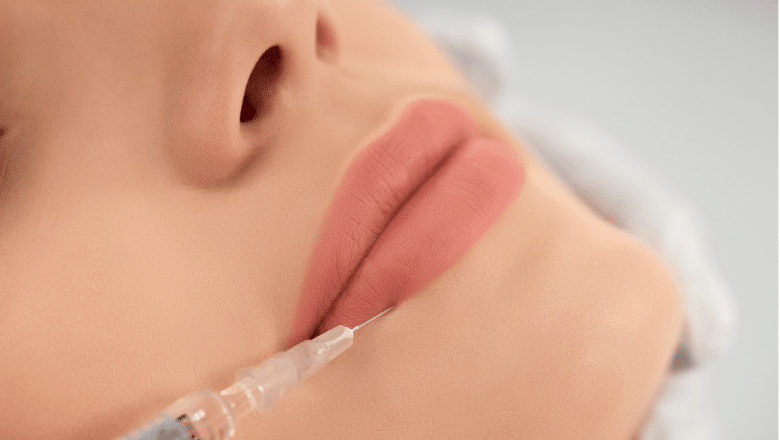
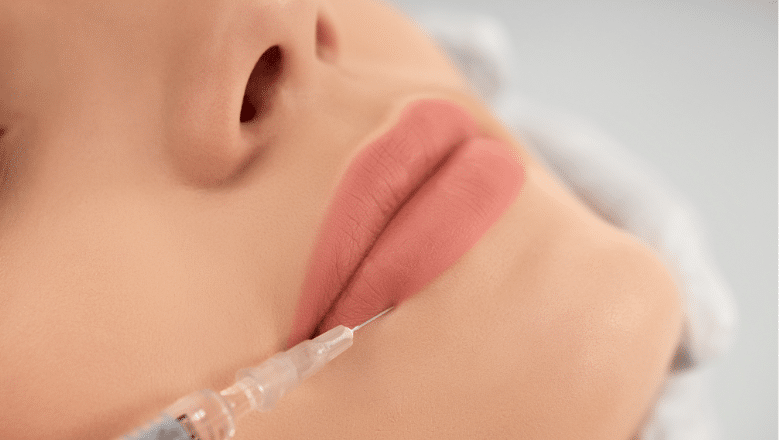
“Less is more” isn’t just an aesthetic preference — it’s clinical reality borne out by research, long-term outcome data, and the lived experience of patients who’ve seen lip filler aesthetics shift dramatically over the past decade. The mid-2010s vogue for maximalist lip enhancement produced a generation of patients now seeking to dissolve their accumulated filler and start fresh with more conservative volumes. The current shift toward natural-looking lip aesthetics reflects both changing tastes and a growing understanding of what aggressive treatment actually does over years.
This guide explains why conservative lip filler produces better outcomes than aggressive treatment, what the research actually shows about preferred lip proportions, how to think about volume choices for your specific anatomy, and how to recognise when an injector is recommending more than you need.
What the evidence actually shows
Research on aesthetic preferences for lip proportions has produced consistent findings across multiple studies:
The 1:1.6 ratio. Studies using eye-tracking and rating methodologies consistently find that an upper-to-lower lip ratio of approximately 1:1.6 is rated most attractive across diverse rater populations. This ratio aligns with the broader “golden ratio” that recurs in aesthetic preferences for various facial features.
Volume increase has a ceiling. Research from the Mayo Clinic and other centres found that lips enlarged to 125% or more of natural volume were rated less attractive than smaller increases. The “optimal” lip enhancement was relatively modest — typically 10-20% increase over baseline natural volume.
Subtle changes outperform dramatic ones. When comparing patients with conservative versus aggressive filler results, observers consistently rated the conservative results as more attractive, more natural, and more youthful-looking. Aggressive filler results were often rated as “obvious” even when the rater couldn’t identify specifically what was different.
Cultural and generational shifts. Preferred lip aesthetics have shifted significantly between 2015 and 2025. The maximalist aesthetic that drove much of the early-decade lip filler boom has been substantially abandoned in favour of natural-looking subtle enhancement. Patients who got aggressive treatment in the 2015-2020 window often now seek dissolving and conservative restart.
The clinical takeaway: the lip volumes that produce the most attractive, most natural-looking results are substantially smaller than what was commonly delivered in many clinics through the 2010s. Conservative treatment isn’t a compromise — it’s typically the optimal aesthetic outcome.
Why aggressive treatment produces worse outcomes over time
The case against maximalist lip filler isn’t just aesthetic — it’s clinical:
Migration above the vermillion border. When too much filler is placed in the lip, it tends to migrate outward and upward, producing the characteristic “filler moustache” appearance above the upper lip. This is one of the most visually distinctive markers of overfilling and is difficult to correct without dissolving and starting over. See our guide on lip filler migration.
Cumulative accumulation. Filler doesn’t always fully dissipate before the next treatment is added. Years of repeated aggressive treatment accumulates filler that exceeds what the tissue can naturally accommodate. Patients often realise this only when they finally dissolve all their filler and see what their actual baseline looks like.
Tissue distortion over years. Repeatedly stretched lip tissue can develop mild residual changes that persist even after filler is dissolved. The architecture of the vermillion border softens; the surrounding skin develops mild laxity; the visible “deflation” when filler is removed becomes more pronounced. See our guide on does lip filler stretch your lips.
Worsening proportions. The 1:1.6 upper-to-lower lip ratio that the research identifies as optimal is rarely achievable with aggressive treatment, which tends to make both lips bulkier rather than refining their proportions.
Loss of definition. Aggressive filler tends to obliterate the Cupid’s bow, the vermillion border definition, and the natural lip contours. The result is lips that look “filled” rather than “fuller.” See our guide on enhancing the Cupid’s bow with fillers for the precision approach.
Vascular complication risk. Higher volumes of filler placed under higher pressure increase the risk of inadvertent intravascular injection or vascular compression. This is the most serious complication of lip filler treatment.
The conservative treatment philosophy
At Centre for Surgery, our approach to lip filler reflects what produces the best long-term outcomes:
Start with less than you think you need. Initial treatment typically uses 0.5ml of filler, sometimes less. Patients who want more can come back at the 2-week review for refinement after seeing the settled result.
Place strategically, not uniformly. A small amount of filler at the Cupid’s bow, vermillion border, and other anchor points produces meaningful enhancement with substantially less product than uniform distribution across the lip body.
Treat the specific concern. If your concern is Cupid’s bow definition, treat that. If your concern is overall volume in the lower lip, treat that. Avoid treating areas that aren’t actually bothering you.
Maintain conservative top-ups. Each maintenance treatment uses the smallest volume needed to maintain the result, not enough to “stack up” volume year over year.
Periodic dissolving. Some patients benefit from periodic dissolving (every 3-5 years) to clear any accumulated filler and restart fresh. This prevents the cumulative buildup that produces problems over decades.
Refuse to overfill on request. An experienced injector declines to use more filler than is appropriate for the patient’s anatomy, even when the patient asks for more. This isn’t paternalistic — it’s clinical judgement that protects patients from outcomes they’ll regret.
Honest discussion of trends. What looks attractive in 2025 may look dated in 2030. Treatment philosophies that match the patient’s natural anatomy tend to age better than trend-chasing.
How to recognise overprescription
Several warning signs suggest an injector is recommending more than you need:
“Full syringe” pricing pressure. Some clinics encourage using a full syringe even when a partial would produce the desired result. Filler doesn’t get “wasted” with conservative use — it can be saved for follow-up treatment if appropriately stored.
Specific volume promises without examination. Reputable practitioners examine your lips before recommending specific volumes. Promises of “2ml minimum” or “you definitely need 1.5ml” before seeing you are usually marketing rather than clinical assessment.
Discomfort discussing smaller volumes. If you suggest starting with 0.5ml and the practitioner pushes back on this, that’s a warning sign.
“Dramatic results” promises. If the practitioner promises dramatic visible change rather than refinement, you’re getting marketing rather than clinical care.
No conversation about your existing anatomy. Good consultations spend significant time examining your natural lip shape, proportions, and what’s actually appropriate. Brief consultations that move quickly to volume recommendations are a warning sign.
No discussion of long-term planning. If treatment is framed as “let’s do as much as possible today” rather than “here’s a sustainable plan over years,” the immediate revenue is being prioritised over your long-term outcomes.
Refusal to provide reference photos of conservative work. Reputable clinics show before-and-after photos of their conservative work, not just their most dramatic transformations.
What conservative treatment can achieve
Patients sometimes worry that conservative filler “won’t be enough” to produce visible change. The reality:
Refined Cupid’s bow. A small amount of filler precisely placed at the Cupid’s bow produces meaningful, recognisable enhancement without changing overall lip size.
Restored vermillion border definition. Loss of definition is one of the most ageing changes in the lips. Targeted filler restores the crisp border that age has softened.
Subtle volume increase. 0.5ml of filler appropriately distributed produces visible fullness that friends and family notice without being able to identify why.
Improved lip proportions. Strategic placement can shift the upper-to-lower lip ratio toward the optimal 1:1.6 without increasing total lip volume substantially.
Softened perioral lines. Small amounts of filler at the vermillion border can soften fine lines around the mouth without addressing them directly.
Better lip shape and contour. Anatomical understanding of how filler placement affects lip shape allows refinement that’s not achievable through volume alone.
For comprehensive guidance on what’s achievable with different approaches, see our guides on 4 things to know about lip filler and different lip shapes.
The age and life-stage context
The “less is more” principle applies across all patients, but with different emphasis at different stages:
Young patients (20s): typically have full natural lips that don’t need significant enhancement. Conservative treatment maintains natural appearance; aggressive treatment produces unnatural-looking lips that don’t match the rest of the youthful face. Consider whether you need treatment at all, or whether lip flip alone might suffice. See our guide on the lip flip.
Mid-life patients (40s-50s): ageing has typically reduced lip volume and softened definition. Filler restores what’s been lost. The “less is more” principle here means restoring toward the natural baseline rather than exceeding it — patients who try to recreate their 20s lips with filler typically end up with unnatural results.
Older patients (60s+): tissue changes make aggressive filler increasingly inappropriate. Conservative volumes that restore subtle definition produce more natural results than attempts at substantial enhancement.
Post-weight-loss patients: significant weight loss can thin the lips along with the face. Conservative filler restores what’s been lost without overshooting.
The economics of less is more
Conservative treatment is also better economics for most patients:
Lower per-session cost. Partial-syringe pricing or single 0.5ml treatments cost less than full or multiple syringes per session.
Less frequent maintenance. Conservative volumes that integrate naturally with tissue typically last as long as aggressive volumes. The maintenance frequency is similar.
Reduced complication management cost. Patients with overfilling, migration, or other complications often spend substantial money on dissolving, revision, and recovery treatments. Conservative initial approach avoids these costs.
Long-term sustainability. Patients who can maintain conservative filler over decades have better long-term economics than those who cycle between aggressive treatment and dissolving-then-restart.
For an overall cost framework, see our comprehensive lip filler guide and our discussion of long-term lip enhancement options in our guide on lip lift vs lip flip vs lip filler.
If you’ve already had aggressive treatment
For patients with existing aggressive filler who want to restart with a more conservative approach:
Step 1: Honest assessment. Consultation with experienced practitioners who can identify accumulated filler, distinguish it from natural anatomy, and discuss realistic options.
Step 2: Comprehensive dissolving. Hyalase to dissolve existing filler over 1-3 sessions. Wait 2-4 weeks between sessions for tissue to settle. See our guide on dissolving filler in the face and lips.
Step 3: Recovery period. Allow 6-8 weeks after final dissolving for tissue to reach its true baseline. This may look smaller than you remember if your tissue has adapted to chronically larger volumes.
Step 4: Conservative restart. If treatment is still wanted, start with 0.3-0.5ml placed strategically. Resist the impulse to “match” how your lips looked previously — the new baseline is more honest than the inflated state.
Step 5: Annual maintenance only. Conservative top-ups at 9-12 month intervals, avoiding the more frequent treatments that produce accumulation.
This restart process can take 3-6 months from start to settled final result but produces substantially better long-term outcomes than continued aggressive treatment.
Cost
Conservative lip filler treatment at Centre for Surgery:
- 0.3-0.5ml (highly conservative): from £350-£400
- 0.5-1.0ml (standard initial): from £400-£550
- Combined with lip flip: additional £150-£250
- Maintenance treatments: typically £350-£500
- Dissolving with hyalase: from £350 per session (covered separately when needed)
Finance options through Chrysalis Finance, including 0% APR, are available.
Common questions
Will 0.5ml of filler really be enough to see a difference?
Yes — strategically placed 0.5ml produces visible refinement that’s recognisable on close inspection without being obvious to casual observers. Most patients are pleasantly surprised at how much can be achieved with conservative volumes.
What if I want more after I see the conservative result?
You can have top-up filler at the 2-week review or any time afterwards. Starting conservatively and adding if needed produces better results than starting aggressively and having to dissolve.
Why would an experienced injector refuse to give me more filler if I ask?
Because their job is to produce good outcomes, not to maximise revenue. Experienced practitioners decline to provide treatment that would produce unnatural-looking results, even when the patient requests it.
What if I have a special event coming up and want dramatic change for it?
Lip filler isn’t the best last-minute treatment for events — final result takes 2 weeks and may not match what you envisioned. For event-related enhancement, plan with substantially more lead time and consider that subtle change typically photographs better than dramatic change anyway.
How do I find an injector who shares the “less is more” philosophy?
Look for: medical professional qualifications, CQC-regulated clinic setting, before/after photos showing subtle work (not just dramatic transformations), willingness to start with conservative volumes, honest conversation about long-term planning, no pressure on volume choices.
What about Russian lips, Korean lips, or other trending techniques?
These can be appropriate for specific patients with specific anatomy. They’re not appropriate for everyone, despite social media marketing. A consultation establishes whether any specific technique suits your face. See our guide to current lip filler trends.
Is there ever a reason to have aggressive treatment?
Rarely — for patients with very specific anatomy (significant volume deficit, particular congenital concerns) where higher volumes are clinically justified. For most patients seeking enhancement, conservative treatment is the right approach.
Will my lips look “underfilled” compared to my friends?
Your friends with aggressive treatment may have lips that look overfilled to objective observers, even if normalised within your social circle. Conservative treatment that looks natural may seem subtle initially but ages better and looks more attractive to most observers.
How does the “less is more” approach work for first-time patients vs experienced patients?
For first-time patients: easier — they don’t have accumulated filler to work around, and conservative treatment establishes good habits. For experienced patients with aggressive treatment history: requires dissolving and restart, but the long-term outcome is substantially better.
Are there any lip enhancement options that don’t involve filler at all?
Yes — lip flip for subtle upper-lip enhancement, lip lift surgery for permanent change, lifestyle factors (sun protection, hydration, smoking cessation). Filler isn’t the only option for patients seeking lip improvement.
Centre for Surgery · CQC-regulated · GMC specialist-registered surgeons · 95–97 Baker Street, Marylebone, London W1U 6RN · 0207 993 4849 · Book a consultation · Finance from 0% APR