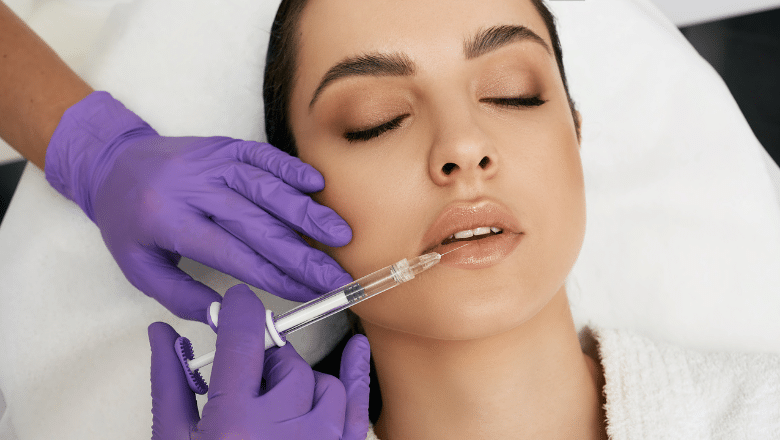
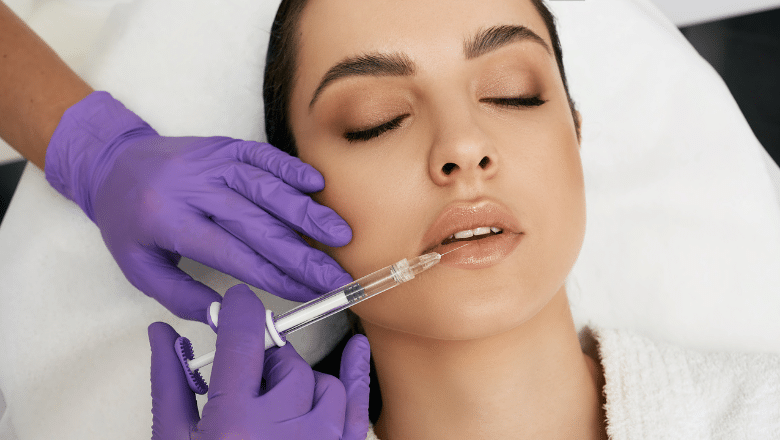
Lip filler is one of the most commonly performed cosmetic treatments in the UK — and one of the most variable in how well it’s performed across different practitioners and clinics. For patients considering their first lip filler treatment, four key things make the difference between a result that looks natural and refined versus one that’s disappointing, overfilled, or actively problematic.
This guide covers what we believe are the four most important things every prospective lip filler patient should understand before booking their first appointment: what HA filler actually is and how it differs from older products; why injector experience and clinical setting matter substantially; how volume choices affect both immediate appearance and long-term tissue outcomes; and what to expect from the procedure, recovery, and ongoing maintenance.
1. Not all “lip filler” is the same — what hyaluronic acid filler actually is
The term “lip filler” covers a range of products with very different properties. Understanding what’s actually being injected is the foundation of safe and effective treatment.
Hyaluronic acid (HA) filler — the modern standard. HA is a naturally occurring substance in the human body, found in skin, joints, and connective tissue. Modern lip fillers are made of cross-linked HA gel produced through bacterial fermentation (not animal-derived). The HA in filler is chemically identical to what’s already in your tissue, which means:
- The body recognises it as natural — allergic reactions are extremely rare
- It’s metabolised naturally over 6-12 months through normal enzyme systems
- It can be dissolved on demand with hyalase if the result isn’t right
- It binds water (up to many times its weight), adding to the volume effect
- It integrates with surrounding tissue without forming hard nodules in most patients
Major HA filler brands used in the UK include Juvederm, Restylane, Belotero, and Teosyal. At Centre for Surgery, our injector chooses among premium HA products based on the specific characteristics needed for each patient and treatment area.
Non-HA “permanent” fillers — to be avoided. Various permanent or semi-permanent fillers exist (PMMA, silicone, polyacrylamide gel). Despite marketing as a “one-time” solution, these produce worse long-term outcomes than HA fillers, can’t be dissolved if problems develop, and carry higher risks of late complications including granuloma formation and chronic infection. See our detailed guide on why to avoid permanent lip fillers.
The product matters. Before treatment, ask:
- What specific product is being used? (brand name, not just “filler”)
- Is it HA-based and reversible with hyalase?
- Is the product approved for use in the UK?
- Is the practitioner using a fresh, sealed syringe in front of you?
Reputable clinics answer all these questions transparently. Reluctance to provide specifics is a warning sign.
For comprehensive guidance on lip filler products generally, see our dermal fillers FAQ and our dermal fillers service page.
2. Who’s injecting matters more than where you go
The UK regulatory environment for cosmetic injectables is permissive — fillers are classified as medical devices rather than prescription medications, meaning practitioners with relatively limited training can legally administer them. This puts substantial responsibility on patients to verify they’re being treated by someone genuinely qualified.
Look for:
- Medical professional status — GMC-registered doctor, GDC-registered dentist, NMC-registered nurse, or appropriately qualified prescribing pharmacist. Each has formal medical training and accountability to a professional body.
- Specific aesthetic medicine training — additional qualifications in cosmetic injectables beyond their primary medical training.
- Substantial clinical experience — years of regular practice in injectable treatments, not occasional weekend work.
- Anatomical knowledge — understanding of facial vascular anatomy that allows safe injection and management of complications.
- CQC-regulated clinic setting — formal regulatory oversight of the facility where treatment is performed.
- Hyalase on-site — immediate availability of dissolving agent for emergency reversal of vascular complications.
- Realistic consultation approach — practitioner who discusses what’s appropriate for your anatomy rather than just upselling.
Warning signs:
- Treatment in non-medical settings (salons, pop-up venues, mobile services)
- Practitioners without formal medical qualifications
- Pressure to commit to large volumes or premium packages
- Vagueness about product specifics or training
- Significantly discounted pricing that suggests corner-cutting
- No clear emergency protocol for complications
- Group sessions or “filler parties”
The cost difference between treatment in a CQC-regulated clinic with experienced medical professionals and treatment in less regulated settings reflects real differences in safety standards, product quality, and clinical capability.
At Centre for Surgery, all lip filler is performed in our CQC-regulated clinic by experienced practitioners with medical qualifications and substantial cosmetic injectable training. This isn’t the cheapest option in the London market, but it reflects the safety standards we believe patients deserve.
3. Less is usually more — volume choices matter long-term
One of the most common mistakes in lip filler is over-volume treatment. Several factors converge to push patients toward larger volumes than they actually need:
Visual “results” are more dramatic with more volume. Patients seeking visible change after their first treatment may feel they “didn’t get enough” if conservative volumes were used.
Social media aesthetics. Influencer culture has normalised lip volumes that look substantial in photos but appear unnatural in person.
Per-volume pricing. Some clinics price filler by syringe rather than by treatment outcome, creating economic incentive to use full syringes even when partial would suffice.
Patient expectation calibration. Patients exposed to overfilled lip aesthetics may not realise that conservative lip filler can still produce meaningful, attractive enhancement.
The reality:
- Most patients are well-served by 0.5-1.0ml per treatment
- 2-3ml in a single session is excessive for most patients
- Volumes should be informed by the patient’s natural lip anatomy, not by trends
- Conservative initial treatment, with follow-up top-up at the 2-week review if needed, produces better long-term outcomes than aggressive single sessions
Long-term implications. Patients who start with aggressive volumes often progress to increasingly large treatments over years, accumulating filler that doesn’t fully metabolise between sessions. This is the pattern that produces the “overfilled” appearance, lip stretching concerns, and migration above the vermillion border. See our guides on whether lip filler stretches your lips and lip filler migration.
The Cupid’s bow alternative. Some patients want visible enhancement with conservative volumes by focusing on Cupid’s bow definition rather than overall volume increase. This produces refined, recognisable change with as little as 0.3-0.5ml. See our dedicated guide on Cupid’s bow enhancement.
The natural-looking objective. The aim of good lip filler is for friends and family to think you look slightly different (well-rested, refreshed) without being able to identify what’s changed. This is achieved with restraint, not maximalism.
4. What to expect from the procedure and beyond
Understanding the full timeline — from pre-treatment preparation through recovery to ongoing maintenance — helps set realistic expectations.
Pre-treatment (1 week before):
- Avoid blood-thinning supplements (vitamin E, fish oil, ginkgo biloba, St John’s Wort)
- Avoid alcohol for 24-48 hours before
- Consider arnica tablets to reduce bruising
- Don’t schedule treatment less than 2 weeks before a significant social event
- If you’ve had previous filler, photographs from before help your injector assess
Day of treatment:
- Consultation and assessment
- Topical anaesthetic applied for 15-20 minutes
- Injection takes 15-30 minutes
- Discussion of aftercare
- Mild discomfort during injection (the lidocaine in the filler itself adds further comfort)
- Visible immediate result, with some early swelling that will continue developing over 24-48 hours
First 24 hours:
- Cold compresses (wrapped in a cloth, never directly on lips) for 10 minutes at a time, several times a day
- Avoid strenuous exercise
- Sleep with head slightly elevated
- No straws, hot drinks, or pressure on the lips
- Lips will feel “full” and possibly slightly numb from residual anaesthetic
Days 2-7 (peak swelling):
- Swelling peaks at day 2-3 and gradually resolves
- Possible mild bruising at injection points (concealable with lipstick after 24 hours)
- Avoid heat exposure — saunas, steam rooms, hot showers, sunbathing
- Avoid sleeping face-down
- Lips may feel slightly tender, especially when smiling broadly or eating crunchy foods
Weeks 1-2 (settling phase):
- Swelling progressively resolves
- Final result becomes apparent
- Any asymmetry or remaining lumps usually smooth out as filler integrates
- 2-week follow-up review at the clinic to assess and refine if needed
Weeks 2-26 (stable result):
- Stable enhancement that’s part of your normal appearance
- No specific restrictions on activities, products, or lifestyle
- Continue normal lip care including SPF
Months 6-12 (gradual dissipation):
- Filler gradually metabolises
- Subtle reduction in fullness that may be barely noticeable
- Time to consider maintenance treatment
Annual maintenance:
- Most patients top up every 9-12 months
- Maintenance treatments usually use slightly less filler than the initial
- Periodic dissolving with hyalase every 3-5 years can prevent cumulative buildup
For comprehensive aftercare detail, see our lip filler aftercare guide and our guides on lip filler bruising and lip filler swelling.
Cost and what you’re paying for
Lip filler at Centre for Surgery is priced per syringe of filler used, plus the consultation and procedure fee:
- 0.5ml treatment (typical for first session): from £350-£450
- 1ml treatment: from £450-£550
- Combined with lip flip: additional £150-£250
- Combined with periorbital or other treatments: bespoke pricing
What you’re paying for at a CQC-regulated clinic with experienced medical practitioners:
- Premium, properly stored, in-date HA products
- Experienced injection technique that minimises complications
- Hyalase on-site for emergency reversal if needed
- Comprehensive consultation including realistic discussion of goals
- 2-week follow-up review included
- Clinical accountability and CQC oversight of the facility
- Emergency contact protocols for post-treatment concerns
Finance options through Chrysalis Finance, including 0% APR, are available across all treatments.
Significantly cheaper treatment elsewhere typically reflects savings in one or more of these areas. Patients should consider what specifically is being economised on before choosing the cheaper option.
When lip filler might not be the right answer
For some patients, lip filler isn’t the most appropriate treatment:
Elongated philtrum. For patients whose upper lip looks recessive because the distance from nose to lip is too long, no amount of filler addresses the underlying anatomy. Lip lift surgery is the appropriate intervention.
Mild gummy smile. Subtle gummy smile responds better to lip flip than to filler. See our gummy smile treatment guide.
Established perioral lines. Significant smoker’s lines around the upper lip aren’t well-addressed by lip filler alone — see our smoker’s lines guide for more appropriate treatments.
Body dysmorphic tendencies. Patients who fixate on minor concerns rarely benefit from cosmetic treatment — additional treatment typically increases rather than reduces distress. Honest assessment is more important than further intervention.
Cost-sensitive patients. Ongoing lip filler maintenance accumulates substantial cost over years. Patients who would otherwise need this for decades may be better served by surgical lip lift as a permanent alternative.
Pregnancy or breastfeeding. Lip filler isn’t recommended during pregnancy or breastfeeding — wait until the postnatal period.
Common questions
How painful is lip filler?
Mild to moderate discomfort during injection — like multiple small pinches. Topical anaesthetic substantially reduces this, and the lidocaine in modern fillers adds further comfort. Most patients tolerate the treatment well without dental block anaesthesia.
What if I don’t like the result?
HA filler can be dissolved with hyalase within 24-48 hours, returning your lips to baseline. This is one of the main safety advantages of HA filler. See our dissolving filler guide.
How natural will my lips look?
With conservative volumes and experienced technique, very natural. The aim is enhanced lips that don’t look like they’ve “had something done.”
How long until I look “normal” after treatment?
Most patients are presentable within 24-48 hours, especially with cold compresses and arnica. Final result settled at 2 weeks.
Will I need maintenance forever?
For continued enhancement, yes — every 9-12 months typically. Stopping treatment returns lips to baseline naturally.
Can I have lip filler if I’m having other treatments?
Yes — typically. A consultation discusses the sequencing of multiple treatments.
What about cold sores?
Patients with a history of cold sores may want prophylactic antiviral medication before treatment. Discuss with your practitioner.
Are lip implants an alternative to filler?
Lip implants exist but are rarely used at experienced clinics due to high revision rates and palpability issues. Lip lift surgery is typically a better permanent alternative.
How young is too young for lip filler?
18+ for legal reasons. Most clinics — including Centre for Surgery — won’t treat patients younger than this regardless of consent.
What if my lips have asymmetry naturally?
Subtle natural asymmetry is universal and often part of what makes faces individually recognisable. Filler can address modest asymmetry but won’t fully correct significant asymmetry that has structural causes. Realistic expectations are essential.
Centre for Surgery · CQC-regulated · GMC specialist-registered surgeons · 95–97 Baker Street, Marylebone, London W1U 6RN · 0207 993 4849 · Book a consultation · Finance from 0% APR