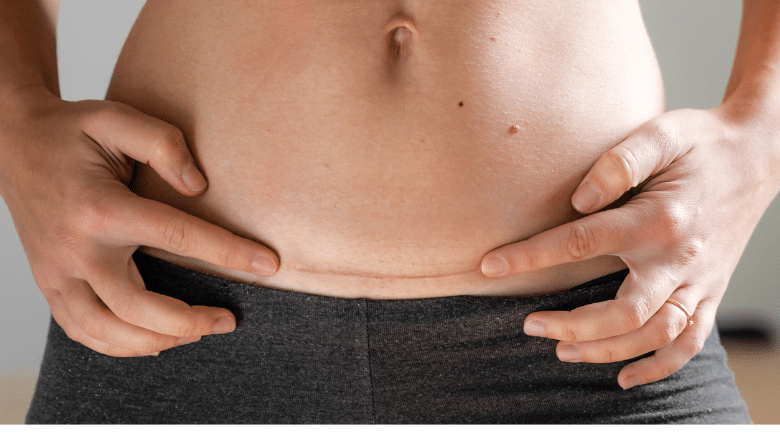
The final appearance of a cosmetic surgery scar is influenced as much by what happens after the operation as by what happens during it. Diligent post-operative scar management can substantially improve the eventual result — and conversely, neglecting it can leave a patient with a more visible scar than the surgery itself would have produced. This guide covers what evidence-based scar management actually involves, what is commonly recommended but isn’t supported by good evidence, and how the principles apply across the procedures most commonly performed at our Baker Street clinic.
For the underlying biology and the different scar types, start with different types of scars. For the broader treatment overview, see scar revision at Centre for Surgery’s CQC-regulated Baker Street private hospital.
How a cosmetic surgery scar matures
A new surgical incision moves through three predictable phases of healing. Understanding the timeline matters because it determines when each intervention is most useful.
- Inflammatory phase (days 0–7) — the wound is closed and protected. Sutures hold the edges together. The body fights infection and recruits the cells needed for repair.
- Proliferative phase (weeks 1–6) — fibroblasts produce new collagen, the wound contracts, and the scar appears red, firm and slightly raised. Itching and tingling are common.
- Remodelling phase (months 2–18) — the new collagen is gradually reorganised. The scar softens, flattens, and fades. Most of the improvement happens between months 3 and 12.
The scar typically looks worst between weeks 6 and 12, when redness peaks. This is normal and not a sign that something has gone wrong. From month 3 onwards, gradual fading begins. By month 12, most scars have reached their final mature appearance — typically a fine pale line that is much harder to see than the active scar was at 6 weeks.
Active scar management starts as soon as the wound has fully closed — usually around 2 weeks after the operation — and continues for the first 6 to 12 months.
The interventions with the strongest evidence
Silicone gel and silicone sheeting
The single intervention with the strongest randomised-trial evidence base for scar improvement. Silicone gel or sheeting applied to a fully closed wound:
- Reduces scar redness
- Reduces scar thickness and raised texture
- Reduces itching and tingling
- Lowers the risk of hypertrophic scar formation
Practical use: start once the wound is fully closed (usually around 2 weeks post-op). Apply gel twice daily, or wear sheeting for 12+ hours a day. Continue for at least 3 months — ideally 6 — to maximise benefit. For full discussion see do silicone strips help cosmetic surgery scars heal better?
Sun protection
A fresh scar contains immature melanocytes that overreact to UV exposure. A few unprotected sun exposures during the first 6 to 12 months can leave the scar permanently darker than the surrounding skin — particularly in skin types III to VI. Once the pigment has set, it can be very difficult to correct.
SPF 50 sunscreen applied daily to the scar, regardless of weather. Continued for at least 12 months. Physical sun protection (clothing, shade) where the scar is in a directly exposed area. For full discussion see the effects of tanning on cosmetic surgery scars.
Scar massage
Once the wound has fully closed — typically around 4 weeks post-operation — gentle scar massage with an unperfumed moisturiser can be started. The technique involves firm circular movements over the scar for 5–10 minutes twice daily. Benefits include:
- Softening firm scar tissue
- Improving local circulation
- Reducing tethering between scar tissue and deeper structures
- Easing itch and tingling
For full technique guidance see how to massage yourself after cosmetic surgery.
Compression garments and pressure therapy
For procedures involving substantial soft tissue work — tummy tucks, body lifts, breast surgery — compression garments are worn for 6 weeks or longer to reduce swelling and support healing. This isn’t a scar-specific intervention but it does help by reducing wound tension and limiting fluid collection that can disrupt the early healing phase. For full discussion see seroma after tummy tuck.
Intralesional steroid injection
For scars that are developing hypertrophic features — raised, firm, red, persistent — triamcinolone steroid injection given every 4–6 weeks reduces collagen overproduction and flattens the scar. Started at 6–8 weeks post-operation if a scar is developing concerning features, the intervention often prevents a hypertrophic scar from establishing. Indicated for high-risk patients (darker skin types, history of poor scarring, high-tension anatomical areas). For full discussion see do hypertrophic scars go away?
Wound care during the first two weeks
Before scar management proper begins, the wound itself needs to heal. The basics:
- Keep the dressing clean and dry until your surgeon advises otherwise — typically 24 to 48 hours for waterproof dressings, longer for non-waterproof.
- Don’t pick at scabs — they protect the underlying healing tissue. Disturbing them prolongs healing and worsens the eventual scar.
- Avoid stretching the wound — heavy lifting, intense physical activity, and movements that pull on the incision should be avoided for the time your surgeon recommends (typically 2 to 6 weeks depending on procedure).
- Don’t apply alcohol, hydrogen peroxide, or harsh antiseptics — outdated advice. Modern wound care emphasises moist healing with mild cleansing.
- Watch for signs of infection — increasing redness, warmth, pain, discharge, fever. These warrant prompt review rather than waiting.
- Attend follow-up appointments — the early review allows your surgeon to assess healing and intervene early if anything is off.
Once the wound has closed and the sutures have been removed (or absorbed), active scar management begins.
Procedure-specific considerations
Different cosmetic procedures produce different scar patterns, and the approach to scar management is tailored accordingly.
Tummy tuck (abdominoplasty)
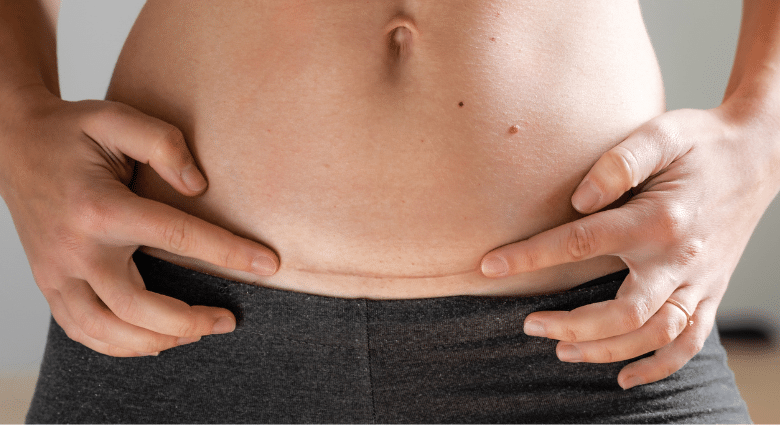
The horizontal scar across the lower abdomen is long but designed to sit below the underwear or bikini line. The scar is under moderate tension and benefits from extended silicone treatment, compression garment support during the first 6 weeks, and ongoing sun protection. Adjunctive Morpheus8 or laser resurfacing in the months after surgery can further refine the scar.
Breast surgery (augmentation, lift, reduction)
Different incision patterns leave different scars. Inframammary incisions (hidden in the breast crease) and periareolar incisions (around the areola) heal beautifully in most patients. Vertical and anchor incisions used for lift and reduction are longer and benefit from extended silicone use and careful sun protection. For full discussion see reducing scars after breast surgery.
Facelift, neck lift, blepharoplasty
Facial incisions heal exceptionally well thanks to the rich blood supply of the face. Scars hidden in hairlines, behind the ears, or in natural skin creases typically become very inconspicuous. Diligent sun protection is particularly important for facial scars.
Body lift, arm lift, thigh lift
The long incisions used for body contouring after weight loss heal in higher-tension anatomical areas and can be more visible than facial scars. Extended silicone treatment, sun protection, scar massage and selective laser treatment all materially improve the result. For full discussion see reducing scars after body lift surgery.
C-section scar
Caesarean scars are not cosmetic surgery scars but the principles are the same. The horizontal lower abdominal scar is under moderate tension and benefits from the same evidence-based interventions. For dedicated guidance see how to prevent and minimise C-section scars.
Mole or skin lesion removal
Small linear scars in the face or body. Standard silicone, sun protection and massage approach. For full discussion see how to minimise scars after mole removal.
Adjunctive in-clinic treatments
For patients who want to optimise the result beyond standard home scar management, several in-clinic options are available:
- Morpheus8 radiofrequency microneedling — often started 6–8 weeks after surgery for textural improvement, particularly useful for raised or developing hypertrophic scars. See does Morpheus8 help treat acne scars? for a related guide on the technology.
- Laser skin resurfacing — erbium or CO2 fractional laser for surface texture and persistent redness. Usually started at 3+ months post-operation.
- Pulsed-dye laser — for persistent scar redness; can be started earlier than ablative laser.
- Intralesional steroid injection — for developing hypertrophic or keloid features.
- Surgical scar revision — held in reserve for 12+ months in case the scar matures unfavourably and warrants formal revision. See scar revision surgery FAQs.
Most patients don’t need any of these — standard home scar management produces a fine result. Adjunctive treatment is held for cases where the standard approach isn’t enough.
Lifestyle factors that influence the scar
- Smoking — measurably impairs wound healing and produces worse scars. Stopping for at least 2 weeks before and 4 weeks after surgery is one of the highest-yield interventions a patient can make.
- Alcohol — moderate intake is not a major issue, but heavy consumption in the immediate post-operative period delays healing.
- Nutrition — adequate protein, vitamins (particularly C and A), and overall caloric intake support tissue repair. Specific supplements aren’t generally needed for healthy patients eating reasonably.
- Hydration — supports skin quality and healing.
- Sleep — wound healing largely happens during sleep. Inadequate sleep impairs the process.
- Stress — chronic stress has measurable effects on wound healing rates.
- Other medications — particularly long-term steroids, immunosuppressants, and some chemotherapy agents can impair healing. These are usually picked up at the pre-operative assessment.
What to expect during the first year
A useful frame for setting expectations:
- Weeks 0–2 — wound healing. Don’t focus on the scar appearance yet.
- Weeks 2–6 — scar is red, firm, sometimes itchy. Begin silicone, sun protection and gentle massage.
- Weeks 6–12 — scar at peak redness. Often looks more prominent than it eventually will. Continue scar management. Consider intralesional steroid if hypertrophic features are developing.
- Months 3–6 — gradual fading and softening. Most patients see clear improvement.
- Months 6–12 — scar approaches its final mature appearance. Significantly less visible than at 6 weeks.
- Months 12–18 — final mature scar. If unfavourable, this is the point to consider surgical revision.
Photographs at consistent angles every 4 to 6 weeks help track progress objectively. Day-to-day changes are hard to notice; comparison shots show the improvement clearly.
What we don’t recommend
- Vitamin E oil on scars — widely recommended but with weak evidence. A notable proportion of patients develop contact dermatitis from vitamin E preparations. Silicone gel is the better-evidenced topical.
- “Drying out” the wound with hydrogen peroxide, surgical spirit, or harsh antiseptics — outdated. Modern wound care prioritises moist healing.
- Picking at scabs — disrupts the healing tissue. Let scabs separate naturally.
- Stretching or rubbing a fresh wound — avoid intense activity that pulls on the incision for the period your surgeon recommends.
- Starting silicone treatment too early — on an open wound, silicone is irritating. Wait until the wound is fully closed (usually around 2 weeks).
- Sun exposure without protection — even brief unprotected exposure can permanently darken a fresh scar.
- Smoking around the time of surgery — measurably worsens scars. Stop for the perioperative period.
- Demanding scar revision in the first 6 months — premature. Wait for the scar to mature; it often improves substantially without intervention.
- Topical “scar removal” creams sold online with strong claims — most have no good evidence. Stick to silicone, sun protection, and (where appropriate) retinoids for early stretch marks.
- Skipping follow-up appointments — early review allows problems to be picked up and addressed at the most cost-effective point.
Frequently asked questions
When can I start scar treatment after surgery?
Silicone gel or sheeting: once the wound is fully closed, typically around 2 weeks post-op. Scar massage: usually 4 weeks. Sun protection: as soon as the wound is healed. Intralesional steroid (if needed): 6–8 weeks. Laser or Morpheus8 (if needed): 3+ months.
How long should I continue scar treatment?
Silicone for at least 3 months, ideally 6. Sun protection for at least 12 months. Scar massage as long as the scar feels firm or tethered.
How long does a cosmetic surgery scar take to fade?
Scar maturation continues for 12 to 18 months. The scar is usually at peak redness at 6 weeks, starts fading visibly by month 3, and reaches its final appearance around month 12.
Will my scar disappear completely?
No scar disappears entirely. With evidence-based management, most cosmetic surgery scars become a fine pale line that is difficult to see without close inspection.
What if my scar starts looking hypertrophic?
Speak to your surgeon at the next follow-up — or sooner if you are concerned. Early intervention with intralesional steroid and intensified silicone use often prevents a developing hypertrophic scar from establishing.
Can I use sunbeds during scar maturation?
No. Sunbeds deliver high-intensity UV that can permanently darken a fresh scar. Avoid for at least 12 months after surgery.
Does swimming affect scar healing?
Once the wound is fully closed (usually 2 weeks), swimming in chlorinated pools is generally fine. Sea water is also acceptable. Avoid until the wound is fully closed.
Can scar massage be started too early?
Yes — massaging an open wound disrupts healing. Wait until the wound is fully closed, typically around 4 weeks. If in doubt, your surgeon will confirm at follow-up.
Does Centre for Surgery offer post-operative scar management?
Yes — scar management is part of every procedure pathway. Specific guidance is given at consultation and reinforced at follow-up appointments. Adjunctive in-clinic treatments (laser, Morpheus8, steroid injection) are available when needed.
Scar management at Centre for Surgery
Centre for Surgery is a CQC-regulated plastic surgery clinic at 95–97 Baker Street, Marylebone. Scar management is integrated into every procedure pathway, with structured follow-up and access to the full range of adjunctive treatments when needed — silicone, intralesional steroid, laser resurfacing, Morpheus8 radiofrequency microneedling, and surgical scar revision. All performed by GMC-registered consultant plastic surgeons. No GP referral required.
For related guides, see different types of scars, scar revision surgery FAQs, do hypertrophic scars go away?, do silicone strips help scars heal better?, how to massage yourself after cosmetic surgery, and the effects of tanning on cosmetic surgery scars.
Centre for Surgery · CQC-regulated · GMC specialist-registered surgeons · 95–97 Baker Street, Marylebone, London W1U 6RN · 0207 993 4849 · Book a consultation · Finance from 0% APR